
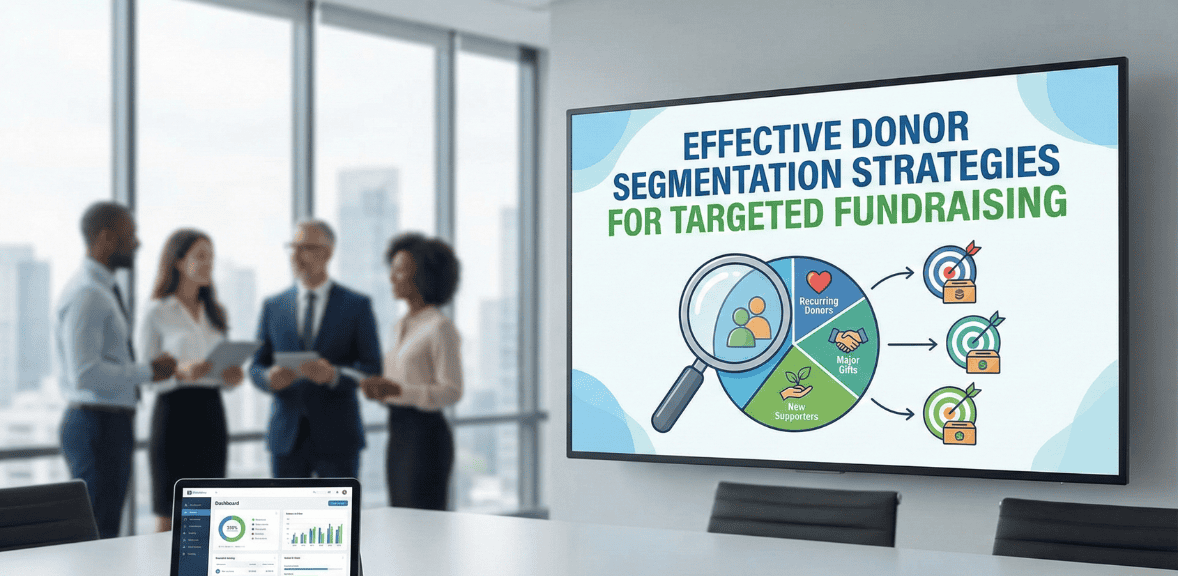
Effective Donor Segmentation Strategies for Targeted Fundraising
Not all donors are the same – so why treat them that way? Donor segmentation is the practice of grouping supporters by shared characteristics to communicate with them more effectively. In an era where people are accustomed to personalized experiences from companies like Amazon and Netflix, nonprofits that rely on generic, mass appeals risk disengaging their supporters.
It dives deep into donor segmentation and targeted fundraising, covering both foundational and advanced strategies. We’ll explore standard segmentation criteria (such as demographics, engagement, and interests), examples of personalized fundraising, and provide step-by-step guidance on implementing segmentation using your existing CRM or basic spreadsheets. We’ll also highlight common pitfalls to avoid, like over-segmentation or outdated data. By the end, you’ll be equipped to send the right message to the right donor at the right time.
Why Segmentation Matters

Segmentation is not a tactic to be executed once, but a mindset to adopt across your fundraising program. As donor expectations continue to rise, organizations that listen, adapt, and respond thoughtfully will stand out in an increasingly crowded nonprofit landscape.
When nonprofits don’t segment their donors, everyone receives the same message and the same ask. The results are predictable:
- Small donors may feel over-asked or overwhelmed.
- Major donors may feel under-appreciated or insufficiently challenged.
- Long-time supporters may receive beginner-level explanations.
- New donors may get aggressive asks before they feel connected.
Over time, this mismatch leads to disengagement, lower response rates, and reduced retention.
Research consistently shows that targeted communications outperform generic ones. Segmented donor outreach typically results in higher response rates, increased average gift size, and stronger long-term retention. Personalization is no longer a “nice to have”; it’s an expectation. Donors want to feel known, understood, and valued.
Segmentation enables a more brilliant fundraising communication strategy by aligning your message with each donor’s relationship to your organization. Instead of shouting the same appeal at everyone, you’re having more relevant, respectful conversations.
Segmentation Basics: Common Ways to Segment Donors

The most effective donor segments are built using data you already have. Start with practical criteria that allow you to change how you communicate meaningfully.
Giving History
This is often the foundation of donor segmentation.
- Gift Amount / Level: Small, mid-level, and major donors warrant different approaches.
- Frequency: One-time donors, repeat annual donors, and monthly sustainers have very different relationships with your organization.
- Recency: Current donors vs. lapsed donors (e.g., no gift in 24+ months).
These factors are commonly combined into RFM analysis (Recency, Frequency, Monetary), a proven framework for donor targeting.
Engagement Level
Not all supporters engage in the same way.
- Donors who also volunteer
- Event attendees vs. non-attendees
- Advocates who open emails or click frequently
Highly engaged supporters often respond well to insider updates, leadership opportunities, or invitations to deepen involvement.
Source or Acquisition Channel
How someone first connected with you matters.
- Direct mail donors may prefer print communications.
- Social media–acquired donors may respond better to digital storytelling.
- Peer-to-peer donors often value community and recognition.
Understanding the acquisition source helps refine your donor targeting and channel strategy.
Interests or Program Affinity
Interest-based segmentation is one of the most potent forms of personalization.
If donors consistently give to specific programs (e.g., education, health, animal welfare), tailor updates and appeals to those interests. A donor who supports your Education Fund will feel far more connected receiving education-specific impact reports than generic organizational updates.
Demographics (Used Thoughtfully)
Demographic data can be helpful, but it should be applied carefully.
- Local vs. out-of-town donors
- Alumni vs. non-alumni (for educational institutions)
- Broad age cohorts (when relevant)
For example, channel preferences may vary: women tend to use Pinterest more heavily, while Twitter/X skews more male. These insights can inform marketing channel decisions, but avoid assumptions or stereotypes.
Crafting Targeted Fundraising Strategies by Segment
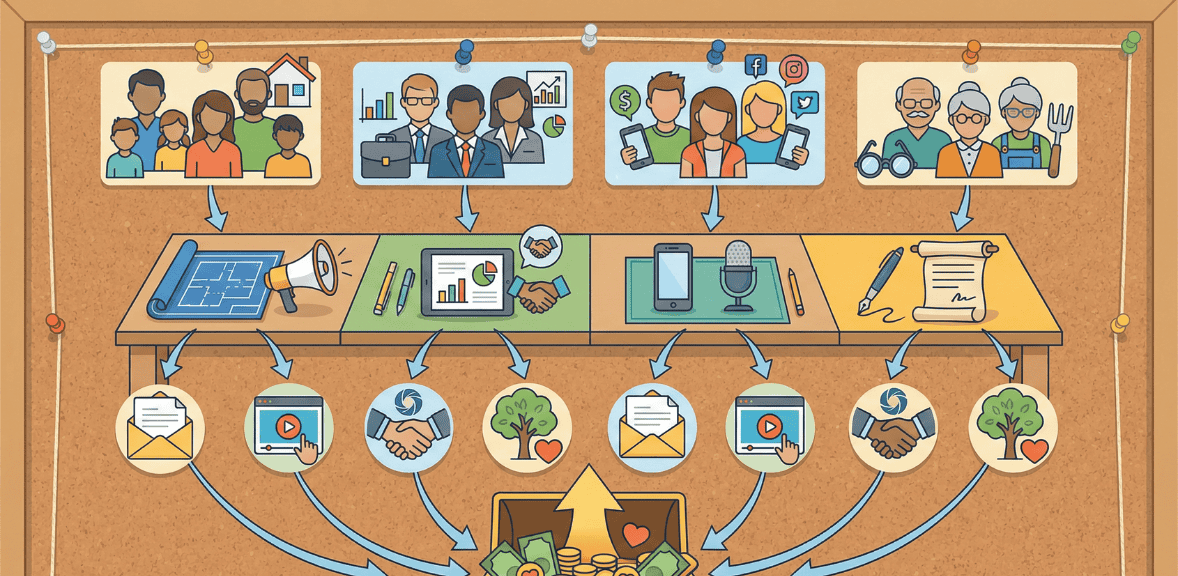
Segmentation adds value only if it drives fundamental changes in how you engage donors. That means adjusting elements like the message itself, the amount you ask for, the communication channel you use, or how often you reach out—otherwise, segmentation is just labeling without impact.
New Donors
Strategy: Welcome and educate.
- Send a welcome series explaining your mission and impact.
- Thank them promptly and warmly.
- Make the first renewal ask softer and more relationship-focused.
Avoid sending new donors the same aggressive appeals you send long-time supporters.
Lapsed Donors
Strategy: Re-engage, don’t ignore the gap.
Create a dedicated win-back segment (e.g., no gift in 24+ months). Use messaging like:
“We miss you. Since your last gift in 2021, here’s what your past support helped make possible.”
Acknowledge the lapse, remind them of past impact, and invite them back without guilt.
Mid-Level Donors
Strategy: Upgrade with intention.
Mid-level donors are often under-segmented. They deserve more personalization than small donors, but different treatment than major donors.
- Use tailored ask amounts.
- Consider personal emails, handwritten notes, or invitations.
- Highlight the tangible difference an increased gift could make.
Major Donors
Strategy: Individualized cultivation.
Major donors often become a “segment of one.”
- Develop customized cultivation plans.
- Focus on relationship-building and shared vision.
- Use personal calls, meetings, and bespoke proposals.
Monthly vs. One-Time Donors
Strategy: Stewardship vs. solicitation balance.
- Monthly donors typically need fewer solicitations.
- Focus on impact reporting and gratitude.
- Occasionally, invite them to upgrade or make a special one-time gift.
Interest-Based Segments
Strategy: Match content to passion.
If 30% of your donors give to the Education Fund and 70% to General Operations, communicate differently. Education donors should receive education-specific stories, metrics, and appeals when new needs arise.
Multi-Dimensional Segmentation
Advanced donor segmentation often combines criteria. For example:
- Donors giving $100–$500 and attending an event in the last year
This group might be ideal for a volunteer invitation or a special behind-the-scenes update.
Implementing Donor Segmentation in Practice

You don’t need perfection—just a plan. Start with clear goals and a few practical segments, then refine your approach over time as you learn what resonates with each group.
Step 1: Define Your Goal
Are you trying to:
- Increase retention?
- Upgrade donors?
- Re-engage lapsed supporters?
Your goal determines which donor segments matter most.
Step 2: Identify and Tag Segments
Use your CRM’s queries, filters, or tags. Even simple systems can segment by:
- Last gift date
- Total giving
- Program designation
Step 3: Develop Segment-Specific Messaging
Adjust at least one element per segment:
- Tone
- Ask amount
- Channel
- Frequency
Step 4: Test and Learn
Test segmented messaging against a generic control group—track differences in response rate, average gift, and retention.
Step 5: Roll Out and Monitor
Launch your campaign, then analyze results by segment. Refine over time.
Start small. Three to four core donor segments are enough for most organizations. Expand as capacity grows.
Common Pitfalls and Best Practices

Common pitfalls and best practices help ensure donor segmentation strengthens your fundraising rather than complicating it. By being intentional, data-aware, and realistic about capacity, organizations can avoid wasted effort and create more effective, donor-centered communication.
Avoid Over-Segmentation
Too many donor segments can lead to complexity without impact. If a segment is too small or doesn’t receive a distinct strategy, it may not be worth maintaining.
Maintain Data Quality
Outdated or incomplete data leads to mis-segmentation—like labeling someone “lapsed” when they actually gave through an unrecorded channel.
Refresh Segments Regularly
Segmentation is not a one-time exercise. Review criteria annually and update donors as they move between segments.
Balance Consistency with Personalization
Some communications (such as annual reports) should be sent to everyone. You can still personalize with segment-specific cover letters, inserts, or emails.
Conclusion
Effective donor segmentation is not about complexity or technology—it’s about respect. When you acknowledge donors as individuals with different motivations, capacities, and relationships to your mission, your fundraising becomes more relevant, more human, and more effective. Segmentation allows you to replace generic appeals with intentional communication that reflects how supporters actually engage with your work.
Ultimately, targeted fundraising strengthens trust. Donors who feel understood are more likely to stay, give again, and give more generously over time. By committing to thoughtful segmentation and acting on it consistently, you move from simply asking for gifts to building lasting relationships—and that is where sustainable fundraising truly begins.
FAQs
What is donor segmentation, in simple terms?
Donor segmentation is the process of grouping donors by shared characteristics to communicate with each group more effectively. Instead of treating all donors the same, you tailor your messages, ask amounts, and outreach methods. For example, new donors might receive a welcome series, while long-time donors get detailed impact reports. The goal is to send the right message to the right donor at the right time.
What are some practical ways to segment our donors?
Standard methods include segmenting by giving history (amount, frequency, recency), donor engagement (volunteers, event attendees), interests or programs supported, demographics, and communication channel preferences. Start with 3–5 segments you can realistically support with tailored messaging.
How does segmentation improve fundraising results?
Segmentation increases relevance. More relevant messages lead to higher response rates, improved retention, and larger average gifts. It also enhances efficiency by focusing higher-cost outreach on higher-value donor segments.
How granular should we get with donor segments?
Aim for balance. For most organizations, 3–6 core segments are manageable and effective. Segments should be large enough to justify a distinct strategy and supported by your team’s capacity to create tailored communications.
We don’t have fancy software—how can we segment donors?
Even basic tools work. Spreadsheets can filter donors by gift size, last gift date, or total giving. Email platforms often support tagging and segmentation. Focus first on high-impact segments such as new, major, and lapsed donors. Segmentation is about logic, not technology.