
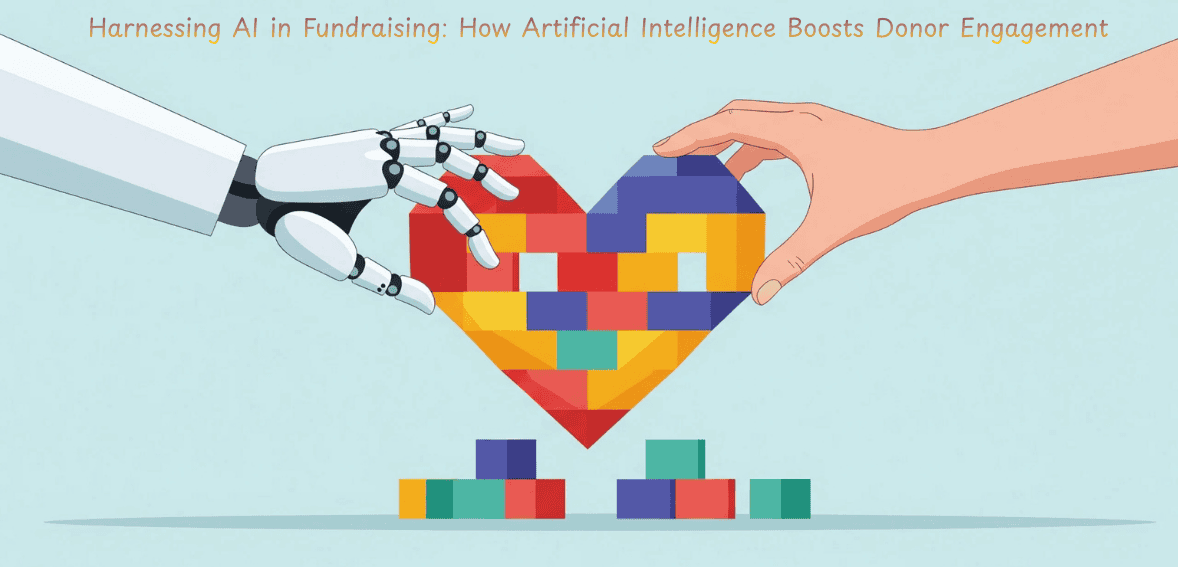
Harnessing AI in Fundraising: How Artificial Intelligence Boosts Donor Engagement
AI in fundraising is revolutionizing the field. The utilization of AI in the nonprofit sector for fundraising purposes is radically changing how organizations are able to interact with and get to know their supporters, the donors’ behavioral patterns, and subsequently, the building of lasting connections. Email blasts and annual appeals are no longer the only tools used in the fundraising process these days. Donors are demanding relevance, precise timing, and unambiguous communication in every interaction. Nonprofits that cannot meet these requirements often witness a drop in engagement, even if their cause is strong.
Thus, the shift has brought forth an opportunity for organizations that are open to the use of more intelligent tools and data-based methods. Applying AI enables nonprofits to listen to their supporters, respond to them more quickly, and provide them with more personalized engagement.
Understanding Artificial Intelligence in Fundraising

AI in nonprofit fundraising implies the employment of smart systems that scrutinize data, discover patterns, and facilitate decision-making. These systems are not a substitute for fundraisers. Rather, they contribute to the ability of the human brain by providing insights that would have taken weeks or even months to reveal.
In the sector of raising funds, AI in its entirety deals with previous donations, engagement patterns, interactions, and supporters’ likes. Thus, it follows that nonprofit organizations can take actions that are grounded in facts rather than relying on the guessing of opinions. Charities can, therefore, personalize their communication according to the actual behaviors of the donors instead of sending out the same message to all the donors. Ultimately, this leads to the establishment of more frequent and profound donor relationships that are informed by knowledge rather than misconceptions.
Why Donor Engagement Has Become More Challenging
Over the last ten years, donor engagement has been transformed beyond recognition. Contributors are constantly inundated with digital communication from a plethora of organizations, and so it is quite hard to keep their attention and loyalty. Besides, donors nowadays want interactions that come across as both personal and meaningful.
Among the factors that nonprofits encounter are the shortage of personnel, data systems that are not integrated, and a lack of follow-ups. The gaps created by these factors make it almost impossible for nonprofit organizations to form strong ties with their donors. The application of AI in nonprofit fundraising has made it possible to tackle such problems by minimizing manual labor and enhancing accuracy in outreach. As a result, nonprofits will be able to gain insights and communicate with donors in a way that is considered relevant, not repetitive.
How AI Improves Donor Data Accuracy

Data of high quality is the basis for efficient fundraising. Nevertheless, donor records are mostly not perfect, old, and found in different places. AI in fundraising helps to automatically clean, sort, and even add value to donor data.
Through the recognition of duplicate records, AI systems enhance the trustworthiness of data by using contact information updates and reporting unusual patterns. The result is pay up through visibility and more trust in the decisions made. For nonprofits that have implemented a CRM specifically for nonprofits, AI in fundraising smart processing of data makes it such that every donor interaction is based on the data, which is the basis for efficient fundraising. Nevertheless, donor records are mostly not perfect, old, and found in different places. AI helps to automatically clean, sort, and even add value to donor data.
Personalized Communication at Scale
Among donors, personalization has become a major expectation. Donors do not appreciate receiving what they consider to be standard communication since it is easy for them to dismiss such messages. The use of AI in fundraising for nonprofits makes it possible for organizations to communicate more personally without having to take on the extra weight of staff work.
By looking into past communications, AI can put forward the best way of communicating, the best channel, and the most suitable time. Consequently, nonprofits are able to send relevant messages that appeal to specific donors. Even the tiniest of organizations can now do personalized outreach, which was once personal only to big teams. AI in fundraising ensures donor engagement gets better while communication stays the same and manageable.
Predictive Insights for Smarter Fundraising Decision-Making

The ability to predict is one of the major advantages of AI. Machine learning has the power to unearth patterns that reveal the exact time a benefactor will donate, boost his/her financial support, or pull out completely. These predictions are rooted in the actual actions of the donors and not in the mere guesswork of the organizations, making AI in fundraising a valuable strategic tool.
With these revelations at hand, the charity institutions will be able to allocate their resources more rationally according to priority. The charity workers can distribute the most willing potential uproars at a certain period of the main attention. The application of AI in the charity sector hardly affects the unproductive communications, and at the same time, it furthers the general effectiveness by making the actions of the organization correspond to the state of the donor’s mind. Organizations utilizing this method can allocate their time and resources more efficiently through AI in fundraising.
Strengthening Donor Retention Through Timely Engagement
Retaining donors usually costs less than acquiring new ones. Still, a lot of charities have a hard time keeping up with donor relations after the first contribution. Machine learning and other techniques help charities hold on to their donors by spotting signs of disengagement very early.
The situation can be indicated by AI-assisted organizations if there is a change in giving patterns or if help rates go down. By knowing this, organizations can take action before the person stops giving. The supporter will not disappear if you take time to follow up and acknowledge right away. Giving consistent attention to the donor will help him or her feel appreciated and understood instead of neglected.
Ethical Use of AI in Nonprofit Organizations

One of the bases of fundraising is trust. Transparency and responsible data handling are the least that donors are going to ask for. Nonprofits must use artificial intelligence ethically and carefully in every interaction with donors.
The privacy of the donor should not be violated in any way, data should not be used in an intrusive manner, and the only use of data should be for improving engagement. If there are clear regulations and responsibilities established, it will be easier to ensure that AI in fundraising is a factor that maintains and even enhances trust, rather than one that erodes it. The practice of adopting AI in the leading way will raise the stakes, increase the credibility, and secure the long-term trust of the donor, which is crucial for the success of fundraising in the long run.
Integrating AI With Existing Fundraising Tools
AI is most useful when it is part of the overall system. Numerous organizations have already adopted donation management software for reporting and processing, and AI is on top of these platforms by providing smart workflows.
When systems get integrated, data passage is effortless, and insights are immediately usable. The integration facilitates the elimination of disjointed operations for charities, and it also helps to provide a more integrated donor experience. The groups have a better understanding of the donor’s activities, which makes cooperating and scheduling easier.
Overcoming Common Barriers to AI Adoption
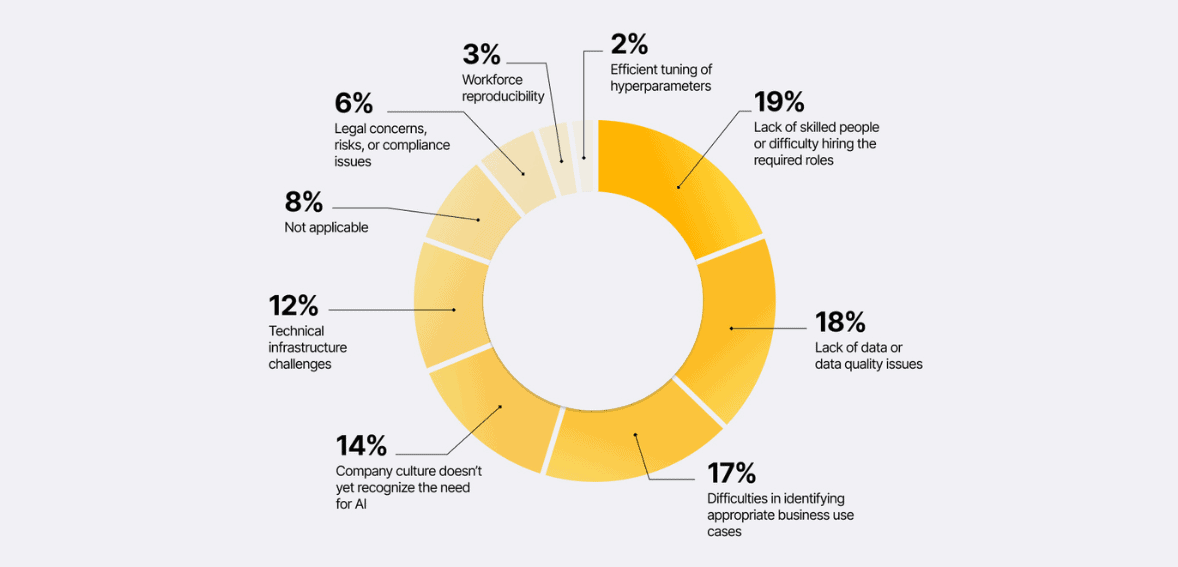
Taking into account the advantages of AI, AI in fundraising still sees some nonprofits refuse to use this technology because of concerns regarding its cost, complexity, or lack of readiness among the personnel. These worries are quite reasonable, particularly for small institutions that struggle with financial constraints.
On the other hand, there are plenty of state-of-the-art tools that are made to be accessible and simple to use. AI in fundraising needs no highly skilled technical personnel. Through appropriate onboarding and training, the teams can soon see the benefits without any upset. Slow adoption frequently makes organizations gain trust and ease with the process in the long run.
The Impact of AI on Fundraising Performance Measurement
Success measurement is fundamental for the long-term improvement process. Performance tracking through artificial intelligence is facilitated by the availability of clear metrics and trend analyses over the entire range of campaigns and donor segments, especially when supported by AI in fundraising.
AI in fundraising enables more precise computations for nonprofits regarding the different metrics of engagement, the ratio of retainers, and the efficacy of campaigns. AI-powered donor analytics reveal to the organizations the very things that are working well and those that require change. This is the gradual progress that AI is helping or supporting through AI in fundraising. The gained knowledge leads to the top management being able to make educated choices rather than depending on guesswork.
Preparing for the Future of Fundraising

AI in fundraising will shape how the fundraising environment keeps changing. Donor expectations will be set higher, and the struggle for getting noticed will become fiercer. The early adopters will be the ones who will take the lead in the new scenario through AI in fundraising.
AI in fundraising aligns closely with AI in nonprofit fundraising as a futuristic vision. Nonprofits will be able to handle the changing situation more easily by relying on data-driven engagement supported by AI in fundraising. Being ready in this way means that they will not be greatly affected by the changes in donor behavior and technology.
Conclusion
AI technology has not merely come and gone in the world of fundraising, but rather indicated the way to an era of more intelligent interactions and closer connections. If applied with care, AI in fundraising can definitely make charities get to know their contributors more thoroughly, send their messages in a better way, and take more daring steps in their operations.
Nonprofits that today choose to go for advanced technologies are, in fact, the ones who are paving the way for a lasting future. Nonprofits, by marrying technology with their core and embracing AI in fundraising, can not only fortify trust but also ensure that their fundraising activities are always successful, even in the long run.
FAQ
What is AI in nonprofit fundraising?
AI application in nonprofit fundraising is understood to include intelligent systems capable of analyzing donor profiles and their interactions to make fundraising and communication decisions, and make them smarter and more effective in supporting.
Can small nonprofits benefit from artificial intelligence?
Definitely. Many AI-driven tools are made for all sizes of organizations and assist in cutting down the manual workload while enhancing the interaction with the donors.
Is donor data safe when using AI tools?
When artificial intelligence tools are handled properly, they give top priority to the security of the data and the privacy of the users. Nonprofits should always pick platforms with excellent data protection policies.
Does AI replace human fundraisers?
Not at all. AI helps humankind with insights and efficiency. Building up the relationship is a job for humans only.
How does AI improve long-term donor relationships?
AI does so by taking over the delivery of pertinent, timely, and personalized messages, which means that nonprofits can continually engage and trust their donors by giving them great support and thus fostering lasting donor trust.