

Building a Donor Stewardship Plan to Increase Donor Retention
A donor stewardship plan is the key to long-term success in fundraising for nonprofit organizations. A lot of nonprofits manage to attract new donors with great effort, but they still have a hard time keeping them interested in the organization after the first donation. Donors who perceive that they are neglected or not valued will frequently cease their contributions without making a sound. A charity that has a clear and intentional stewardship strategy can acquire trust, strengthen bonds, and even keep the donors involved with the cause long after their initial donation.
The presence of a strong stewardship method is not associated with the sending of more emails or thank-you notes at random. What it entails is the design of an intelligent system that treats donors as co-creators of the impact. For organizations that are using modern fundraising tools, stewardship is even more potent when it is backed by accurate data and constant communication. The present article describes how to design a donor stewardship plan that will not only promote donor retention but also pave the way for sustainable growth.
Understanding Donor Stewardship and Why It Matters
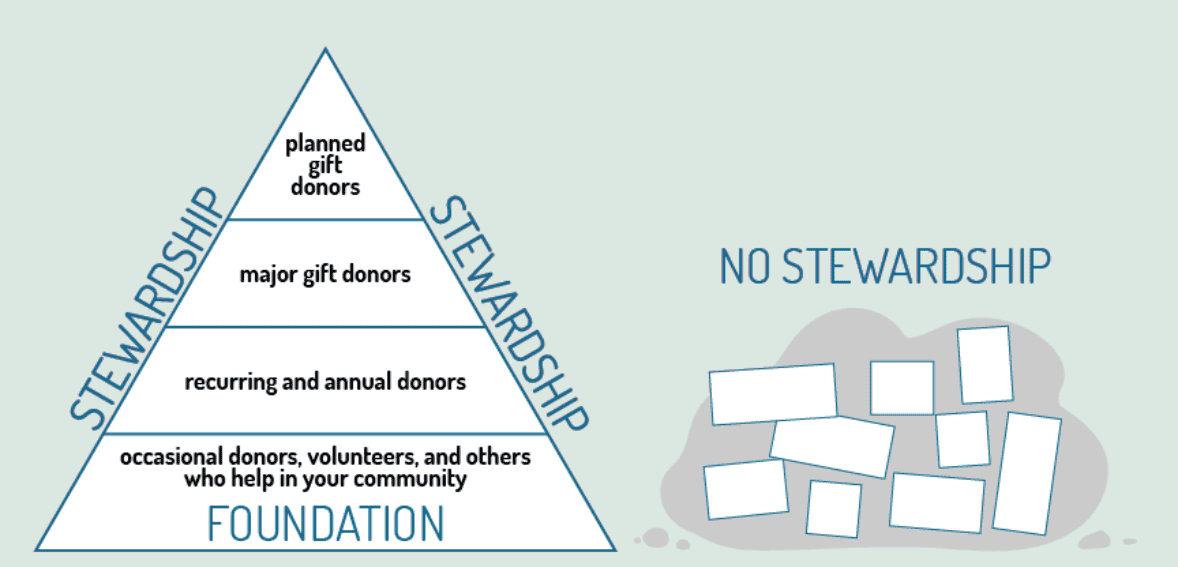
Donor stewardship is the term used for the continuing process that involves the creation and sustenance of important ties with the donors after their contributions. It stresses the importance of gratitude, transparency, communication, and impact reports. Donor stewardship allows the donors to realize the extent to which their contributions make a difference and the importance of their continued participation.
The quality of donor stewardship directly affects their retention. When organizations consider their donors as worthy, then the donors would be expected to participate again, to increase their donations, and to advocate for the organization. On the contrary, inadequate stewardship is likely to act as a deterrent to donors and a cause for their disengagement. For nonprofits that are in a scramble for contributions, good donor management has turned out to be a necessity. It has been regarded as one of the most important tactics for the organization’s financial security.
If an organization lays out a solid donor stewardship plan, it can gradually shift its fundraising strategy from the transactional model to the relationship-building model. This change reduces the need to constantly replace lost donors, allowing the organization to maintain a more stable and reliable donor base.
Defining Goals for Your Donor Stewardship Plan
The initial step in every effective stewardship plan is the establishment of explicit goals. In the absence of defined objectives, stewardship efforts tend to be fragmented and variable in nature. Goals not only give a roadmap but also serve as a means to evaluate success cumulatively.
Typical objectives in stewardship are to enhance donor retention rates, upgrade donor satisfaction, promote repeated giving, and build trust through honesty. Quite a few institutions also want to gradually guide you through the giving process, from first-time donors to lifetime supporters.
The organization’s vision and its funding strategy must align with the goals. Additionally, the goals should be measurable and realistic. For example, one can set “increasing donor retention by one year” as a goal, and it will provide the corresponding teams with a very clear target to work towards. Unambiguous goals empower staff and management to discern what is effective and what requires modification.
Identifying and Segmenting Your Donors

Donors are not the same in terms of their reasons for giving, their expectations, or their giving capacity. Nevertheless, a thorough donor stewardship plan is such that it clearly acknowledges the existence of these differences and reacts. Segmentation of donors indeed allows nonprofits to customize their messages and interactions based on the unique features of each donor.
The most frequently used bases for segmentation include the donation size, the donor’s frequency of giving, the kind of campaign, and the length of the relationship within a structured donor stewardship plan. New donors commonly require support and instruction, but existing ones might prefer to be updated about the impact in a more significant way. Fundraisers, in general, anticipate very intimate and, at times, even more communication with the organization that builds the relationship.
Implementing a donor management system is an excellent way for nonprofit organizations to get accurate and consistent tracking of donor data as part of a reliable donor stewardship plan. They can then give stewards targeted, relevant, rather than generic, experiences from the organized data. Segmentation not only raises the quality of communication but also minimizes the chance of donor disconnection.
Also Read: Nonprofit Storytelling: How Impact Stories Can Inspire Donor Support.
Establishment of a Structured Framework for Donor Communication

Stewardship is best practiced through regular and purposeful communication within a clear donor stewardship plan. The good governance of the organization relies on regular and intentional communication. The contact with the donors should be maintained by the organization throughout the entire year and not just during the appeals for funds. A communication plan seals the deal with the donors receiving messages that are appropriate and relevant, but not feeling overwhelmed.
The communication framework should consist of thank-you notes, updates on impact, stories about programs, and organizational achievements as part of a structured donor stewardship plan. The communications should always highlight the donor’s part in mission advancement. Openness about difficulties and victories is a way of acquiring credibility and trust.
Email, letters, newsletters, and reports are examples of means of communication supported by a consistent donor stewardship plan. Key points are consistency and relevance. Communication has to be very plain, not long, and aimed at the results rather than the ways. Donors who know the impact of their contributions tend to stay emotionally engaged.
Creating an Effective Thank-You Process
The power of gratitude is undisputed in a donor stewardship plan, and therefore, it is one of the main components of such a plan. One of the foremost reasons for giving a genuine, appreciative thank you is to reinforce the giver’s decision to give altogether and to set the tone for their future relationship.
The quickest thing to do in a process of gratitude is to send messages that are quick, personalized, and written down with the details. Sometimes, even the most generic acknowledgments can be perceived as transactional and unmemorable. Mentions of the donor’s contribution and its anticipated effect should be made whenever possible. Even the smallest particulars may have a great impact on making a donor feel important and recognized.
It is possible that there will be different donor segments that will call for different approaches for the thank-you notes. The first-time donors would be the ones to mainly receive warm and welcoming notes that would also serve to tell the organization’s mission. Supporters who have been with the organization for a long time might like to receive such acknowledgment, recognition, and information on how their support has created an impact. Regularly expressing gratitude makes donors more loyal.
Sharing Impact Through Clear and Honest Reporting

Impact reporting is the lifeblood of donor trust within an effective donor stewardship plan. The first thing donors want to know is how their money has been spent and which outcomes were supported with their contribution. By means of clear reporting, accountability is shown, and the value of the donor is being reinforced.
The reports that have the greatest impact are characterized by providing the results, narrating the stories, and presenting the measurable outcomes as part of a strong donor stewardship plan. Instead of using very complicated technical language, they present the world’s transformation. For instance, hard information might be easily presented with the help of a chart or a small case study that could clarify the requirement in a given context.
Being honest is very important in any donor stewardship plan. Not every project reaches its goals perfectly, and donors appreciate openness in this matter. Tonality that shares both achievements and barriers to success builds trust and solidifies the relationship for a long time. It is very likely that the donors will stay involved if they feel that they are kept in the loop.
Using Technology to Support Donor Stewardship
Stewardship efforts in modern times are heavily reliant on technology. Platforms for donor management enable the organizations to bring data together, monitor the interactions, and even make automated, albeit personalized, communications.
An electronic system that is dependable can take care of accurate records as well as provide good service to the donors through a series of follow-ups. It helps the personnel to have access to the whole history of the donor, including the past donations, the communication modes favored, and the level of the donor’s participation. This data is then used by the teams to create the right moment and relevant stewardship experiences.
Efficiency can be increased through automation, but it is never an alternative to thoughtful communication. Technology is most effective when assisting the connection between people rather than taking it away. Under the right circumstances, the digital tools enhance the outcomes of stewardship and thus contribute to retention.
Training Staff and Aligning Internal Teams

Stewardship is not a responsibility that can be taken up by only one department. Instead, it should be shared among fundraising, programs, finance, and leadership. All those involved should appreciate the value of donor relationships and their part in upholding them.
Moreover, the training of the staff guarantees that there will be no differences in the way the messaging and interaction with the donors are done. Having well-defined internal procedures in place will enable the teams to properly handle donor inquiries and comments. Allowing the staff to have a clear understanding of the stewardship goals, they will be able to play their part in donor satisfaction more effectively.
Moreover, the involvement of the leadership is also very significant. The support of the leadership that is visible will strengthen the organization’s dedication to the donor relationships. The connection between the teams will ensure that the donor experience is professional and intentional, which values and adds to the quality of the service.
Evaluating and Enhancing Donor Stewardship Measures
A donor stewardship plan should be adapted through data and feedback. Measuring results enables charities to identify the successful aspects and the ones that require enhancement. The vital metrics might consist of donor retention rates, frequency of repeat gifts, and levels of engagement.
Periodic evaluations grant the teams permission to alter their plans and to develop their message delivery techniques. In the case of direct or indirect donor feedback, the insight gained about donors’ expectations is very useful. Paying attention to donors increases the trust factor and, at the same time, makes the stewardship more effective.
The organization that engages in continuous improvement will have its stewardship efforts always relevant and impactful. Charitable organizations that meet the needs of their donors will be at the forefront of the market in terms of winning new supporters and keeping existing ones satisfied in the long run.
Establishing Long-Term, Consistent Relations through Stewardship
The central idea of stewardship is cultivating and continuing relationships. The donor’s wish is to establish an emotional connection with the cause and to have no doubts about the organization’s integrity. When donor stewardship strategies are well expressed, they develop relationships with the help of consistency, clarity, and trust.
Nonprofit organizations that put stewardship first can minimize the loss of donors and, at the same time, develop a reliable support group. The long-term relationships formed consequently will result in stronger communities, larger impacts, and even more sustainable funding. Stewardship does change the status of donors from just having made one-time contributions to being dedicated partners.
Conclusion
An excellent donor stewardship plan allows charities to transcend their dependence on short-term fundraising and work on establishing long-term relationships instead. Nonprofits make donor experiences meaningful through having a clear, well-defined, and measurable goal; treating donors as per their respective segments; using constant and honest communication; and reporting impact honestly. The process of stewardship augments trust, retention, and the organization’s long-term success in its mission. People who have contributed money and feel like they are being appreciated and kept in the picture will not only stay around but also be even more willing to help and support the change that is sought to be brought about.
FAQ
What Is a Donor Stewardship Plan?
A donor stewardship plan is a nonprofit’s intentional, organized way of maintaining donor partnerships after they have given money, although the connection will last the entire time prosocial behavior is nurtured. Economic support will be seen as an investment in the future of giving at the organizational level rather than as a mere transaction between the donor and charity.
How Does a Donor Stewardship Plan Go About Giving a Boost to Donor Retention?
The donor stewardship plan strengthens the bond with the supporters who consider themselves to be a part of the nonprofit and are judiciously informed. An overlooking donor will be more likely to associate with the organization and donate once more if they can witness the effect of their donation.
How Often Should Nonprofits Communicate With Donors?
Communication between nonprofits and their supporters should take place year-round, not only during fundraising events. Sending such things as news updates, impact reports, or just thank you notes can be regarded as continuous communication that will all contribute to the establishment of strong donor relationships.
What Role Does Technology Play in a Donor Stewardship Plan?
Charities to track donor metrics, manage communications, and offer quick follow-ups are made possible by technology. The latter is the foundation of the former’s continuity and personalization of donor care strategies.
How Can a Donor Stewardship Plan Support Long-Term Fundraising Growth?
The donor stewardship plan fosters increased donor loyalty, which, over time, results in trust being built. Good stewardship means that the fundraising events will be supported securely and for a long time, which in turn leads to what in the long run?