

Mobile Giving & Text-to-Donate: Best Practices to Engage Donors on the Go
Mobile giving. The methods of mobile giving and text-to-donate during the fundraising process of nonprofit organizations are no longer only seen as new trends. They are now, in fact, a crucial part of the giving methods of donors who are supporting causes that they care about. Donors are accustomed to using their phones for everything. They get messages, join online events, and make their decisions simultaneously. If nonprofits make it easy to give during those moments, donor participation will increase automatically.
In the past, today’s donors have had expired donation experiences that were nothing but fast and simple. Long forms, wrong steps, and delays are all that donors would like to experience in the donation process. When donors encounter difficulties in the mobile giving process, they just leave, and the gift is not completed. A mobile experience that is smooth and flawless eliminates doubt and creates trust.
For nonprofits, it is not just mobile fundraising but also mobile-first fundraising that refers to their vision to walk their donors through the already-existing m-paths. It begins with instant actions reinforced by enhanced engagement and eventually, strong relationships over time. This article takes you through the workings of mobile giving and text-to-donate, their significance, and the best practices that nonprofits can implement to engage their donors while they are on the go.
Understanding Mobile Giving in Modern Nonprofit Fundraising
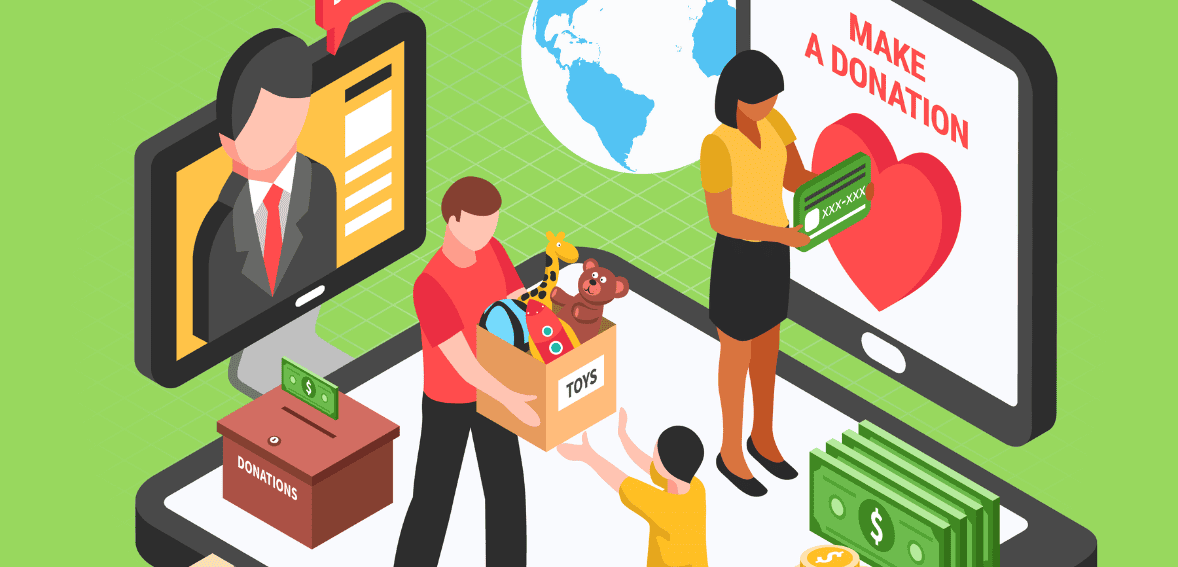
Mobile giving is the term used for donations that are made through a smartphone or a tablet. Mobile giving includes such methods as a donation page optimized for mobile devices, text-based giving, and payments made through a mobile wallet. The increasing usage of mobile devices in the United States has resulted in a change in donor behavior to correspond with it.
Donors are increasingly using mobile channels to interact with nonprofits. They find the causes via social media, use the mobile tickets for events, and reply to campaigns via text messages. Nonprofit organizations that run fundraising strategies without mobile experiences create a barrier to collaboration.
Mobile charity supports both committed and unplanned gifts. Nonprofit organizations can capture the precise moment when a potential donor’s interest is at its peak and capture their intent. One of the most powerful advantages of mobile fundraising is its immediacy.
What Text-to-Donate Is and How It Works
Text-to-donate is a mobile giving method that starts with the sending of a text message. The donors transmit a designated word to an assigned phone number or short code. An instant response is sent to them containing a link to the secure donation page. The donation is done through a page that is mobile-friendly.
Donor Behavior Makes Text-to-Donate the Right Choice
For nearly all donors, texting is a familiar and user-friendly method. The same goes for text messages, which are part of their daily activities. This high level of comfort and familiarity eliminates the need for hesitation, and the learning curve is also reduced drastically.
Text-to-donate fits perfectly in live events and public campaigns. Donors can make their contributions instantly without going through the hassle of looking for a website or filling out long forms. This convenience directly translates to higher completion rates.
How Text-to-Donate Helps Maintain Donor Relationships
Text-to-donate provides the opportunity for charities to acquire donors’ contact details along with their consent. This data enables the charity to continue communication with the donor beyond a single donation.
If done correctly, texting will be a medium through which donors will get engaged continuously and develop their relationships with the charities.
Reasons Why Mobile Giving Enhances Donor Engagement
Mobile giving eases the acceptance of donations by breaking down obstacles. A quick and intuitive process is more likely to attract donors to give. The seamless mobile experience also conveys professionalism and respect for the donor’s time.
The credit of a positive experience to the organization will be the reason for the donor’s future giving to that organization. The memory of the organization that made giving easy will increase the likelihood of repeat donations and ongoing donor engagement.
Mobile giving enhances accessibility. The honest donor can contribute no matter where he or she is or at what time. This flexibility not only stretches the engagement but also strengthens it as a whole.
Best Practices for Effective Mobile Giving
Design Donation Pages for Mobile Users
Donation pages must be built for mobile screens first. Pages need to load swiftly and adapt automatically to different screen sizes, with clarity for the text without the need to zoom in, while the buttons remain easy to click on.
Forms should ask only for essential information. Each additional field increases friction. Short forms improve completion rates and donor satisfaction.
Payment options should feel familiar and secure. Clear security indicators help donors feel confident while completing their gift.
Select Text-to-Donate Keywords That Are Simple and Clear
The keywords for text-to-donate should be short and easy to memorize. Complicated and/or lengthy keywords result in mistakes and confusion. The keyword must have a direct association with the campaign or cause. Such a connection gives the donors confidence that they are actually supporting the right effort. Using the same keywords across all campaigns creates a recognition and trust factor among the donors for the entire process.
Make Clear Instructions Available at Each Stage
Donors must always be aware of what the next step is. The instructions need to be really clear, very direct, and repeated if necessary. During events, the instructions should be both shown visually and explained verbally. In the case of digital campaigns, the steps should be written in a clear manner in the emails and social posts. Clear communication eliminates uncertainty and boosts participation.
Respond Immediately After the First Text
Speed is critical in text-to-donate campaigns. Donors expect an instant response after sending a text.
The response message should include a direct donation link and brief guidance. Delays reduce trust and increase drop-off.
Immediate replies maintain momentum and reassure donors that the process is legitimate.
Use Mobile Giving Strategically During Events
Live events create emotional connection. Mobile giving allows donors to act while engagement is high.
Introducing mobile giving at multiple moments during an event improves participation. Repetition helps donors remember how to give.
Event-based mobile giving often results in higher participation because donors are already connected to the mission.
Building Trust in Mobile Fundraising
Trust is the most important factor for the success of mobile donations. The donors should have the assurance that their data is safe.
Branding that is uniform across platforms is one of the ways trust is developed. The pages for donations should exhibit the identity of the charity. The donors are given reassurance by the use of the same visuals.
Another important factor is transparency. Donors who are informed about the intended use of their contribution and what will happen to it after the donation are less likely to feel insecure. Professionalism is reinforced through the use of confirmation messages.
Also Read: Nonprofit Storytelling: How Impact Stories Can Inspire Donor Support.
Personalizing the Mobile Donor Experience
Personalization is a factor that makes donor relationships stronger. Nonprofits can use mobile tools to send messages that are based on the donor’s behavior and history.
Connecting with a donor by using his/her name and referring to past support is a way of creating a bond. Appreciation and recognition are conveyed through these small things.
Mobile communication that is personalized helps in building loyalty and engagement over a longer term.
Integrating Mobile Giving With Donor Management Systems
Mobile giving is most effective when connected to a donor management system. Integration ensures donor data is accurate and complete.
This connection reduces manual work and errors. It also provides a clear view of donor engagement across channels.
Integrated systems support better follow-up and more meaningful relationships.
Common Mobile Giving Challenges and How to Avoid Them

One of these challenges concerns over-communication. Too many messages can lead to donor fatigue and opt-outs. Balance is important.
Another issue is unclear consent. Donors should clearly understand how their information will be used.
Ignoring performance data is also a mistake. Mobile giving provides insights that should guide improvement.
Addressing these challenges protects donor trust and engagement.
Measuring Mobile Giving Performance
Measuring performance helps nonprofits improve results. Key metrics include completion rates, average gift size, and repeat participation.
The examination of donor behavior points out the areas where changes are necessary. Decision-making based on data leads to more powerful results.
The mobile giving strategies are kept effective through the constant review process.
Conclusion
Mobile giving and text-to-donate have turned out to be an absolute necessity for nonprofit fundraising. They provide the donors with the utmost ease, quickness, and the most important thing—the confidence to give the money in the very moments that matter. When nonprofits put in their first place clarity, speed, and trust, mobile giving is sure to become a robust interaction channel.
Pulling through with powerful mobile strategies not only means achieving the immediate fundraising targets but also having healthy donor relationships in the long run. It is organizations that have chosen to invest in the mobile best practices of today that will be able to face donor expectations and even grow in the future.
FAQ
What Is Mobile Giving, and Why Is It Important?
Mobile giving is described as the process of donating through mobile devices such as smartphones or tablets, which are the most advanced mobile methods to use for donations. The trend of donors switching from conventional giving to mobile giving is the main factor contributing to its significance. Mobile-friendly nonprofits are always out there at the right time to catch the donors’ motivation, and this leads to a lot of participation and interaction with the nonprofits.
How Does Text-to-Donate Support Fundraising Campaigns?
The text-to-donate method also endorses the campaigns and facilitates the donors making the donation through an action that is already familiar to them, without any time delay. A donor texts, and then he/she receive a secure link to give. This procedure suits events, emergency appeals, and public campaigns where both swiftness and ease are necessities.
Is Mobile Giving Safe for Donors?
Mobile giving ensures donor safety if the organizations use secure payment processing and encrypted donation pages to protect their transactions. In addition, the use of strong branding and confirmation messages would also contribute to alleviating the donors’ concerns about the safety of their information.
Can Small Nonprofits Benefit From Mobile Giving?
Mobile giving is one of the elements that small nonprofits can rely on for their growth. In a way, mobile tools are scalable, and, on the other hand, they are also affordable. With the help of mobile tools, organizations can reach out to the donors without having to set up a complicated infrastructure, which can drive effective engagement.
How Does Mobile Giving Boost Long-Term Donor Engagement?
Mobile giving elevates engagement in the long run through a positive donor experience. Donors who are given easy and customized ways to donate will be more likely to come back. Moreover, donor data integration and considerate follow-up contribute to the gradual building of relationships.