

Activating Your Board in Fundraising: Getting Board Members to Champion Your Cause
Many nonprofits and churches across the United States depend on their boards for more than governance. Board members are often among the organization’s most credible ambassadors, trusted voices, and potential fundraising champions. Yet for many organizations, board engagement in fundraising remains a persistent challenge.
Board members may sincerely believe in the mission, but still feel uncomfortable asking for donations, unsure of their role, or disconnected from fundraising goals. When expectations are unclear or support is lacking, fundraising responsibilities can fall almost entirely on staff, limiting growth and sustainability.
This explores how to activate your board as confident fundraisers and committed donors. By setting clear expectations, equipping members with the right tools, and aligning fundraising with mission impact, organizations can strengthen nonprofit board fundraising efforts while building credibility with donors and funders alike.
Why Board Fundraising Matters
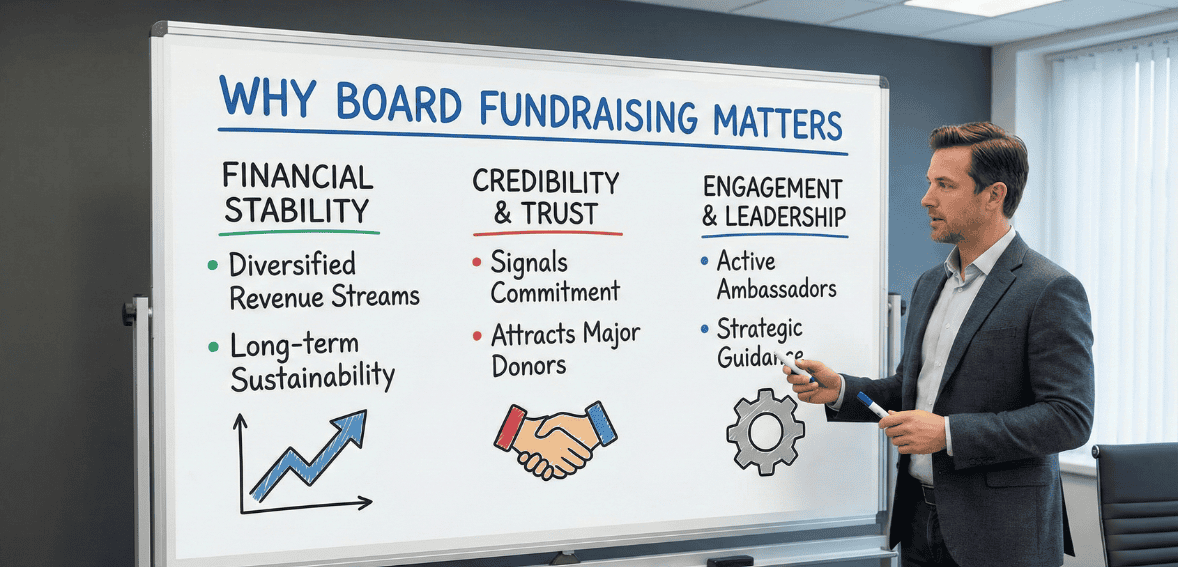
An engaged board sends a powerful signal to donors, foundations, and community partners. When board members give and actively participate in fundraising, it demonstrates confidence in the organization’s leadership and mission.
Many institutional funders and major donors expect to see 100% board giving participation before making significant investments. While fewer than half of nonprofit organization boards currently meet that benchmark, organizations that do stand out. Full board participation shows that leadership is willing to invest personally, not just oversee from a distance.
Strong board involvement in fundraising also expands reach. Each board member brings personal and professional networks that staff may not otherwise have access to. These connections can lead to new donors, corporate sponsorships, partnerships, and community visibility.
Just as important, engaged boards help normalize philanthropy within the organization. When board members give and ask, fundraising becomes a shared responsibility rather than a task delegated solely to development staff.
Understanding Board Fundraising Responsibilities
One reason board fundraising struggles is confusion about what is actually expected. Many board members assume fundraising means making direct donation asks, which can feel intimidating or outside their comfort zone. In reality, board fundraising responsibilities are broader and more flexible.
Fundraising involvement can include:
- Making a personal financial contribution that is meaningful to the individual
- Sharing organizational updates with personal networks
- Making introductions to potential donors or partners
- Hosting or attending small gatherings
- Thanking donors and reinforcing relationships
Not every board member will play the same role, and that’s okay. What matters is that every member contributes to advancing fundraising goals. Clarity around responsibilities reduces anxiety and increases participation.
Set Clear Expectations from the Start

Effective board fundraising begins long before a donation is requested. It starts with clear, transparent expectations during recruitment and onboarding.
Prospective board members should understand that fundraising is part of board service. This includes both personal giving and participation in broader fundraising efforts. Avoid vague language such as “support fundraising when possible.” Instead, outline expectations clearly and respectfully.
Establish a Board Giving Policy
A board giving policy sets the tone for accountability and shared commitment. Policies vary by organization, but many include a “give or get” expectation or a 100% participation goal.
The emphasis should be on participation, not equal dollar amounts. A meaningful gift looks different for each board member, depending on their capacity. What matters is that every member gives at a level that is personally significant.
When expectations are documented and discussed openly, board members are less likely to feel surprised or pressured later. Transparency builds trust and reduces discomfort around fundraising conversations.
Normalize Giving as Leadership, Not Obligation
Board giving should never feel transactional or forced. Instead, it should be framed as an expression of leadership and belief in the mission.
When board members see their own contributions as investments in impact, rather than dues, giving becomes more meaningful. This mindset shift is essential for sustainable board member donations.
Leaders can reinforce this by connecting board giving directly to outcomes. For example, instead of focusing on meeting a participation target, highlight how board contributions helped fund a specific program, expand services, or respond to community needs.
This approach grounds fundraising in purpose and helps board members take pride in their role.
Equip and Empower Board Members to Fundraise

Even board members who care deeply about the mission may hesitate to fundraise if they feel unprepared. Training and resources can dramatically increase confidence and participation.
Many board members have never formally requested a donation. Others may worry about saying the wrong thing or damaging personal relationships. Addressing these concerns directly makes fundraising feel more approachable.
Provide Practical Tools
Rather than expecting board members to figure it out on their own, provide simple, ready-to-use resources. These might include:
- A short mission overview that they can share with contacts
- Talking points that explain why the organization matters
- Sample email language for introductions or invitations
- Clear guidance on how to refer a prospect to staff
The goal is not to script every interaction, but to reduce uncertainty. When board members feel supported, they are more likely to participate in nonprofit board fundraising activities.
Some organizations use donor management systems, such as Cloud Donor Manager, to track board participation and follow up on introductions, making it easier to coordinate efforts without adding complexity.
Offer Fundraising Training That Respects Experience
Board members bring diverse backgrounds and skill sets. Some may have extensive professional experience in sales, leadership, or community engagement, while others are newer to these roles.
Practical training respects this diversity and focuses on shared learning rather than instruction from a single “expert.” Short workshops, role-playing exercises, or peer discussions can be practical for building confidence.
Training should emphasize that fundraising is about relationships and storytelling, not pressure. When board members understand that their role is to invite others into the mission, not close a sale, participation increases.
Align Fundraising with Mission and Values

Board members are most motivated when fundraising feels directly connected to the mission they care about. Abstract goals or general operating needs are more challenging to champion than specific, tangible outcomes.
Whenever possible, link fundraising efforts to real impact. Share stories, data, and examples that show how donations make a difference. This helps board members speak authentically when engaging their networks.
For example, instead of asking board members to help raise “general support,” explain how funds will expand a program, serve more families, or respond to a pressing community issue. Context gives meaning to the ask and strengthens board engagement.
Leverage Board Members’ Networks Strategically

One of the greatest assets board members bring is access to networks that staff may not be able to reach on their own. However, leveraging these networks requires intentional strategy and sensitivity.
Board members should never feel pressured to solicit everyone they know. Instead, encourage thoughtful engagement based on alignment and interest.
Focus on Introductions, Not Just Asks
Many board members are more comfortable making introductions than directly requesting donations. Introductions still add tremendous value by opening doors and building trust.
Encourage board members to identify individuals or organizations who may share the mission’s values. Staff can then follow up with tailored outreach, using the board member’s connection as a bridge.
Small gatherings, whether in person or virtual, can also be effective. These settings allow board members to introduce friends or colleagues to the organization in a low-pressure environment focused on learning and connection.
Also read: Nonprofit Board Member Fundraising: The Gentle Art of Getting Your Board to Actually Ask.
Support Board Members in Hosting and Outreach
If board members are willing to host events or gatherings, make the process as easy as possible. Provide clear guidance on what is expected, who will speak, and how follow-up will happen.
Avoid placing logistical burdens on board members. Staff support is critical to ensure these efforts feel collaborative rather than overwhelming.
After any outreach activity, follow up with board members to share outcomes and next steps. Seeing results reinforces the value of their involvement and encourages future participation.
Recognize and Motivate Board Participation

Recognition plays a decisive role in sustaining board involvement. When board members feel appreciated and see the impact of their efforts, they are more likely to stay engaged.
Recognition does not need to be elaborate. Simple, sincere acknowledgment goes a long way.
Make Impact Visible
Regularly share updates that show how board fundraising efforts contribute to organizational goals. This might include progress toward fundraising targets, beneficiary stories, or milestones achieved with board support.
Public recognition, such as highlighting board contributions in newsletters or at events, can also reinforce positive behavior. Peer recognition is especially effective. When one board member’s effort is celebrated, it often motivates others to step forward.
Foster a Culture of Shared Responsibility
Sustainable board involvement in fundraising depends on culture, not pressure. When fundraising is framed as a shared responsibility tied to leadership and mission, it becomes part of the board’s operating model.
Board chairs and executive leaders play a key role in modeling this culture. When leadership participates actively in giving and fundraising, it sets a powerful example.
Over time, this culture shift reduces resistance and normalizes engagement. New board members enter with clear expectations, and experienced members mentor others through the process.
Address Common Challenges with Empathy

Resistance to fundraising often stems from fear or misunderstanding, not lack of commitment. Addressing these challenges with empathy builds trust and openness.
Some board members may worry about asking friends for money. Others may feel their contribution is too small to matter. Acknowledge these concerns and provide reassurance.
Emphasize that participation matters more than the amount raised, and that fundraising takes many forms. By meeting board members where they are, organizations can gradually increase comfort and involvement.
Measuring and Improving Board Fundraising Over Time
Like any strategic effort, board fundraising benefits from regular evaluation. Track participation rates, types of involvement, and outcomes to identify what is working and where support is needed.
Use this information to refine training, adjust expectations, and celebrate progress. Continuous improvement helps keep fundraising efforts aligned with both organizational goals and board capacity.
Importantly, evaluation should focus on learning, not judgment. The goal is to strengthen board engagement, not create anxiety.
Conclusion: Turning Your Board into Fundraising Champions
Activating your board in fundraising is not about turning every member into a professional fundraiser. It is about creating clarity, confidence, and connection.
By setting clear expectations, providing practical support, and aligning fundraising with mission impact, nonprofits can transform their boards into powerful advocates and donors. Engaged boards build credibility, expand reach, and strengthen long-term sustainability.
While achieving full participation may take time, each step toward increased involvement strengthens your organization. A committed board does more than govern—it champions the cause, inspires others to give, and helps ensure the mission thrives for years to come.
FAQs
Are board members legally required to fundraise for a nonprofit?
Board members are not legally required to fundraise in most cases, but fundraising is commonly considered a core board responsibility. Many nonprofits include giving and fundraising expectations in board policies to support financial sustainability.
What does “100% board giving” actually mean?
100% board giving means every board member makes a personal financial contribution during the year. The amount is not equal for everyone; it should be meaningful to each member’s capacity to give.
How can board members help with fundraising if they dislike asking for money?
Board members can support fundraising by making introductions, hosting small gatherings, sharing mission stories, or thanking donors. Directly asking for donations is only one of many ways to be involved.
When should fundraising expectations be discussed with board members?
Fundraising expectations should be communicated during board recruitment and reinforced during onboarding. Clear, early communication helps avoid confusion and builds accountability from the start.
How do nonprofits keep board members motivated to fundraise?
Motivation increases when board members see the real impact of funds raised and feel appreciated. Regular updates, recognition, and peer encouragement help sustain long-term board engagement in fundraising.