

Nonprofit Email Marketing 101: Nurturing Donor Relationships Through Email
Email remains one of the most effective and cost-effective ways for nonprofits to stay connected with supporters. While social media algorithms change and advertising costs rise, email gives organizations a direct line to people who already care about their mission. When done well, nonprofit email marketing is not just about sending updates or asking for donations—it’s about building trust, reinforcing impact, and creating long-term donor relationships through consistent, meaningful donor emails.
For many nonprofits, especially small and mid-sized organizations, email feels deceptively simple. You write a message, press send, and hope people read it. But strong results come from intentional planning: growing the right audience, crafting messages that feel personal, and measuring what actually resonates. This guide breaks down the essentials of nonprofit email marketing so your messages feel relevant, human, and worth opening.
Why Email Still Matters for Nonprofits
Despite the growth of social platforms and text messaging, email remains central to donor communication in the United States. Most donors expect nonprofits to communicate by email, and many prefer it because it allows them to read and respond on their own schedule.
Email also plays a unique role in the donor journey. It can welcome new supporters, share impact stories, invite people to events, and support email fundraising campaigns without requiring a large budget or technical infrastructure. When emails are consistent and donor-focused, they reinforce credibility and help supporters feel like partners in the mission rather than passive recipients of updates.
Building Your Email List the Right Way

A strong email strategy starts with a healthy list. Growing your list isn’t about collecting as many addresses as possible—it’s about building a group of people who genuinely want to hear from you.
Focus on Permission and Trust
In the US, anti-spam laws require nonprofits to have permission to email supporters. Beyond legal compliance, permission signals respect. People who choose to hear from you are more likely to open, click, and respond over time.
Opt-ins should always be clear. Supporters should know what they are signing up for and how often they’ll hear from you. Transparency at this stage sets expectations and reduces unsubscribes later.
Practical Ways to Grow Your List
Website sign-up forms are one of the most reliable list-building tools. Instead of a generic “Join our mailing list,” explain what subscribers will receive, such as stories of impact, invitations to local events, or updates on programs they care about.
In-person opportunities are just as important. Events, volunteer orientations, community meetings, and fundraising activities provide natural moments to invite people to stay connected by email. Make the process simple and explain the value clearly.
Incentives can help, but they should align with your mission. A short impact guide, a behind-the-scenes update, or early access to event registration feels relevant and respectful.
Quality matters more than quantity. A smaller list of engaged supporters will outperform an extensive list of people who never open your messages. Engaged readers are more likely to respond to future nonprofit email campaigns, including fundraising appeals.
Crafting Must-Open Donor Emails

Once you have a list, the next challenge is earning attention in a crowded inbox. Every email competes with work messages, family updates, and countless promotions. To stand out, your emails need to feel human, relevant, and worth the reader’s time.
Writing Subject Lines That Invite Action
Subject lines are often the deciding factor in whether an email gets opened. Strong subject lines are clear, specific, and written with the reader in mind. They hint at value without resorting to hype.
Personalization can help, especially when it feels natural. Using a first name or referencing a recent interaction works best when it’s accurate and relevant. Overusing gimmicks or emojis can feel forced, so use them sparingly and only when they match your organization’s voice.
Choosing the Right “From” Name
People are more likely to open emails from a recognizable sender. Using a real person’s name paired with your organization, such as an executive director or program lead, can make emails feel more personal and approachable. Consistency matters here—frequent changes to the sender name can reduce trust.
Writing Content Donors Want to Read
Inside the email, clarity matters more than cleverness. Supporters should immediately understand why the message matters to them and how it connects to the mission.
Effective donor emails often focus on one main idea rather than trying to cover everything at once. A short story about a person helped, a recent milestone reached, or a challenge ahead gives readers a reason to keep reading.
Tone is equally essential. Conversational language is more effective than formal or academic writing. Donors want to feel like they’re hearing from people, not institutions. Photos can enhance engagement, especially when they show real moments rather than staged images.
Strengthening Donor Communication Through Segmentation
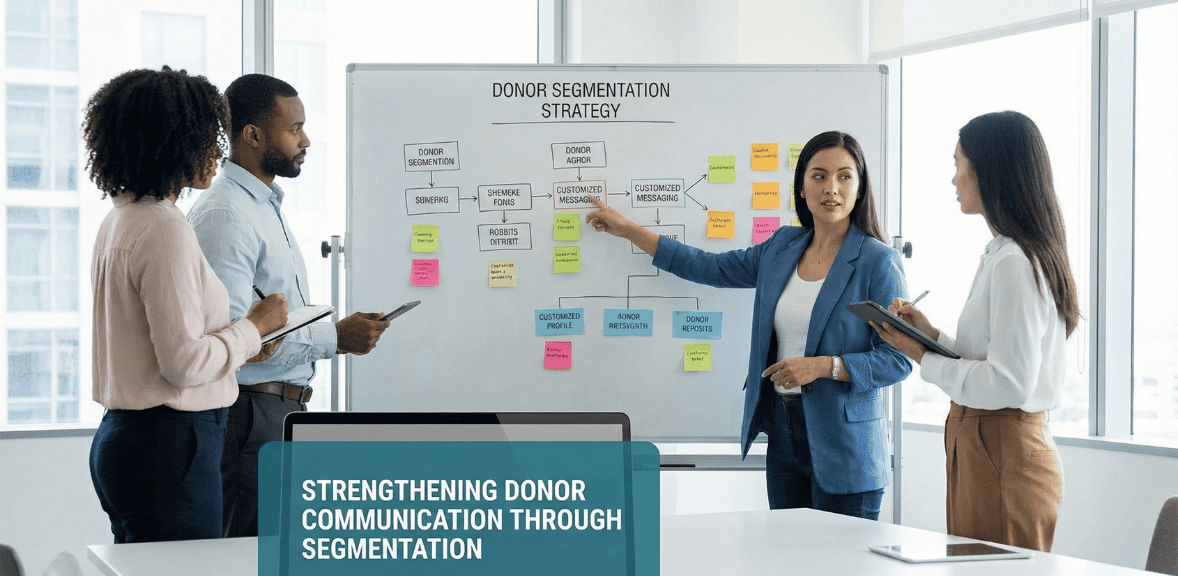
Not all supporters are the same, and treating them as if they are can weaken engagement. Segmentation allows nonprofits to tailor messages based on who people are and how they’ve interacted with the organization.
Why Segmentation Improves Engagement
When emails feel relevant, people are more likely to open them and take action. A long-time donor may appreciate a deeper impact update, while a new subscriber might need more context about the mission. Volunteers often prioritize different information than donors do, even when they support the exact cause.
Segmentation doesn’t need to be complex to be effective. Even basic groupings can significantly improve email engagement.
Examples of valuable segments include:
- Donors versus non-donors
- First-time donors versus repeat donors
- Event attendees versus general subscribers
Personalization That Feels Respectful
Personalization goes beyond using a first name. Referencing a recent donation, a program someone supports, or a location they’re connected to shows that your organization pays attention.
Many nonprofits rely on donor management systems, such as Cloud Donor Manager, to keep supporter data organized and make simple personalization easier without adding extra work. When data is used thoughtfully, it strengthens relationships rather than feeling intrusive.
Finding the Right Timing and Frequency

One of the most common concerns nonprofits have is how often to send emails. Too many messages can lead to unsubscribes, while too few can cause supporters to forget about your work.
Establishing a Sustainable Rhythm
For many US-based nonprofits, a monthly email newsletter, combined with occasional campaign or event emails, is a strong starting point. This rhythm keeps supporters informed without overwhelming them.
Fundraising emails should feel purposeful, not constant. When supporters regularly receive value through stories and updates, they are more receptive to a donation request.
Timing and Testing
There is no universal “best” time to send emails, but many organizations see solid results by sending messages midweek in the morning. Testing different days and times helps identify what works for your audience.
Watch unsubscribe rates closely. A sudden increase often signals that frequency or content needs adjustment.
Also read: Moving from Manual to Automated Donor Communications (Without Losing the Personal Touch)
Measuring Success and Improving Over Time
Email marketing works best when it’s measured and refined. You don’t need advanced analytics to make meaningful improvements—just a willingness to pay attention to a few key indicators.
Core Metrics That Matter
Open rate shows how many people open your emails and provides insight into the effectiveness of your subject lines. Click-through rate indicates whether content and calls to action resonate with users. Conversions, such as donations or event registrations, show whether emails are supporting organizational goals.
Many nonprofits see newsletter open rates in the 20-30 percent range, though results vary by audience and content. Instead of focusing solely on benchmarks, look for trends within your own data.
Using A/B Testing Thoughtfully
A/B testing involves sending two versions of an email to small segments of your list to see which performs better. This might include testing subject lines, call-to-action placement, or message length.
Small tests can lead to meaningful insights over time. The goal is not perfection but steady improvement. As your understanding of your audience grows, your nonprofit email marketing efforts become more effective and less reliant on guesswork.
Integrating Email With Your Broader Strategy
Email doesn’t exist in isolation. It works best when aligned with other communication channels and internal systems. When donor information is up to date and accessible, emails can better reflect a supporter’s history and interests.
Integrating email tools with your donor records helps ensure consistency across touchpoints. It also reduces manual work, allowing staff to focus on content and relationship-building rather than data cleanup.
Nurturing Relationships, Not Just Sending Messages

At its core, email marketing for nonprofits is about relationships. Every message is an opportunity to reinforce trust, demonstrate impact, and remind supporters why they chose to get involved.
Strong donor communication respects the reader’s time, acknowledges their role in the mission, and provides clear value. Over time, these small moments of connection add up, creating a foundation for sustained engagement and support.
Whether you’re launching your first email campaign or refining an existing strategy, focusing on relevance, clarity, and consistency will help your emails stand out and strengthen donor relationships for the long term.
Conclusion: Turning Email Into a Lasting Donor Relationship
Effective nonprofit email marketing is not about sending more messages—it’s about sending the right messages with intention. When you build a permission-based list, write donor-centered content, personalize communication, and consistently review performance, email becomes a relationship-building tool rather than just a broadcast channel. Over time, thoughtful donor emails help supporters feel seen, valued, and connected to real impact. By focusing on clarity, relevance, and steady improvement, nonprofits can use email to strengthen trust, deepen engagement, and support sustainable fundraising for years to come.
FAQs
1. How often should nonprofits send donor emails?
Most nonprofits do well with one consistent monthly newsletter and occasional additional emails for events or fundraising. The key is balance—email often enough to stay relevant, but not so much that supporters feel overwhelmed.
2. What makes a nonprofit email campaign successful?
Successful campaigns focus on one clear goal, use compelling storytelling, and make it easy for readers to take action. Clear subject lines and donor-focused content are often more effective than long or overly detailed messages.
3. Is email still effective for fundraising in the US?
Yes. Email remains one of the most cost-effective channels for email fundraising, especially when sent to an engaged, permission-based list. Donors often prefer email because it allows them to respond at their convenience.
4. Do small nonprofits need segmentation?
Even simple segmentation can make a noticeable difference. Separating donors from volunteers or new subscribers from long-term supporters helps ensure messages feel relevant and respectful, improving overall email engagement.
5. How can nonprofits personalize emails without extra work?
Using basic supporter data—such as names, donation history, or interests—can go a long way. Many nonprofits rely on donor management systems like Cloud Donor Manager to keep information organized and support more personalized donor communication without adding complexity.