

Local Community Collaborations: Partnering with Other Organizations for Greater Impact
Small nonprofits across the United States often feel pressure to do more with less. Limited staff, tight budgets, and growing community needs can make it challenging to independently expand programs or fundraising efforts. That is where nonprofit community partnerships and local collaboration become powerful tools. When organizations work together within their communities, they can amplify impact, reach new supporters, and strengthen trust in ways that are difficult to achieve independently.
Local collaboration is not about giving up control or diluting your mission. It is about recognizing that many organizations are serving the same families, neighborhoods, and values, and that shared effort can lead to stronger outcomes. From collaborative fundraising initiatives to interfaith partnerships rooted in shared service goals, community-based partnerships help nonprofits move from isolated work to collective impact.
This is especially true for faith-centered and community-based organizations in the U.S., where local relationships, congregational networks, and small businesses often form the backbone of charitable support. By building intentional partnerships, nonprofits can weave a stronger support system around their mission while modeling cooperation and unity for the communities they serve.
Why Collaborate Locally?

Local collaboration allows nonprofits to extend their reach without significantly increasing overhead. When two or more organizations pool resources, they can host larger events, apply for broader funding opportunities, or serve more people than any one organization could manage alone. For example, a neighborhood food pantry partnering with a local church may be able to serve additional families by sharing volunteer teams, facilities, and outreach channels.
Nonprofit community partnerships also increase credibility. Donors and community members tend to trust organizations that are visibly connected and working together rather than operating in isolation. A joint initiative signals that organizations are thoughtful stewards of resources and committed to the community’s overall well-being, not just to their own growth.
Visibility is another significant benefit of local collaboration. When nonprofits partner with local businesses, faith groups, or other nonprofits, they gain access to new audiences. A collaborative fundraising event promoted through multiple mailing lists, social media channels, and physical locations is far more likely to attract attention than a standalone effort. In many U.S. communities, local media outlets are also more inclined to cover joint initiatives that demonstrate cooperation and broad community engagement.
Perhaps most importantly, collaboration reduces duplication of effort. Instead of multiple organizations running similar programs independently, partnerships can align strengths and fill gaps. One organization might excel at outreach, another at logistics, and another at volunteer management. Together, they create a more effective and sustainable response to local needs.
Types of Community Partnerships
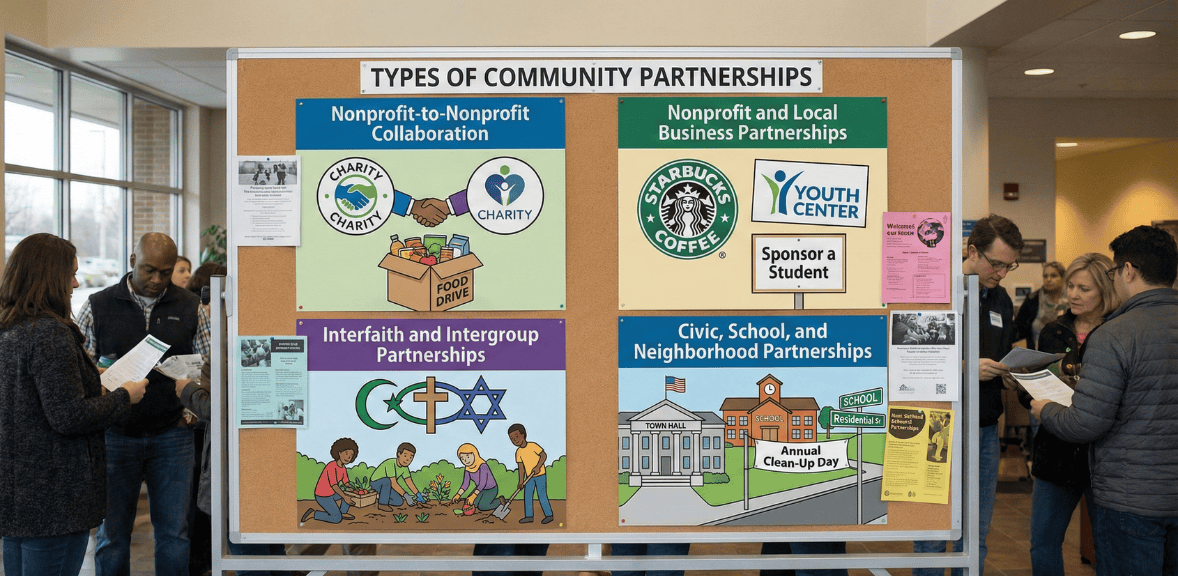
Nonprofit-to-Nonprofit Collaboration
Nonprofit collaboration is one of the most natural and effective forms of local collaboration. When two or more nonprofits work together, they can combine expertise, share operational responsibilities, and reach broader segments of the community. For example, a food assistance organization may partner with a local church or social service nonprofit to run a seasonal meal program, allowing one group to focus on food sourcing while the other manages volunteers and outreach. These partnerships reduce service duplication and help ensure that community needs are met more comprehensively.
Nonprofit and Local Business Partnerships
Partnerships between nonprofits and local businesses create opportunities for mutual benefit and community visibility. Local business support may take the form of event sponsorships, donation matching, employee volunteer days, or cause-related campaigns tied to sales. For U.S.-based nonprofits, partnering with trusted local businesses can strengthen community ties while giving those businesses meaningful ways to demonstrate civic responsibility. These relationships often introduce nonprofits to new donors who may not have engaged otherwise.
Interfaith and Intergroup Partnerships
Interfaith partnerships bring together congregations or faith-based groups from different traditions to address shared community challenges. While beliefs may differ, many faith organizations share a focus on service, compassion, and social responsibility. By collaborating on service projects or fundraising initiatives, these groups can model unity and expand volunteer and donor participation. Intergroup partnerships can also include civic associations and cultural organizations, creating broader coalitions that reflect the community’s diversity.
Civic, School, and Neighborhood Partnerships
Local schools, neighborhood associations, and civic groups often have deep community roots and strong communication networks. Partnering with these groups can help nonprofits increase awareness, recruit volunteers, and deliver programs more effectively. For example, a nonprofit might work with a school district to provide family support services or partner with a neighborhood association to host a community fundraiser. These collaborations reinforce local collaboration by embedding nonprofit work directly into the fabric of the community.
Finding the Right Partners

Successful nonprofit community partnerships begin with alignment. The most effective collaborations are built between organizations that share similar values, complementary missions, or overlapping audiences, even if their programs differ. A nonprofit focused on youth mentorship may find strong alignment with a local faith group that already serves families with children and teens.
Personal relationships often play a critical role in identifying potential partners. Board members, volunteers, and longtime donors frequently have connections to businesses, congregations, or other nonprofits. These existing relationships can open doors and help establish trust early in the conversation. In many cases, the first step toward collaboration is simply a conversation about shared challenges and goals.
When approaching a potential partner, it is essential to frame the opportunity in terms of mutual benefit. Rather than focusing solely on what your organization needs, emphasize what can be accomplished together. For nonprofits, this might mean serving more people or creating a more comprehensive program. For businesses, it could involve positive community visibility or meaningful employee engagement. For faith groups, it often centers on living out shared values through tangible action.
Clear communication from the outset helps set the tone for a healthy partnership. Being upfront about expectations, capacity, and limitations builds trust and reduces the risk of misunderstandings later. Collaboration does not require perfection, but it does require honesty and respect.
Making Collaboration Work

Once a partnership is established, thoughtful planning becomes essential. Clear goals should be defined early, whether the collaboration is focused on fundraising, service delivery, or community awareness. Each partner should understand their role and responsibilities, as well as how success will be measured.
Even informal partnerships benefit from some level of documentation. A simple written agreement outlining responsibilities, timelines, and financial arrangements can prevent confusion and protect relationships. This does not need to be overly complex, but it should reflect shared understanding and commitment.
Communication is another cornerstone of effective nonprofit collaboration. Regular check-ins help partners stay aligned and address challenges before they escalate. Flexibility is also essential, as collaborative work often requires compromise and adjustment. Being willing to listen and adapt strengthens the partnership and models the cooperation you are trying to promote.
In collaborative fundraising efforts, transparency around finances is critical. Partners should agree in advance on how costs will be covered, how proceeds will be distributed, and how donors will be acknowledged. Using a shared system or compatible tools to track donations and supporter engagement can simplify this process. Some organizations find it helpful to use donor management platforms like Cloud Donor Manager to keep records organized and ensure accurate reporting across collaborative campaigns, particularly when multiple groups are involved.
Also read: Multichannel Donor Communication Strategies for Better Engagement
Sharing the Success and Continuing the Relationship

The end of a collaborative project is not the end of the partnership. Taking time to reflect together on what worked well and what could be improved strengthens future efforts. Honest debriefing helps partners refine their approach and build confidence in working together again.
Publicly recognizing partners is essential to sustaining nonprofit community partnerships. Thanking collaborators through social media, newsletters, and community events reinforces goodwill and shows supporters that the work was truly a shared effort. When outcomes are shared transparently, such as funds raised or people served, it helps donors and community members see the tangible results of collaboration.
Sharing success stories with both audiences also expands reach. A joint message highlighting collective impact can inspire supporters to engage more deeply and attract new donors who value cooperative approaches. Transparent reporting builds trust and reinforces the idea that collaboration leads to meaningful results.
Consistency can turn a one-time collaboration into a long-term relationship. Annual joint events, recurring service projects, or ongoing interfaith partnerships can become anticipated traditions within a community. Over time, these collaborations strengthen networks and create a culture of cooperation that benefits everyone involved.
Managing ongoing relationships and shared donor engagement requires organization and clarity. Tools such as Cloud Donor Manager can support this process by helping nonprofits maintain accurate records and communicate effectively with supporters, without becoming the focus of the collaboration itself. When systems quietly support work in the background, organizations can focus on relationships and impact.
Building Stronger Communities Together

Local collaboration is not a strategy reserved for large organizations with extensive resources. In fact, it is often small nonprofits that benefit the most from nonprofit collaboration and community fundraising partnerships. By working together, organizations can stretch limited resources, increase visibility, and deepen trust within their communities.
In the U.S. nonprofit landscape, where community connection and local identity play a significant role in donor engagement, partnerships rooted in shared values are compelling. Whether through nonprofit community partnerships, local business support, or interfaith collaboration, working together helps organizations move beyond survival mode and toward sustainable impact.
Ultimately, collaboration is about recognizing that no single organization can meet every need alone. When nonprofits choose partnership over isolation, they not only strengthen their own work but also help build resilient, connected communities. That collective strength enables missions to endure and grow, even in challenging times.
Conclusion: Stronger Impact Starts with Working Together
Local collaboration is not a shortcut or a trend—it is a practical, values-driven approach to building lasting impact in the communities nonprofits serve every day. When organizations choose partnership over isolation, they unlock shared strength, deeper trust, and broader reach. Nonprofit community partnerships enable small and mid-sized organizations to demonstrate to donors, volunteers, and neighbors their commitment not only to their mission but also to the well-being of the entire community.
Whether through nonprofit collaboration, local business support, interfaith partnerships, or collaborative fundraising, working together turns limited resources into collective power. The most successful collaborations are rooted in clear communication, mutual respect, and a shared commitment to outcomes. Over time, these relationships do more than raise funds or deliver services—they create resilient networks that communities can rely on during both calm and crisis.
For nonprofits across the United States, local collaboration is an opportunity to lead by example. By choosing cooperation, transparency, and shared purpose, organizations can multiply their impact and help build communities where progress is sustained together, not carried alone.
FAQs
What are nonprofit community partnerships, and why do they matter?
Nonprofit community partnerships are collaborative relationships among nonprofits, businesses, faith groups, and civic organizations that work toward shared goals. They matter because they expand reach, reduce duplication of effort, and strengthen trust with donors and the community.
How do small nonprofits start local collaboration with limited resources?
Small nonprofits can start by leveraging existing relationships with board members, volunteers, or local organizations that share similar values. Even simple collaborations, such as co-hosting a small event or sharing volunteers, can yield meaningful results.
What makes a community fundraising partnership successful?
Successful community fundraising partnerships are built on clear expectations, shared goals, and transparent financial arrangements. When each partner understands their role and benefits, the collaboration feels balanced and sustainable.
Are interfaith partnerships effective for nonprofit work?
Interfaith partnerships can be highly effective, especially when focused on shared community needs rather than theological differences. These collaborations often resonate strongly with donors and volunteers who value unity and service across traditions.
How can nonprofits manage shared donors and campaigns in collaborations?
Clear communication and organized tracking are essential. Some nonprofits use donor management tools, such as Cloud Donor Manager, to keep records accurate and reporting clear, allowing partners to focus on relationships rather than logistics.