

Mastering Google Ad Grants: Free Advertising for Nonprofits
The Google Ad Grants program can completely change the way nonprofits connect with and engage supporters through digital channels. Nonprofit organizations can find it difficult to be noticed amidst the overwhelming competition online for attention, as they usually work with few, if any, reputable marketing dollars to assist in garnering the attention that is being sought. Through this program, nonprofits have a unique chance to compete for attention with much larger organizations without any financial investment. When this grant is used properly, it can generate regular streams of new visitors, increase donation levels, and bring attention to issues that are relevant, which will require a systematic approach to creating this awareness through an all-encompassing web marketing process.
For nonprofits in the US, understanding the details of how the Google Ad Grants program works is critical. This article explains the complete process in a straightforward manner, including information on eligibility, application, campaign development, compliance, and tracking results. The intent is to provide nonprofits with the information and tools necessary to make informed decisions and utilize Google Ad Grants to their fullest potential efficiently and effectively.
Eligibility and Application Process
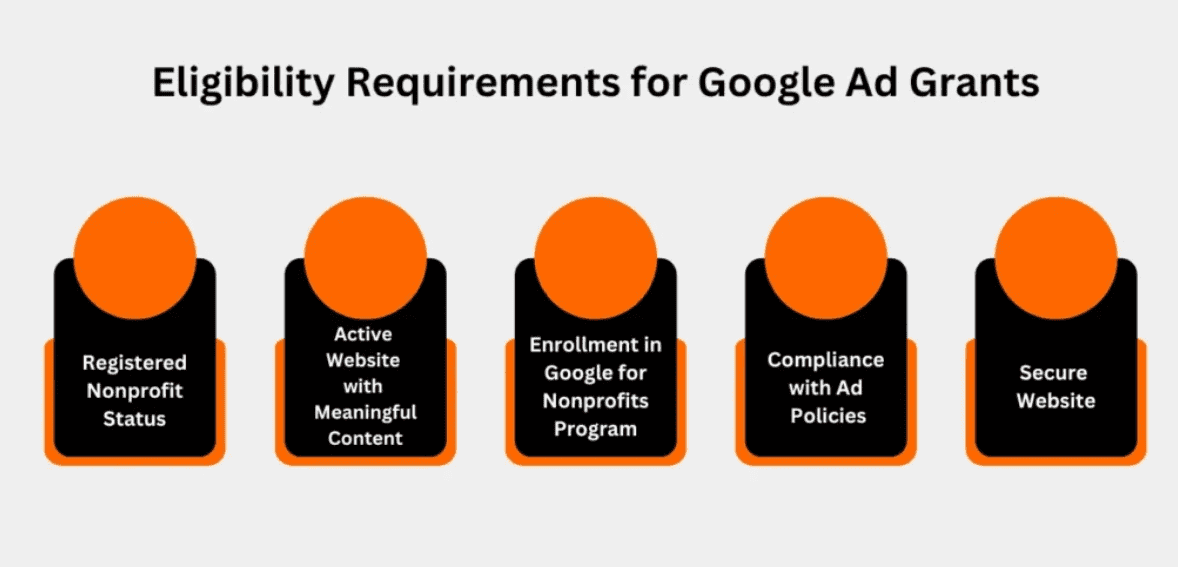
Google Ad Grants are available exclusively to federally recognized not-for-profit organizations. To be eligible for Google Ad Grants, you must have recognized 501(c)(3) status in the United States. Organizations like federal, state, or local governmental bodies; hospitals; and educational institutions are not eligible for participation in the Google Grants program.
Another important eligibility requirement is that you have a functional website. Your website must clearly state your nonprofit’s mission, programs, and impact; have original content; be easy to navigate; and have a working donation page and/or a way for visitors of your site to contact you. Google will conduct a thorough review of your website, and if it’s incomplete or outdated, you will be disqualified from receiving Ad Grants.
The first step of the application process is to enroll in Google for Nonprofit Organizations to verify your charity status and access the Nonprofit Tools. After you have been approved, you will complete a short application and agree to the rules of the program. Once you have been accepted into the Ad Grants program, your account is activated, and you can begin developing your campaigns.
How to create effective online campaigns

When a nonprofit is approved for a Google AdWords grant, it is able to create a Google Ads account and receive an advertising credit each month. The amount of the monthly advertising credit is allocated over a daily budget to help nonprofits plan for long-term advertising campaigns rather than spending all of their credit in a few days or weeks with short-term advertisements.
When creating a campaign, the nonprofit should have established measurable goals. For example, some nonprofits create their campaigns to attract donations; other nonprofits will use their campaigns to attract volunteers or promote a program or resource.
Clear campaign objectives help nonprofits track performance and measure success. The keywords used to build the campaign are very important in ensuring that a nonprofit will succeed. Nonprofits need to select keywords that accurately depict their organization’s mission and that correlate to what people are searching for online. Nonprofits do very well with keywords and phrases related to donating, volunteering, or getting help. Avoiding broad or unrelated keywords will limit the number of low-quality visitors and lessen the possibility of violating a policy.
In addition, geographic targeting is an important aspect of successful advertising. Nonprofits that are locally based should only place their advertisements within their geographic area; however, if the nonprofit is based nationally, it can expand its advertising reach, but will need to do so with caution. Successful nonprofit advertising is based on relevance, not volume.
Also Read: Community Partnerships: Collaborating with Local Businesses and Groups.
Creating Advertisement Campaigns to Engage the Appropriate Audience

When writing ad copy, it must be clear, truthful, and congruent with the selected keywords (whether your keywords are “pets” for an animal rescue org or “disaster relief” for a disaster response organization). To ensure the audience understands the organization’s mission and why the mission is important, the ad needs to convey what the organization does (very quickly).
Additionally, each ad should link directly to a relevant landing page. For example, if you want to donate, your donation-related ad should point to your donation page; if you want to volunteer, your volunteer-related ad should point to your volunteer information. This will help build trust and engagement level with your audience.
Strong ad copy typically has a clear call to action; for example, donate, learn more, or sign up. While using emotional language can add to the effectiveness, it should be used without being overly dramatic. Vague claims will detract from your credibility and likely result in a less-than-optimal performance.
The Google Ad Grant program only allows for creating text-only ads, which means every word is important. Trying out several different ads will give you a much better chance at seeing which ad(s) give you the best results. Over time, making minor changes can create significant improvements to your ad’s performance.
Meeting Google Ad Grants Requirements

Compliance with Google Ad Grants is a fundamental part of using the Ad Grants program. Google has certain policies that apply to Ad Grant accounts that do not apply to typical paid ad accounts, and if these policies are not adhered to, your Ad Grant account will be suspended.
A major component of compliance is to ensure that your Google Ads have a minimum click-through rate. If your ads are continually not receiving clicks, those ads should be either edited or put on hold. Performing regular checks will help prevent further damage to your account as well as provide some assurance that your account will remain compliant with Google.
Another common problem for organizations using Google Ad Grants is their ad keywords. Google will not allow you to use single-word keywords and does not allow you to use too general a keyword. The keywords must be relevant to your nonprofit’s mission and website content. Performing regular audits can help keep your account in compliance.
Your account must also be in an active state and targeted properly. In addition to this, your campaigns must be properly geo-targeted and receive ongoing updates. Consistent management of your Google Ad Grants will help ensure that you are in compliance with their policies and that your campaigns continue to run effectively.
Improving Outcomes and Assessing Performance

After campaigns are compliant and operational, optimization is the next step. Performance data shows which keywords or ads will generate actions such as donations or volunteer sign-ups.
You can test different ad headlines and descriptions by gradually introducing them into existing ads to see if either change will result in improved engagement rates. Consistent monitoring enables a nonprofit to know what items are working and what items may need adjusting.
Connecting Google Ads to analytics will assist a nonprofit in tracking user behavior after someone clicks on the ad. The analytics data can also provide valuable insight into specific types of Google Ads that lead to online fundraising and those that require refinement to increase success rates.
There is no need to spend your entire monthly budget all at once. Many nonprofits begin small and increase their use of online advertising as they grow their experience with it. This method helps to reduce mistakes and allows for continued growth and success into the future.
Importance of Google Ad Grants for Nonprofit Organizations
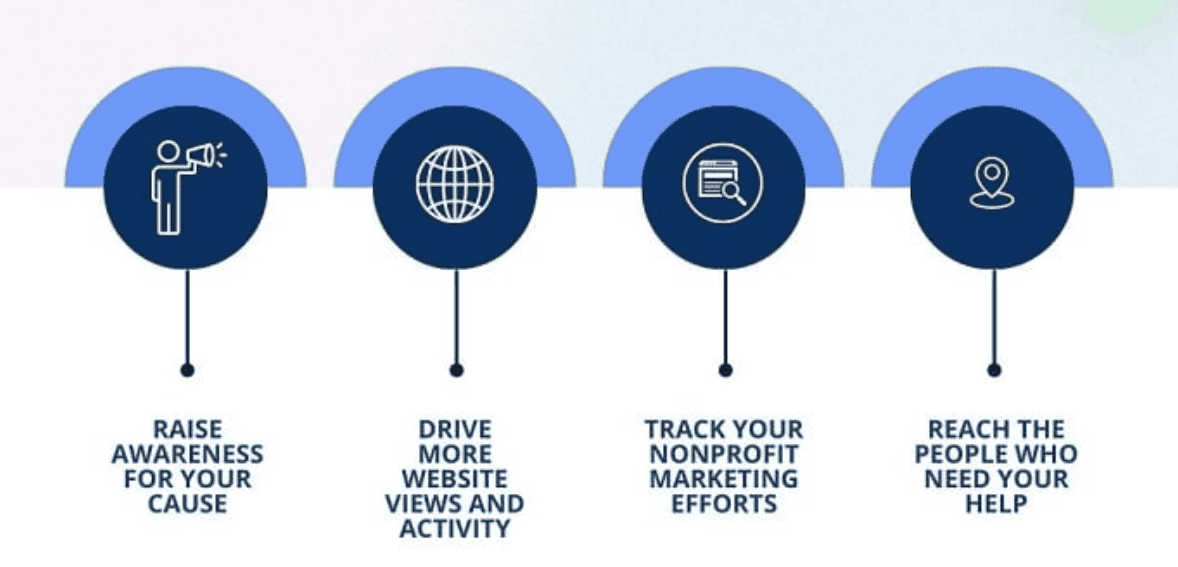
Nonprofits face barriers to marketing due to limited budgets, making it difficult for them to reach audiences. Google Ad Grants are a solution to that issue by providing nonprofits with free advertising options that help good causes discover existing offers of assistance on the Internet. They also promote awareness, establish credibility, and encourage effective partnerships when utilized appropriately.
A nonprofit organization with a small staff can have an impact by concentrating on targeted objectives and predetermined phrases. Nonprofit organizations are able to compete in the marketplace through programs like Google Ads grant programs that do not impose an additional burden on them monetarily.
Conclusion
The Google Ad Grants account offers nonprofit organizations the opportunity to develop their outreach efforts without having to spend money on advertising or marketing. This program requires organizations to be eligible, develop robust campaigns, compose effective ads, and adhere to the rules and regulations that accompany the program. Nonprofits can leverage the Google Ad Grants account, when used strategically, to support awareness and engagement for their respective missions while cultivating long-term growth. Therefore, creating mission-focused messaging and continually improving their campaigns and ads can create a meaningful impact for nonprofits and drive their organization from search traffic.
FAQ
Are there really offers from Google every month worth $10,000 in free advertising?
Nonprofits that meet the required criteria are eligible for up to $10,000 a month of advertising through Google’s Ad Network. Your credit will be given to you via the credit account on Google Ads. Daily spending limits apply to your account, as do program guidelines.
Is it hard to run Google Ad Grant campaigns?
There is a learning curve in running a grant account. With some basic training, many nonprofit organizations can operate successfully in their own grant accounts, and by only having one campaign to begin with, you can make the experience easier on yourself.
What can I advertise with the Google Grant?
You can use the grant to market your organization by utilizing Google AdWords to create a donation page, volunteer opportunities, and programs or events related to your organization, or you can generally educate the public on your mission.
If an organization does not comply with Google’s policy, what could happen?
Google can suspend your campaigns or give you warnings. In most cases, if there is an error on your grant, it can easily be resolved, and you will want to reach out to Google to get your account reviewed for compliance.
Would Google Ad Grants work for small nonprofits?
Small Nonprofits often report excellent results when utilizing the Google Grant by focusing on keywords and targeted audiences. Establishing clear goals works very well.