
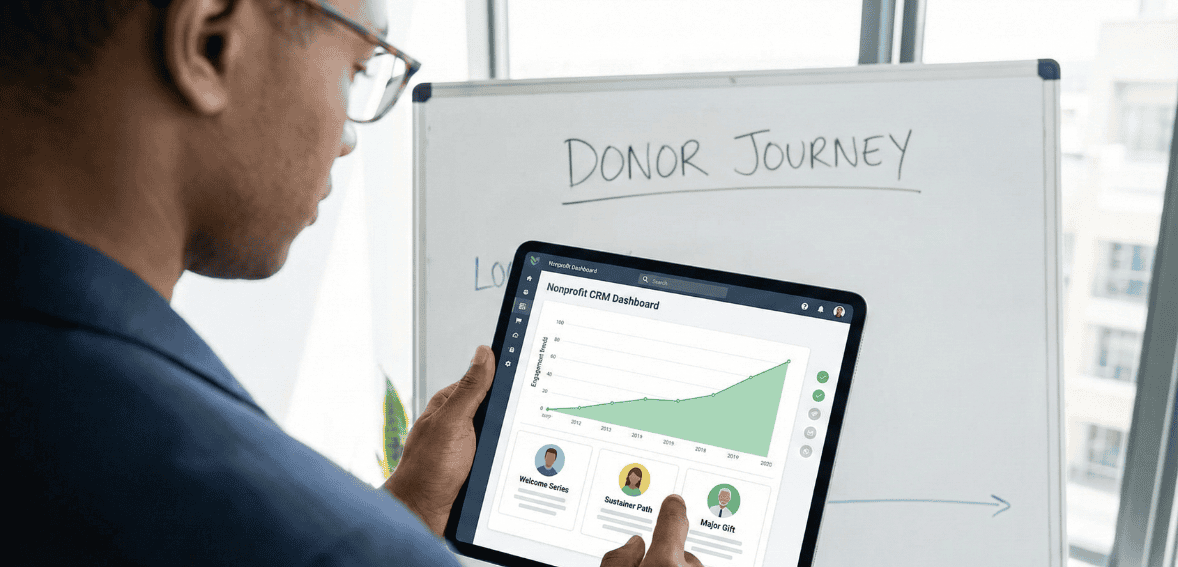
Personalized Donor Journeys: Using Your Nonprofit CRM to Increase Engagement
Modern donors expect meaningful, relevant interactions from the organizations they support. They choose nonprofits not only for mission alignment but also to feel seen, understood, and valued as individuals. When communication feels generic or disconnected from their actual interests, donors can feel like just another name on a mailing list—and disengage quickly. A thoughtfully crafted personalized donor journey changes that dynamic. It shows supporters that their actions matter, their motivations are recognized, and their involvement creates real impact. This kind of intentional relationship-building strengthens trust, encourages deeper participation, and ultimately increases donor lifetime value.
Nonprofits of all sizes can deliver this level of personalization by using a nonprofit CRM to understand where each person is in the donor journey and to respond with communication that fits their stage and interests. The nonprofit CRM tools make this approach accessible by centralizing supporter information, highlighting engagement patterns, and helping staff send timely, relevant touchpoints that feel genuine and aligned with donor motivations. When donors consistently receive communication that reflects who they are—not just what they gave—they build a stronger emotional connection to the mission and are more likely to stay involved for years to come.
Why Personalization Matters in the Donor Journey

Many nonprofits still rely on broad, one-size-fits-all communication because it is fast and easy. While convenient, this approach comes with significant limitations. When donors receive the same message regardless of their interests or prior involvement, it lacks resonance. They may read it once, but it rarely influences deeper engagement.
Personalization solves this issue by recognizing that donors have different motivations, histories, and expectations. A first-time donor who just made a $25 gift has a different perspective than someone who has given annually for five years. When communication reflects those differences, it builds trust. Supporters feel acknowledged rather than treated as a name on a list.
U.S. donors are especially accustomed to personalized experiences in commerce, media, and services. They expect nonprofits to operate with similar awareness. Personalization in the supporter journey shows respect for a donor’s time and attention and lays the foundation for long-term engagement.
Mapping the Donor Journey
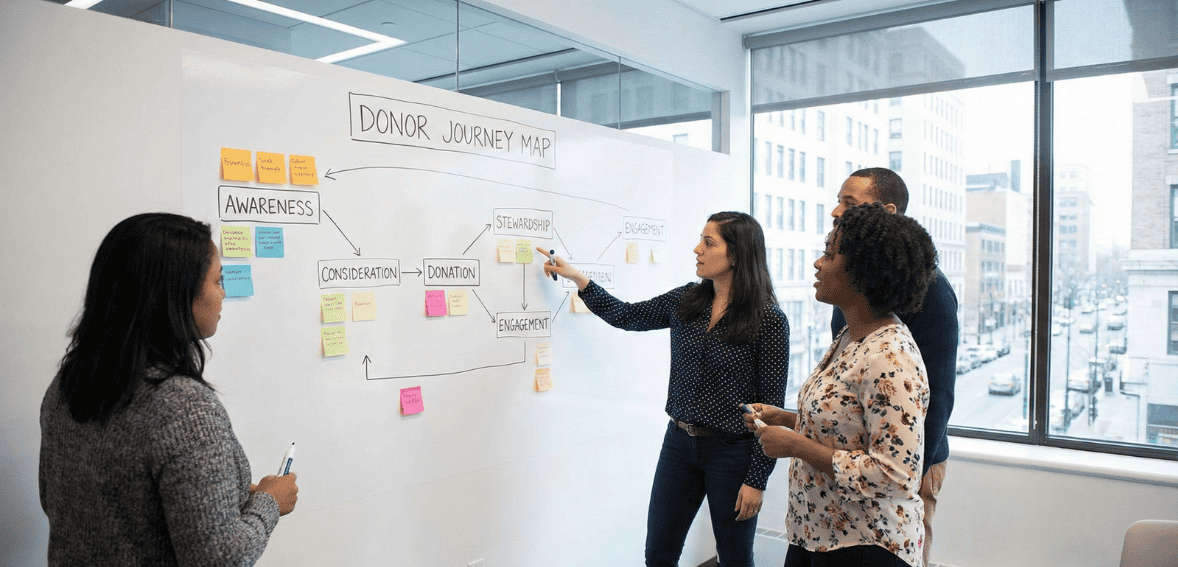
A clearly defined donor journey outlines the stages a supporter typically moves through. Mapping these stages helps nonprofits understand what donors need at each stage and how to guide them through the process.
Key Stages of the Donor Lifecycle
Most U.S. nonprofits see supporters move through a predictable pattern:
- Prospect – Someone learning about the organization.
- First-Time Donor – A newcomer who has made an initial gift.
- Repeat Donor – A donor who returns within the year or in response to a meaningful update.
- Sustaining Donor – Someone who commits to recurring or monthly giving.
- Major or Legacy Donor – A long-term supporter who makes significant contributions or includes the nonprofit in future planning.
While these stages are common across most missions, how a donor moves between them depends on the organization’s level of communication and engagement.
Touchpoints That Guide Donors Forward
A donor journey works only when the touchpoints feel relevant and intentional. Each stage of the donor lifecycle should be supported with interactions that acknowledge who the donor is, what they care about, and how they have engaged so far. This might include warm welcome emails, tailored thank-you messages, program updates aligned with specific interests, invitations to virtual or in-person events, short surveys to capture communication preferences, or anniversary notes recognizing continued support. These moments demonstrate appreciation and help donors see the tangible impact of their involvement. A nonprofit CRM makes this process far more effective by tracking which messages each supporter has received and how they have responded, allowing staff to build on previous interactions rather than repeat them—ultimately creating a journey that feels thoughtful, personal, and genuinely connected to the donor’s experience.
Understanding the Donor Journey With CRM Data
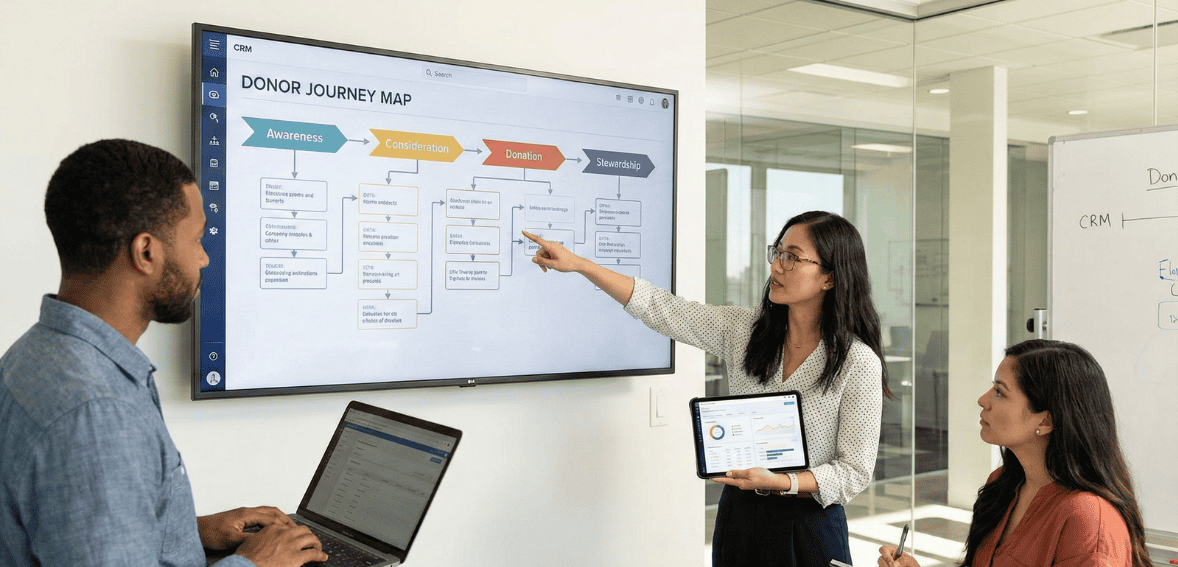
A modern CRM acts as the central nervous system for donor relationships. Without it, nonprofits are left guessing about donor interests or manually tracking interactions, which often leads to overlooked opportunities.
Building Complete Donor Profiles
CRMs store the complete picture of each supporter, which often includes:
- Giving history
- Specific programs or campaigns supported
- Events attended
- Volunteer activity
- Preferred communication channel
- Notes from staff conversations
- Survey responses or stated interests
This information helps nonprofits understand not only what donors do but also why they engage. For instance, if someone repeatedly gives to a youth program, it is reasonable to assume that updates related to that program will resonate more strongly than general appeals.
Tools like Cloud Donor Manager consolidate this information so staff can quickly see which messages match a donor’s history and preferences.
Tracking Behavior and Identifying Engagement Signals
Specific donor actions often signal increased interest or readiness to deepen their involvement, and a CRM enables precise tracking of these behaviors. Signs of engagement may include a supporter opening multiple emails about a particular program, clicking links to impact stories, registering for or attending events, making several small gifts within a short period, or reaching meaningful milestones such as a full year of monthly giving. Recognizing these patterns helps nonprofits respond thoughtfully and align with a donor’s demonstrated interests. For example, a supporter who consistently engages with environmental content might be a strong candidate for a personal invitation from the program director or an opportunity to volunteer on a conservation project.
CRM Tools for Segmentation and Automation
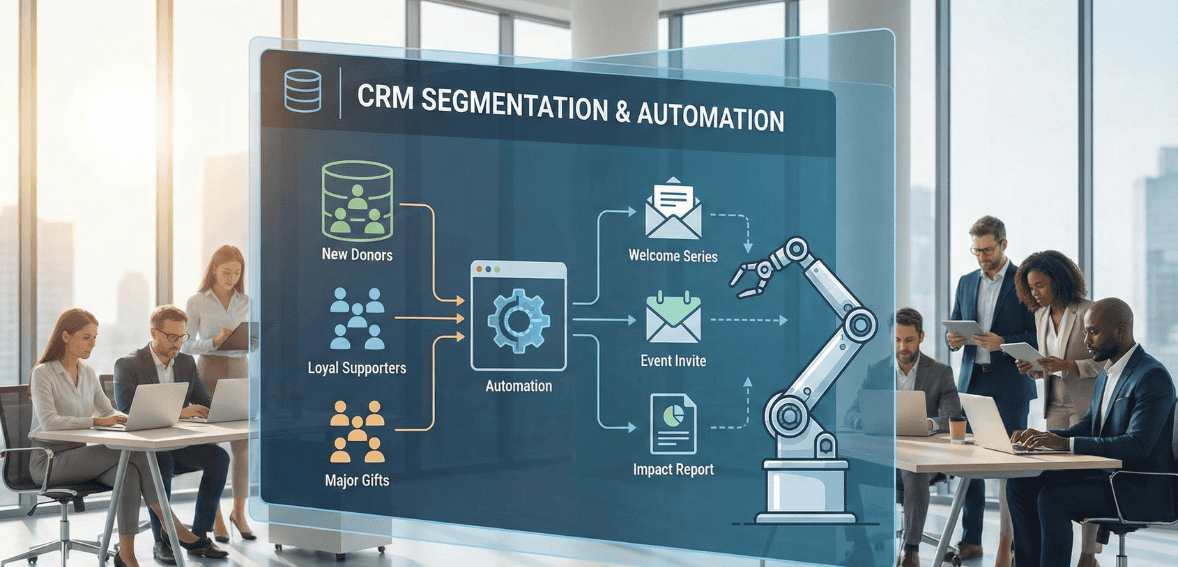
Segmentation and automation are two essential components of a personalized donor journey. They ensure that communication matches donor interests without overwhelming staff.
Building Meaningful Segments
Segmentation goes far beyond grouping donors by gift amount. A nonprofit CRM provides dozens of ways to segment based on deeper attributes.
For example, segments might be based on:
- Motivations or interests such as education, social justice, animal welfare, or environmental work
- Engagement level, including volunteers, event attendees, or digital-only supporters
- Preferred channel, such as email, text, phone call, or direct mail
- Program alignment, based on which initiatives the donor has supported
- Behavioral data, including link clicks or video views
Thoughtful segmentation ensures donors are not overwhelmed with content that doesn’t align with their motivations. It also makes messaging more meaningful and increases the likelihood of engagement.
Using Automation to Deliver Personalized Outreach
Automation supports consistent engagement by triggering communication when donors take specific actions. CRMs like as Cloud Donor Manager enable nonprofits to build workflows that streamline this process.
Examples of helpful automation include:
- A welcome message is sent immediately after the first gift
- A task for staff to send a handwritten note after a donor reaches a giving milestone
- A program-specific update was sent to donors who engaged with program-related content.
- A reminder for staff to follow up with a donor who attended an event
- An automatic invitation for recurring donors to consider a slight upgrade after several months
Automation does not replace personal communication. Instead, it creates structure so staff can focus on meaningful interactions without missing critical touchpoints.
Examples of Personalized Donor Journeys
Concrete examples clarify how segmentation and automation work together within the donor journey.
Welcome Journey for New Donors
A strong welcome series recognizes a donor’s initial contribution and lays the foundation for an ongoing relationship. It often begins with a timely thank-you message that includes a story related to the donor’s gift, followed by a note that illustrates how their support drives real impact. Many nonprofits also share a brief behind-the-scenes video to give new supporters a closer look at their work, along with a short survey to learn about communication preferences. The sequence may conclude with an invitation to a volunteer opportunity or informational session. Together, these touches help the organization better understand the donor and gently introduce them to the mission in a warm, meaningful way.
Milestone Journey
Milestones such as donor anniversaries or cumulative giving thresholds deserve recognition. These moments strengthen loyalty by showing donors that their long-term contributions matter. Automated reminders make it easy for staff to send timely acknowledgments.
Recurring Donor Upgrade Journey
After several months of steady support, recurring donors may be open to increasing their monthly contribution. An upgrade journey can encourage this by starting with a personal note that recognizes their ongoing commitment, followed by a meaningful story that illustrates the difference their gifts have already made. The sequence then leads to a clear, straightforward invitation to increase their monthly amount by a small amount. This thoughtful approach honors the donor’s generosity, offers context for the request, and presents the opportunity without creating any sense of pressure.
Lapsed Donor Journey
Supporters sometimes pause their giving for reasons unrelated to the organization. A thoughtful re-engagement sequence might include:
- A warm message expressing appreciation for past support
- A recent story demonstrating the nonprofit’s current work
- A clear, low-barrier invitation to reconnect
This approach acknowledges their history without assuming disinterest.
Measuring Whether Personalized Donor Journeys Are Working
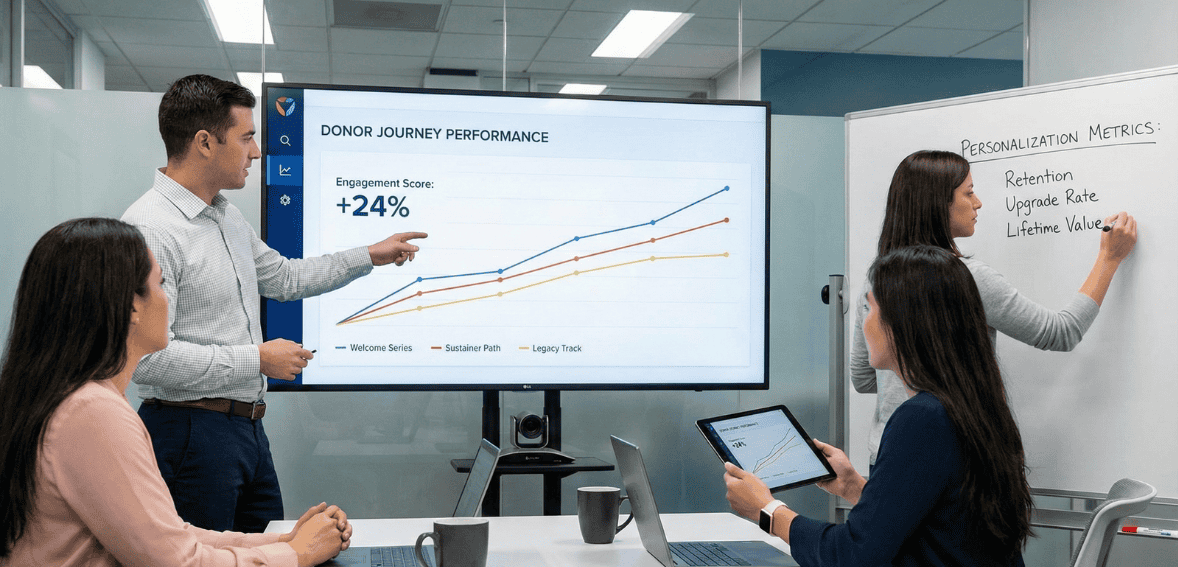
A personalized strategy must be evaluated regularly to understand its impact. CRMs provide clear metrics that help nonprofits make informed decisions.
Key Engagement Metrics
When evaluating donor engagement, it’s essential to monitor shifts in key behaviors, including email open and click rates, event participation, volunteer sign-ups, and responses to surveys or preference forms. Together, these signals reveal how well supporters are connecting with your messages and whether the content feels timely and relevant to their interests.
Fundraising Metrics That Matter
Retention and giving patterns provide a deeper view of donor engagement. Track metrics such as:
- First-time donor retention
- Frequency of repeat giving
- Monthly donor retention
- Average annual gift
- Donor lifetime value
- Time between gifts
Improvement in these metrics often reflects stronger relationships and more thoughtful communication.
A/B Testing and Iteration
Nonprofits can refine their donor journeys by testing variations of subject lines, message formats, or sending times. Using CRM reports, staff can determine which version performs better and update workflows accordingly.
Organizations also benefit from gathering direct feedback. Short surveys or conversations with board members, volunteers, and donors can reveal what supporters value most.
How Into Personalized Donor Journeys
Without endorsing any particular solution, it’s helpful to recognize that platforms such as Cloud Donor Manager can enhance a nonprofit’s ability to personalize donor outreach. These systems enable organizations to maintain donor profiles, create well-defined segments, automate communication workflows, and monitor interactions across channels. They also make it easier to spot behavior trends and evaluate how different campaigns or messages perform. By bringing all of this information together in one place, staff stay informed and can send communications that genuinely reflect each donor’s background and level of engagement.
Best Practices for Delivering Personalized Donor Journeys

To maintain a strong and consistent supporter journey, nonprofits should use a combination of strategic planning and ongoing evaluation.
Recommended practices include:
- Map the journey first, then build communication around it
- Segment intentionally, using behavioral and interest-based data.
- Automate strategically to ensure timely touchpoints.
- Prioritize clarity and conciseness in every message.
- Review performance regularly and adjust based on real data.
- Refresh stories and examples to keep content engaging.
- Keep the following steps simple and include clear calls to action.
Organizations that follow these practices often see donors respond with more profound commitment and more consistent involvement.
Conclusion
A personalized donor journey transforms the way supporters experience a nonprofit. Instead of receiving broad, impersonal appeals, donors encounter communication that reflects their motivations, acknowledges their history, and honors the role they hope to play in creating change. When nonprofits track donor behavior, segment their audiences thoughtfully, and deliver timely, relevant touchpoints, they create interactions that feel intentional rather than transactional. This level of care strengthens loyalty, encourages deeper engagement, and demonstrates respect for the donor’s commitment.
Personalization is not simply a strategy—it is a mindset that shapes how an organization views its supporters. When nonprofits embrace this approach, they move beyond basic stewardship and begin cultivating relationships built on trust, transparency, and shared purpose. Over time, this leads to higher retention, deeper engagement, and greater long-term stability.
Ultimately, a well-crafted donor journey does more than support one stage to the next. It shows them they matter. It reinforces their belief in the mission. And it turns moments of generosity into lasting partnerships that fuel the organization’s future.
FAQs
1. What is a donor journey, and why is it important?
A donor journey is the path a supporter takes from first discovering your organization to becoming a long-term donor. Mapping this journey helps nonprofits send the right message at the right time, rather than relying on generic outreach. When communications match a donor’s stage and interests, engagement increases and retention improves.
2. How can nonprofits segment donors for personalized outreach?
Segmentation groups donors by shared characteristics—such as interests, giving behavior, or preferred communication channels—so outreach feels more relevant. A nonprofit CRM helps create segments such as volunteers, event attendees, and donors who support specific programs. This approach ensures each group receives messages that reflect their motivations.
3. Which CRM features help create personalized donor journeys?
A strong CRM includes donor profiles, segmentation tools, automation workflows, and reporting dashboards. These features allow nonprofits to tailor communication to each stage of the donor lifecycle. Platforms like Cloud Donor Manager help track interactions, trigger timely outreach, and ensure supporters receive messages that reflect their history and engagement.
4. Can you give an example of a personalized donor journey?
Imagine a first-time donor who receives an immediate thank-you, followed by an impact story tied to their gift. If they click the link, the CRM adds them to a segment based on their interest and triggers a follow-up invitation to an event. Later, the donor receives a personalized appeal referencing their past involvement. This sequence builds trust and connection.
5. How do nonprofits measure whether personalized donor journeys are working?
CRMs track metrics like open rates, click rates, event attendance, repeat giving, and donor retention. Comparing segmented outreach to generic messages shows which strategies resonate most. When personalized communication drives stronger engagement or more frequent giving, it signals that the supporter journey is effectively guiding donors.