

Donor Database Systems Explained
Donor data is one of the most valuable assets a mission-driven organization has. Every name, gift, note, event registration, email response, and recurring donation tells part of a larger story: who supports your work, why they care, how they prefer to give, and what kind of relationship they want with your organization.
Without a reliable way to manage that information, fundraising becomes harder than it needs to be. Staff may search through spreadsheets, email inboxes, paper forms, payment reports, and old notes just to understand one donor’s history.
Volunteers may send duplicate messages. Development teams may miss follow-up opportunities. Leaders may struggle to answer basic questions about donor retention, campaign performance, or recurring giving.
Donor database systems help solve those problems by bringing donor records, donation history, communication notes, fundraising reports, and campaign activity into one organized place. Instead of scattered spreadsheets and disconnected records, organizations can build a clearer view of every supporter and make better decisions about stewardship, outreach, and long-term growth.
For nonprofit leaders, fundraisers, charities, churches, schools, community organizations, development teams, and volunteers, the right donor management system is more than a storage tool. It is the foundation for stronger donor engagement, more accurate reporting, better collaboration, and more thoughtful relationships.
What Are Donor Database Systems?
Donor database systems are software tools used to store, organize, update, and analyze information about donors and fundraising activity. At the most basic level, they help an organization keep track of who gave, how much they gave, when they gave, and how the organization communicated with them.
More advanced systems also support campaigns, recurring donations, donor segmentation, receipts, pledge tracking, event activity, reporting, and fundraising workflows.
A donor database system usually includes a central record for each supporter. That record may contain the donor’s name, email address, mailing address, phone number, preferred communication method, donation history, notes, relationships, household information, giving interests, and engagement activity. These donor profiles help fundraisers understand the person behind the gift.
A strong nonprofit donor database also connects giving activity to campaigns, funds, appeals, or events. For example, a donor record might show that someone gave to a holiday appeal, attended a fundraising dinner, opened several email updates, and later became a recurring donor. That complete picture helps teams communicate with relevance instead of treating every supporter the same.
Many organizations use donor database software as part of a broader fundraising CRM. A fundraising CRM focuses on relationship management, not only financial transactions. It helps staff and volunteers track conversations, follow-up tasks, donor preferences, and stewardship plans over time.
Some systems are simple and built for small teams. Others are full nonprofit CRM software platforms designed for complex fundraising operations. The right choice depends on donor volume, staff capacity, reporting needs, budget, technical comfort, and growth plans.
Useful donor database systems often support:
- Donor profiles and contact records
- Donation history and gift tracking
- Recurring donor management
- Donor communication history
- Donor segmentation
- Fundraising reports
- Campaign tracking
- Receipt generation
- User permissions
- Data imports and exports
- Integrations with payment, email, accounting, or event tools
Why Nonprofits Need a Donor Database
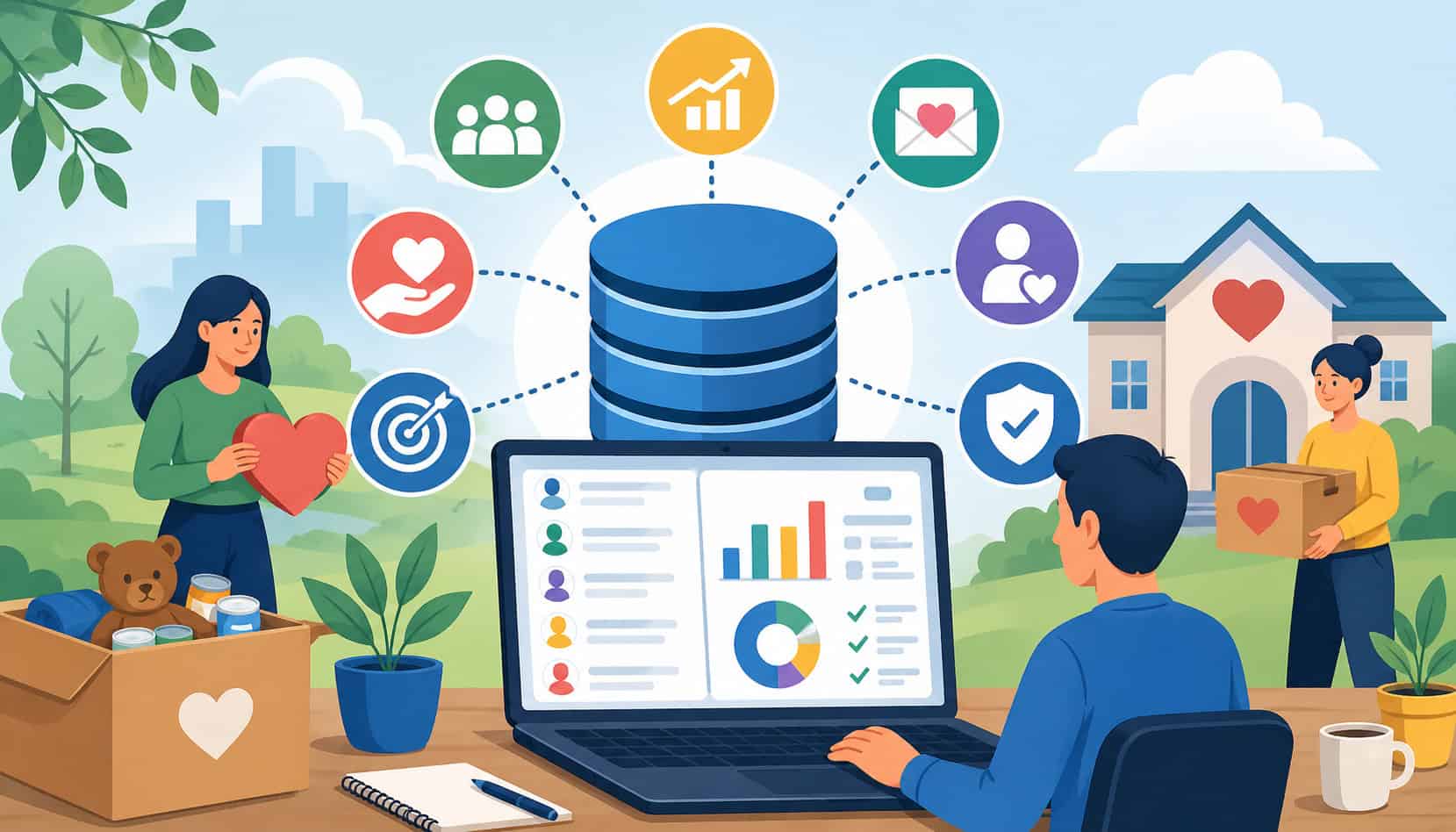
A donor database helps organizations move from reactive fundraising to organized relationship management. When donor information is scattered, teams often spend too much time looking for details and not enough time engaging supporters.
A centralized donor management system gives everyone working on fundraising a shared, reliable place to find donor records, track updates, and plan next steps.
One major benefit is organization. Donors may give online, in person, by check, through an event, or in response to a campaign. Without a donor tracking system, those gifts can end up in separate reports or spreadsheets.
A nonprofit donor database brings that activity together so staff can see complete donation history and avoid duplicate or incomplete records.
A donor database also improves trust. Donors expect organizations to remember their giving, respect their preferences, send accurate receipts, and communicate with care. When a team has clean donor records and clear communication notes, it is easier to thank donors correctly, avoid embarrassing mistakes, and show that the organization values the relationship.
Fundraising planning also becomes stronger. Instead of guessing which donors might respond to a campaign, teams can review past giving patterns, campaign results, recurring donor activity, and donor engagement. This helps fundraisers build more relevant appeals and set realistic goals.
Reporting accuracy is another important reason to use donor database systems. Leaders, boards, finance teams, and grant stakeholders often need clear fundraising reports. A good system can show totals by campaign, fund, date range, donor segment, or gift type. That saves time and reduces the risk of manual calculation errors.
For relationship management, donor database software helps teams maintain continuity. Staff and volunteers may change, but the donor history remains. Notes, preferences, past conversations, and follow-up tasks help the next person continue the relationship with context.
Key Features of Donor Database Software
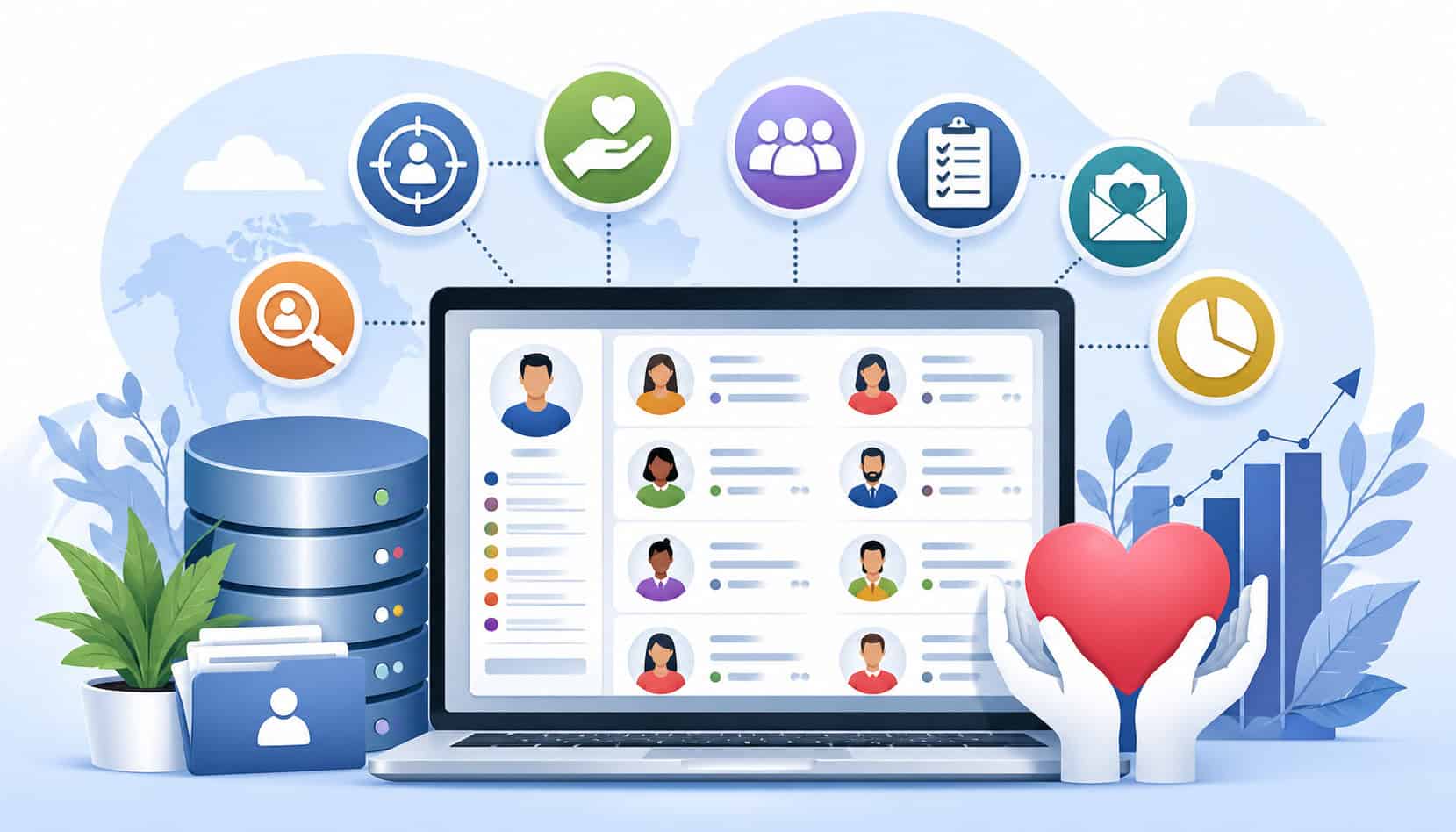
The best donor database software is not always the system with the longest feature list. It is the system that supports your fundraising workflow clearly, consistently, and securely. For many organizations, the most valuable features are the ones that reduce manual work, improve donor communication, and make reporting easier.
Start with donor profiles. Every donor management system should make it easy to create and update contact records. These records should include giving history, communication preferences, notes, tags, household or organization relationships, and engagement activity. A useful donor profile should help your team understand a supporter at a glance.
Gift tracking is another essential feature. Your team should be able to see the donation amount, date, payment method, campaign, fund designation, receipt status, and whether the donor gave once or on a recurring basis. This makes stewardship and reporting much easier.
Segmentation is especially important for donor engagement. A donor segmentation feature allows teams to group supporters by giving level, interests, location, recency, campaign participation, recurring donor status, or communication preference. This helps organizations send more relevant thank-you messages, appeals, invitations, and updates.
Reporting tools should be easy to use. Fundraising reports can help leaders understand revenue trends, campaign results, donor retention, recurring giving, lapsed donors, and major gift opportunities. Downloadable reports are useful when teams need to share data with leadership, boards, finance teams, or outside advisors.
Look for communication history as well. A donor management system should help staff see previous emails, calls, meetings, notes, and follow-up tasks. This avoids repeated questions and supports more thoughtful stewardship.
Security and permissions matter too. Not every volunteer or staff member needs full access to all donor records. User roles help protect sensitive information while still allowing people to do their jobs.
For organizations comparing tools, reviewing donation software features can help clarify which functions matter most for online donations, campaign pages, donor CRM activity, analytics, receipts, and integrations.
| Feature | What It Does | Why It Matters |
| Donor profiles | Stores contact details, preferences, notes, relationships, and engagement activity | Helps teams understand each supporter and personalize outreach |
| Donation history | Tracks gift amounts, dates, campaigns, funds, and payment methods | Makes stewardship, reporting, and donor analysis more accurate |
| Recurring donation management | Identifies and tracks ongoing donors | Helps protect predictable revenue and improve retention |
| Donor segmentation | Groups donors by behavior, interest, giving level, or status | Supports relevant appeals, thank-you messages, and invitations |
| Communication history | Records calls, emails, meetings, notes, and follow-ups | Keeps teams aligned and prevents duplicated outreach |
| Fundraising reports | Summarizes giving, campaigns, retention, and trends | Helps leaders make data-informed decisions |
| Receipts and acknowledgments | Generates or tracks donation receipts and thank-you messages | Improves donor experience and administrative consistency |
| Campaign tracking | Connects gifts to appeals, events, funds, or initiatives | Shows which efforts are working |
| User permissions | Controls who can view or edit data | Protects sensitive donor information |
| Data exports | Allows reports and records to be downloaded | Supports audits, backups, accounting, and system flexibility |
Donor Profiles and Contact Records
Donor profiles are the heart of donor database systems. A donor profile brings key details about a supporter into one record so your team can understand the relationship quickly. This usually includes name, email, phone number, mailing address, donor type, communication preferences, household information, and important notes.
Good donor profiles go beyond contact details. They also show history, campaign participation, recurring donation status, event attendance, volunteer involvement, interests, and previous communication. These details help fundraisers avoid generic outreach and build stronger donor engagement.
For example, if a donor has repeatedly supported youth programs, the donor profile should make that interest easy to see. If someone prefers email over phone calls, that preference should be visible. If a donor recently had a meaningful conversation with a board member, that note should be recorded for future follow-up.
Clean contact records also reduce mistakes. Duplicate donor records, outdated addresses, misspelled names, and missing preferences can lead to poor donor experiences. A well-maintained donor database helps your organization communicate with accuracy and respect.
Donation History and Gift Tracking
Donation history shows the financial side of a donor relationship. It helps organizations understand when a donor gave, how much they gave, which campaign or fund they supported, and whether they are a one-time or recurring donor. This information is essential for fundraising reports, acknowledgments, retention work, and future campaign planning.
Gift tracking also helps teams spot patterns. A donor who gives every December may need a different stewardship plan than someone who gives monthly.
A donor who increased their gift amount over time may be ready for a more personal conversation. A supporter who gave consistently but has not donated recently may need a thoughtful re-engagement message.
A good donor tracking system should connect each gift to relevant details, such as payment method, receipt status, campaign source, fund restriction, pledge, tribute gift, or event. These details reduce confusion later, especially when finance and fundraising teams need to reconcile records.
Donation history should also be easy to review at the donor level and across the organization. Staff should be able to see one person’s giving timeline and also run broader reports by campaign, date range, donor segment, or gift type.
Donor Segmentation and Reporting
Donor segmentation helps organizations communicate with supporters in more relevant ways. Instead of sending the same message to everyone, teams can group donors based on shared characteristics or behavior.
Common segments include first-time donors, recurring donors, lapsed donors, major donors, event attendees, volunteers, campaign donors, and donors interested in specific programs.
Segmentation improves donor communication because it allows your team to match the message to the relationship. A first-time donor may need a warm welcome and impact story. A recurring donor may need a loyalty-focused update.
A lapsed donor may need a thoughtful re-engagement message. A major donor prospect may need a personal call rather than a general email.
Reporting turns donor data into insight. Fundraising reports can show how much a campaign raised, which donor segments responded, how many donors gave again, and where recurring donations are growing. These reports help leaders plan with evidence instead of relying only on instinct.
Together, segmentation and reporting help organizations improve donor retention, prioritize staff time, and make better decisions. They also help development teams explain results to boards, leadership, and volunteers.
Donor Database Systems vs Spreadsheets
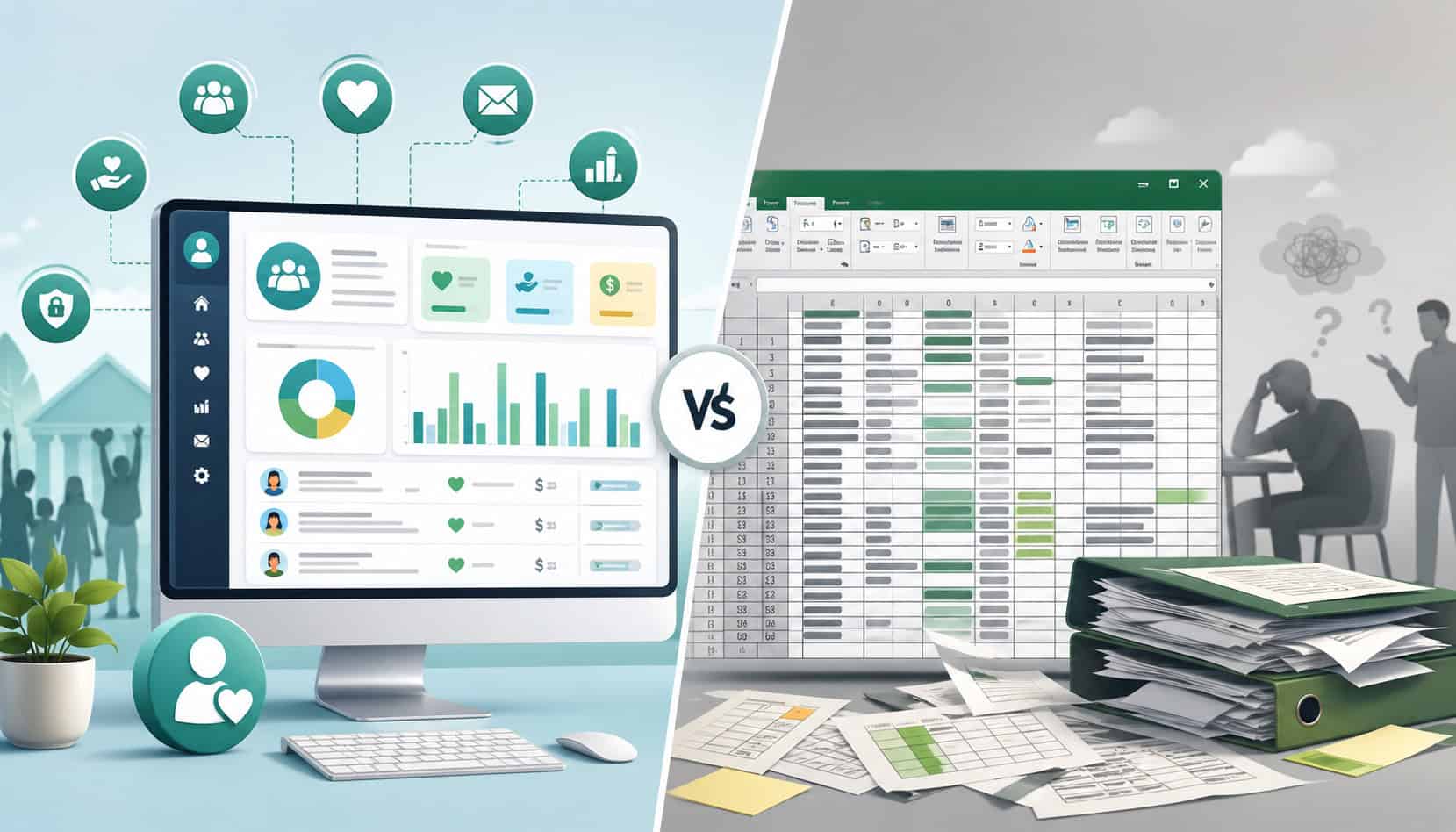
Spreadsheets are often where fundraising records begin. For a very small organization with only a handful of donors, a spreadsheet may be enough for basic tracking. It can store names, contact information, gift dates, and simple notes. Spreadsheets are familiar, flexible, and inexpensive.
However, spreadsheets become risky as donor activity grows. They depend heavily on manual updates, which increases the chance of errors. A missed row, duplicate entry, accidental deletion, or outdated file version can create confusion. When multiple staff members or volunteers use different copies, it becomes difficult to know which record is correct.
Spreadsheets also struggle with relationship history. They may show that someone gave, but they rarely provide a complete donor timeline with communication notes, campaign activity, receipts, segmentation, recurring giving, and follow-up tasks. This makes donor engagement harder to manage.
Reporting is another challenge. Basic spreadsheets can calculate totals, but fundraising reports often require more detail. Teams may need to report by campaign, fund, donor type, gift frequency, retention status, or date range. Building those reports manually can take hours and may still contain errors.
Security can also be a concern. Donor records often include sensitive contact and giving information. Spreadsheets may be shared too widely, stored in personal folders, or downloaded to unsecured devices. A donor management system with user permissions provides better control.
Collaboration is usually easier in donor database systems. Staff can update donor records, add notes, assign follow-up tasks, and view current information in one place. This reduces confusion and helps teams work from the same source.
That does not mean every organization must upgrade immediately. Spreadsheets may work during the earliest stage. But when donor lists grow, recurring donations increase, campaigns multiply, or reporting becomes more complex, donor database systems become a practical necessity.
How Donor Database Systems Improve Fundraising
Fundraising improves when teams understand donors better. Donor database systems give organizations the information needed to personalize outreach, prioritize follow-up, identify opportunities, and measure results. Instead of treating fundraising as a series of disconnected appeals, teams can build a more consistent relationship-based strategy.
Personalization is one of the clearest benefits. When donor records include giving history, interests, communication preferences, and engagement activity, staff can write messages that feel relevant.
A donor who supports emergency relief may receive a different update than someone who gives to education programs. A recurring donor may receive a message recognizing their ongoing commitment instead of a standard appeal.
Donor database software also helps identify major gift opportunities. Giving patterns, event attendance, volunteer involvement, and engagement notes can reveal supporters who may be ready for deeper involvement. A fundraising CRM can help development teams track cultivation steps, assign relationship owners, and plan personal outreach.
Campaign planning becomes stronger when teams can review past performance. Fundraisers can see which appeals worked, which segments responded, which channels performed well, and which donors upgraded or lapsed. This helps organizations refine messaging and allocate effort more wisely.
Recurring donations are easier to grow and protect when they are visible in the system. A donor management system can help teams identify recurring donors, monitor changes, and create stewardship plans that recognize their consistency.
Retention is another major benefit. Keeping existing donors engaged is often more efficient than constantly finding new donors. Strong donor records help teams thank supporters on time, follow up after campaigns, and re-engage donors who have not given recently.
Organizations evaluating online giving workflows may find it useful to review how a donation platform works when thinking through donor-covered fees, recurring options, and connected fundraising activity.
Better Donor Follow-Up
Timely follow-up can turn a transaction into a relationship. Donor database systems help teams send thank-you messages, receipts, updates, and next-step communications with better timing and more context. When follow-up depends on memory or scattered notes, donors can be missed.
A donor management system can show recent gifts, communication history, assigned tasks, and important notes. This helps staff see who needs a thank-you call, who should receive a handwritten note, who requested more information, and who may be ready for another conversation.
Follow-up is especially important after first gifts, major gifts, event attendance, pledge commitments, and recurring donation signups. A donor timeline helps teams understand what happened and what should happen next. This creates a more consistent stewardship experience.
Communication history also prevents awkward repetition. If one staff member already called a donor, another team member can see the note. If a donor asked not to receive phone calls, that preference can be respected. These details build trust.
Smarter Campaign Planning
Campaign planning improves when fundraisers have access to reliable data. A donor database system can show which campaigns performed well, which donors responded, what gift amounts were common, and which segments were most engaged. That information helps teams build stronger appeals.
Past giving data can guide audience selection. For example, donors who supported a similar program may be a good audience for a related campaign. Recurring donors may need a stewardship update rather than a direct upgrade request. Lapsed donors may need a re-engagement message that acknowledges the time since their last gift.
Engagement history also matters. A donor who attends events, opens emails, volunteers, and gives occasionally may be more engaged than gift totals alone suggest. A fundraising CRM helps teams see those signals and plan outreach accordingly.
Campaign tracking also helps after the appeal ends. Teams can review total revenue, average gift, donor retention, new donors, recurring donor conversions, and response by segment. These insights make future campaigns more focused and effective.
How to Choose the Right Donor Management System
Choosing the right donor management system starts with understanding your organization’s real needs. A small community organization with a few hundred donors may not need the same tool as a large development office managing multiple campaigns, events, grants, recurring donations, and board relationships. The best system is the one your team can use consistently.
Begin with organization size and donor volume. How many donor records do you have now? How quickly is your list growing? Do you need household records, organization records, volunteer records, or member records? A system should fit your current workload while allowing room for reasonable growth.
Budget is another factor. Consider not only subscription costs, but also setup fees, payment processing costs, training time, data migration, integrations, and staff capacity.
A system that looks inexpensive may become costly if it requires heavy manual work or outside support. At the same time, a feature-heavy system may be unnecessary if your team only needs core donor records, gift tracking, receipts, and reports.
Reporting needs should guide the decision. Make a list of must-have reports, such as campaign totals, donor retention, recurring donations, lapsed donors, fund totals, and monthly giving summaries. Ask whether the system can create these reports easily.
Usability is critical. Staff and volunteers are more likely to keep donor records updated when the system is intuitive. Complicated software can lead to inconsistent data entry, which weakens the value of the database.
Security should not be overlooked. Look for user permissions, secure access, reliable backups, and responsible handling of donor information. Sensitive donor records should be protected.
Integrations may also matter. Many organizations need donor database software to connect with donation forms, payment tools, accounting software, email platforms, event registration systems, or websites. Connected tools reduce duplicate entry and improve data accuracy.
When comparing cost models, it can be helpful to review donation software pricing considerations as part of a broader evaluation of platform fees, monthly fees, processing costs, and donor-covered fee options.
Match the System to Your Fundraising Workflow
A donor tracking system should fit how your organization already collects donations, communicates with donors, sends receipts, and reports results. If your fundraising includes online donations, in-person gifts, events, recurring gifts, pledges, and campaigns, your system should support those workflows without constant workarounds.
Start by mapping your current process. What happens when someone gives online? Who sends the receipt? Where is the gift recorded? How are campaign results tracked? Who follows up with first-time donors? How are recurring donors stewarded? Where do notes from donor conversations go?
Once you understand the workflow, compare systems against it. A good donor management system should reduce steps, not add them.
For example, if online gifts can flow directly into donor records, your team avoids manual entry. If receipts are generated automatically, staff save time. If campaign activity is connected to donation history, reporting becomes easier.
The right system should also support collaboration. Staff, volunteers, board members, and development teams may all play different roles in fundraising. User permissions and clear activity tracking help everyone work together without creating confusion.
Check Ease of Use and Training Needs
Ease of use can determine whether a donor management system succeeds. Even powerful nonprofit CRM software will fail if staff and volunteers avoid using it. A system should be simple enough for daily use and structured enough to keep donor records accurate.
Training needs vary by team. Some organizations have experienced development staff. Others rely on volunteers, part-time administrators, or rotating committee members. If many users are not technical, the system should have clear navigation, simple data entry, easy search, and understandable reports.
Consider how quickly a new user can complete common tasks. Can they find a donor record? Add a note? Enter a gift? Pull a basic report? Update contact information? Create a segment? If these tasks require too many steps, adoption may suffer.
Training should also include data standards. Users need to know how names should be entered, when to create a new record, how to tag interests, where to add notes, and how to avoid duplicates. Software helps, but consistent habits make the database reliable.
Common Mistakes to Avoid With Donor Database Software
A donor database can greatly improve fundraising, but only when it is implemented thoughtfully. Many problems happen not because the software is bad, but because the organization does not define how the system should be used.
One common mistake is choosing too many features too soon. Advanced automation, complex dashboards, custom workflows, and deep integrations can be useful, but they may overwhelm a small team. Start with the essentials: clean donor records, accurate gift tracking, receipts, segmentation, communication notes, and core reports.
Another mistake is skipping data cleanup before migration. If old spreadsheets contain duplicate donors, outdated addresses, inconsistent names, and unclear gift records, importing them into a new system can carry those problems forward. Clean data before moving it whenever possible.
Failing to define user roles is also risky. Not every user needs the same access. Volunteers may only need limited views, while administrators may need full permissions. Clear roles protect donor information and reduce accidental changes.
Training is often underestimated. Staff may receive a quick introduction but not enough guidance on daily use. Without training, users may enter data inconsistently or avoid the system altogether.
Ignoring data exports is another issue. Organizations should know how to download donor records and reports when needed. Data portability matters for audits, backups, accounting, and future system changes.
Security should never be an afterthought. Donor records may include contact details, giving amounts, notes, and other sensitive information. Strong passwords, user permissions, careful sharing practices, and regular review of access are important.
Duplicate records can also damage database quality. When one donor appears under multiple names or email addresses, giving history becomes fragmented. This can lead to inaccurate reports and poor stewardship.
Best Practices for Managing Donor Data
Managing donor data well requires consistent habits. A donor database system is only as useful as the information inside it. Clean, complete, and current donor records help organizations communicate better, report accurately, and build stronger relationships.
Start by standardizing donor names. Decide how households, organizations, couples, titles, nicknames, and formal names should be entered. Consistency makes searching, receipts, letters, and reports easier.
Merge duplicates regularly. Duplicate donor records are one of the most common database problems. They can split donation history, confuse staff, and lead to duplicate mailings. Schedule a regular duplicate review, especially after imports, events, and campaigns.
Record communication notes with care. Notes should be helpful, respectful, and relevant to the donor relationship. Include details such as communication preferences, interests, meeting summaries, follow-up commitments, and important context.
Use tags or segments thoughtfully. Tags can identify interests, campaigns, volunteer roles, event attendance, giving level, or communication preferences. Avoid creating too many tags without a plan. A cluttered tagging system becomes hard to use.
Update contact details whenever new information appears. Returned mail, bounced emails, donor replies, event registrations, and conversations can all reveal changes. Keeping contact records current improves donor communication.
Back up and export data as needed. Even cloud-based systems should have clear data export options. Regular exports can support internal recordkeeping and provide peace of mind.
Review fundraising reports consistently. Monthly or quarterly reviews can reveal trends in donor retention, recurring giving, campaign performance, and lapsed donors. Reports are not only for leadership; they should inform daily fundraising decisions.
Protect sensitive information. Limit access, use strong login practices, avoid unnecessary downloads, and train users on responsible data handling. Donor trust depends on careful stewardship of information as well as money.
For teams looking for ongoing fundraising education, nonprofit fundraising insights can be useful for topics such as board fundraising, community partnerships, grants, and donor engagement.
When to Upgrade Your Donor Tracking System
Many organizations begin with simple tools. That is normal. But there comes a point when spreadsheets, basic contact lists, or disconnected payment reports make fundraising harder. Knowing when to upgrade can save time, reduce errors, and improve donor relationships.
One clear sign is a growing donor list. As the number of donor records increases, it becomes harder to track contact details, donation history, communication notes, and segmentation manually. A larger list also increases the risk of duplicates and outdated records.
Recurring donations are another sign. Recurring donors need careful stewardship because they provide reliable support over time. A donor management system can help track recurring donor status, payment changes, upgrade opportunities, and special recognition.
Multiple campaigns also create complexity. If your organization runs annual appeals, events, online campaigns, capital efforts, memorial gifts, and program-specific appeals, tracking results in spreadsheets can become messy. Campaign tracking inside a donor database provides clearer reporting.
Reporting complexity often pushes organizations to upgrade. If monthly reports require hours of manual sorting, formulas, and cross-checking, a stronger system may save significant time. Leaders need accurate information, and staff need tools that make reporting manageable.
Staff collaboration is another factor. When more than one person manages fundraising, a shared system becomes important. Donor notes, tasks, receipts, and updates should not live only in one person’s inbox or personal spreadsheet.
Donor retention goals may also require better tools. To improve retention, teams need to know who gave before, who gave again, who lapsed, and which donors are most engaged. A donor database makes these patterns easier to see.
A final sign is donor experience. If supporters receive duplicate messages, delayed receipts, incorrect names, or irrelevant appeals, your system may be holding your team back.
FAQs
What is a donor database system?
A donor database system is software that helps organizations store, organize, and manage donor information. It usually includes donor profiles, contact details, donation history, communication notes, recurring donation records, campaign activity, and fundraising reports.
What is the difference between donor database software and a CRM?
Donor database software focuses on storing and tracking donor records, gifts, and fundraising information. A CRM usually has a broader focus on relationship management, communication history, tasks, segmentation, and donor engagement.
Can small nonprofits use donor database systems?
Yes. Small organizations can use donor database systems to improve organization, reduce manual work, track gifts, manage donor records, send receipts, and build better donor relationships.
What information should be stored in donor records?
Donor records should include names, email addresses, phone numbers, mailing addresses, communication preferences, donation history, campaign activity, receipt status, notes, relationships, interests, and recurring donor status.
How do donor database systems help fundraising?
Donor database systems help fundraising by making donor information easier to use. Teams can personalize outreach, identify recurring donors, find lapsed donors, review campaign performance, track follow-up tasks, and create fundraising reports.
Are spreadsheets enough for donor tracking?
Spreadsheets may work for very small organizations with simple donor tracking needs. However, as donor lists, campaigns, recurring donations, and reporting needs grow, spreadsheets can become risky because of duplicate records, manual errors, limited reporting, and collaboration issues.
What features matter most in donor management software?
The most important features include donor profiles, donation history, gift tracking, donor segmentation, recurring donation management, communication history, receipts, campaign tracking, fundraising reports, user permissions, integrations, and data exports.
How often should donor data be updated?
Donor data should be updated whenever new information becomes available, such as new gifts, changed contact details, event attendance, donor conversations, bounced emails, returned mail, or updated communication preferences.
Conclusion
Donor database systems help organizations bring order, clarity, and strategy to fundraising. They organize donor records, track donation history, store donor profiles, improve donor communication, support donor segmentation, and make fundraising reports easier to create and trust.
For nonprofit leaders, fundraisers, churches, schools, charities, community organizations, development teams, and volunteers, the right donor management system can reduce manual work and strengthen donor relationships. It helps teams move beyond scattered spreadsheets and disconnected records toward a more reliable, relationship-focused approach.
The best system is not always the biggest or most complex. It is the one that fits your current needs, supports your fundraising workflow, protects donor information, and gives your team room to grow.
When donor records are accurate and easy to use, organizations can thank supporters more thoughtfully, plan campaigns more confidently, and build long-term donor relationships with greater care.