
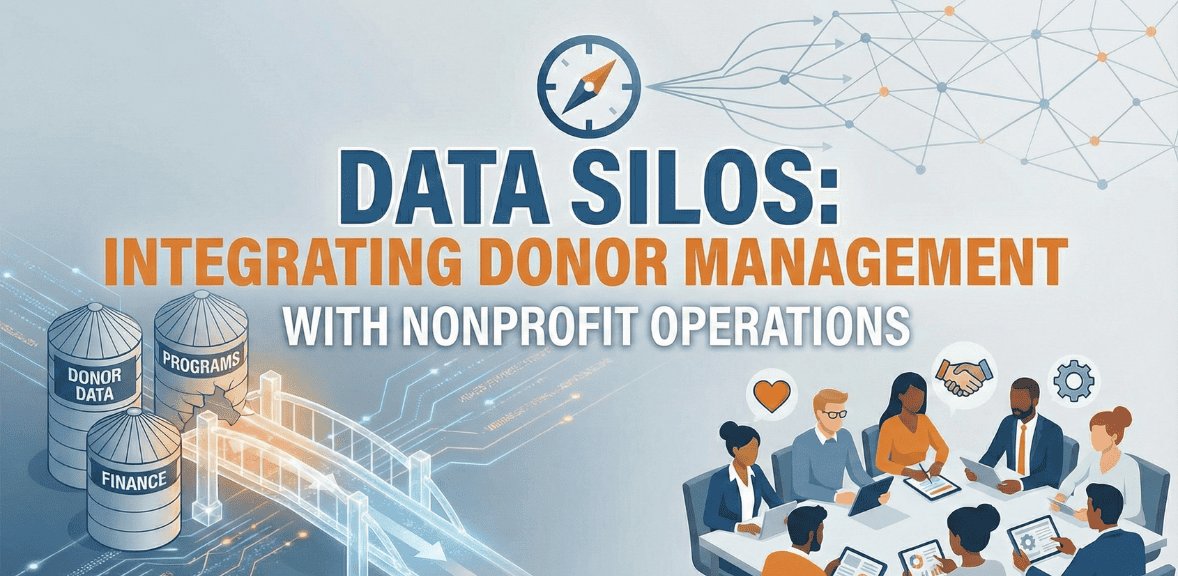
Breaking Data Silos: Integrating Donor Management with Nonprofit Operations
Many US nonprofits invest heavily in donor management systems but still struggle with inefficiency behind the scenes. Fundraising teams track donors in a CRM, finance teams manage transactions in accounting software, program staff document outcomes in spreadsheets, and communications teams maintain separate email lists. When these systems do not connect, donor data becomes fragmented. This lack of donor management integration creates delays, duplicate work, and missed opportunities to serve donors and communities better.
Integrating donor management with broader nonprofit operations is no longer a “nice to have.” For organizations facing tighter budgets, higher donor expectations, and increased compliance requirements, integration is a practical way to work smarter. By connecting systems and encouraging cross-department collaboration, nonprofits can reduce errors, save staff time, and gain clearer insight into what is actually working.
How breaking data silos through CRM integration improves nonprofit efficiency, what systems should be connected, and how organizations can approach integration thoughtfully—without overcomplicating the process.
The Silo Problem in Nonprofit Operations

What Are Data Silos?
A data silo occurs when information is stored in a single system or department and is not easily shared with others. In nonprofits, silos often form unintentionally as teams adopt tools to solve immediate needs.
Common examples include:
- Development teams using a donor CRM
- Finance teams using standalone accounting software
- Program teams tracking outcomes in spreadsheets or case management tools
- Communications teams managing email lists separately
Each system may work well on its own, but without integration, they do not reflect the complete picture of the organization.
How Silos Hurt Efficiency and Accuracy
When donor management systems are isolated from nonprofit operations, several problems arise. Address updates may be entered into the CRM but not shared with communications, resulting in returned mail. Donation totals may appear different in fundraising and finance reports because data is manually re-entered. Staff spend hours exporting and reconciling files instead of focusing on mission-driven work.
Silos also create strategic blind spots. Fundraisers may not know which programs need urgent funding. Program leaders may lack visibility into donor interests. Leadership struggles to answer basic questions quickly, such as how fundraising performance aligns with program spending.
These inefficiencies are not caused by staff effort or intent. They are symptoms of disconnected systems and processes.
Benefits of Donor Management Integration
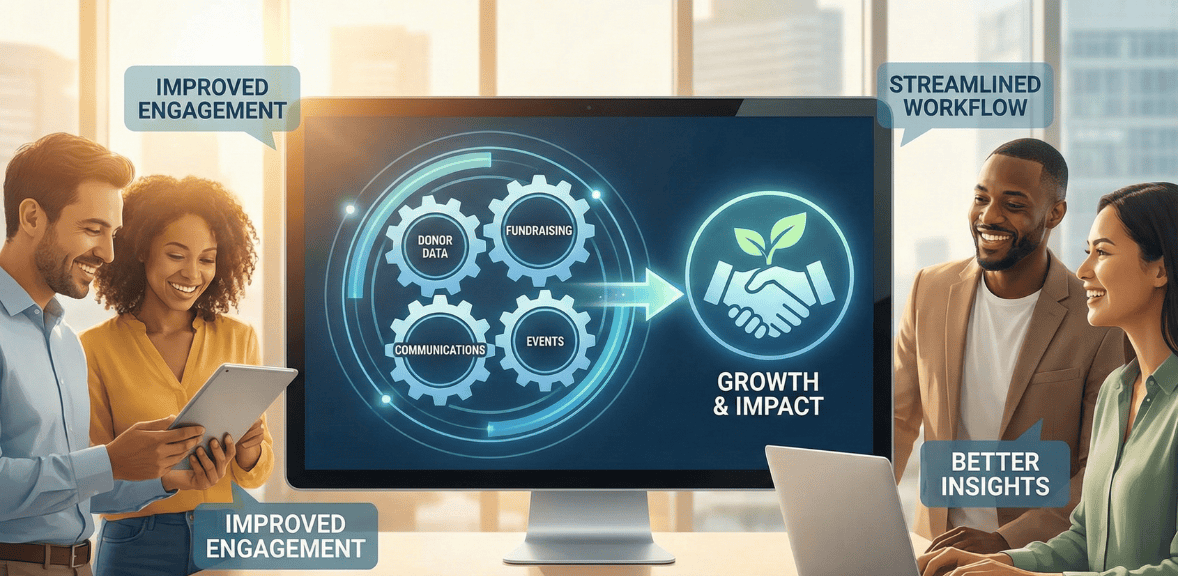
Breaking down silos through donor management integration produces tangible improvements across nonprofit operations.
A Single Source of Truth
Integration allows all departments to reference the same donor and transaction data. When systems are connected:
- Updates made in one place are reflected elsewhere
- Staff no longer debate which report is “correct.”
- Decision-making is based on consistent information
This shared visibility builds trust in data and reduces internal friction.
Time Savings and Reduced Manual Work
Manual data entry is one of the biggest drains on nonprofit efficiency. Integrating a donor CRM with accounting or email tools allows information to move automatically between systems. For example, when a donation is recorded in the CRM, it can appear in accounting without re-entry. This reduces workload and lowers the risk of errors.
Over time, even small efficiencies add up. Hours saved each month translate into more capacity for donor stewardship, grant writing, or program delivery.
Better Donor Experience
Donors interact with nonprofits across multiple touchpoints: giving online, attending events, volunteering, receiving emails, or calling the office. Integration ensures these interactions are connected.
When communications teams can see recent donations or volunteer activity, outreach becomes more relevant. Donors are less likely to receive redundant messages or poorly timed appeals. A smoother experience reinforces trust and professionalism.
Improved Insights and Planning
Integrated systems make it easier to connect fundraising data with program outcomes. Leadership can see which initiatives attract support, how donor behavior changes over time, and whether resources are aligned with priorities.
This holistic view supports more thoughtful planning and faster adjustments, especially during periods of rapid change or crisis response.
What to Integrate and How

Not every system needs to be connected at once. Successful tech stack integration focuses on the most impactful connections first.
CRM and Accounting Integration
This is often the highest priority. Synchronizing donor management systems with accounting software simplifies reconciliation and financial reporting. Donations entered by fundraising staff flow directly to finance, reducing delays and discrepancies.
Integration does not eliminate financial oversight. Instead, it ensures that finance teams work with accurate, timely data while maintaining appropriate controls.
CRM and Email Marketing Integration
Email platforms are a primary communication channel for US nonprofits. Integrating the donor CRM with email tools ensures contact information, preferences, and segments stay current.
This connection allows communications teams to:
- Automatically update mailing lists
- Target messages based on giving history or engagement
- Reduce reliance on repeated CSV imports
The result is more relevant communication with less administrative effort.
CRM and Program or Volunteer Systems
Some nonprofits track program participation, services delivered, or volunteer hours in separate systems. Integrating these with donor management allows organizations to understand how donors engage beyond giving.
For example, when a volunteer later becomes a donor, staff can acknowledge both forms of involvement. This context supports more personalized stewardship and stronger relationships.
Technical Approaches Explained Simply
Integration can happen in several ways:
- Built-in connectors offered by software vendors
- Middleware tools that pass data between systems
- Scheduled imports and exports using consistent formats
An API, or application programming interface, is simply a way for one system to send information to another automatically. While the term sounds technical, many integrations use APIs behind the scenes without requiring staff to interact with them directly.
For organizations using tools like Cloud Donor Manager, understanding available integration options helps prioritize next steps without assuming a complete system overhaul is required.
The Role of Data Standards in Integration
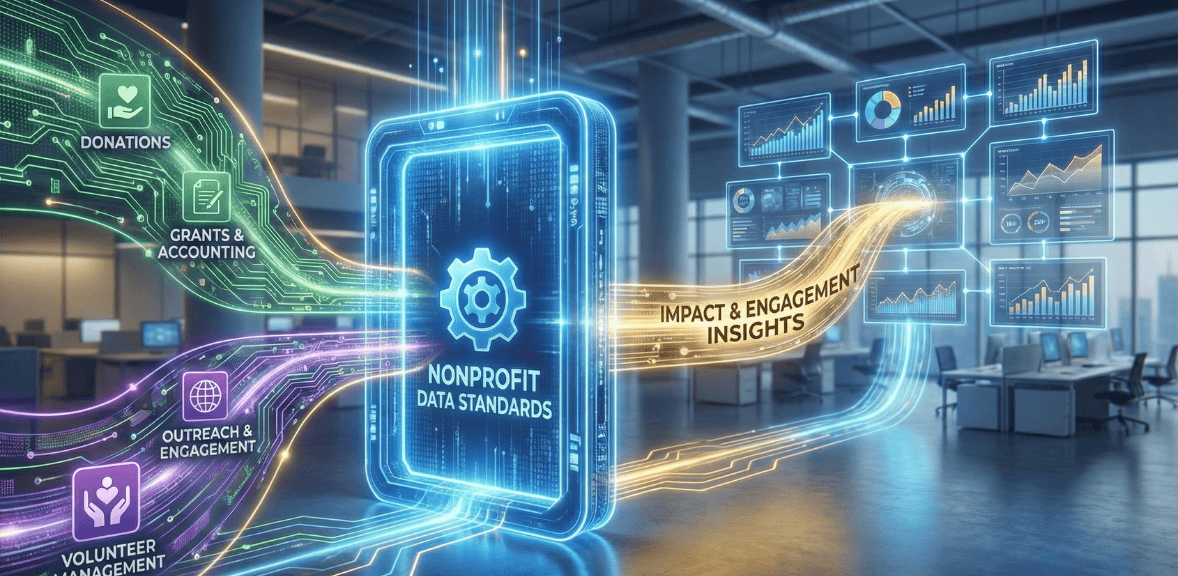
Technology alone does not solve integration challenges. Data must be structured consistently to move reliably between systems.
Why Standards Matter
If one system records a donor as “Robert Smith” and another as “Bob Smith,” matching records becomes difficult. Inconsistent field names, formats, or definitions slow integration and create confusion.
Establishing shared standards for:
- Names and addresses
- Gift types and designations
- Unique identifiers such as email addresses
makes integration smoother and more sustainable.
Small Changes, Big Impact
Data standards do not require complex documentation. Even simple cross-team agreements can reduce friction. When staff understand how information should be entered and where the “system of record” lives, integration efforts are more likely to succeed.
Collaboration Across Teams: The Human Side of Integration

Integration Is Not Just an IT Project
One of the most common mistakes nonprofits make is treating donor management integration as purely technical. In reality, integration affects how people work together.
Disconnected systems often reflect disconnected teams. Fundraising, finance, programs, and communications may have different priorities, timelines, and reporting needs. Integration brings these differences to the surface.
Building Cross-Department Collaboration
Creating a small internal group with representatives from key departments helps align expectations. This group can:
- Identify pain points caused by data silos
- Agree on shared definitions and priorities
- Review how information flows between teams
Cross-training also helps. When development staff understand finance’s reporting needs, and finance understands fundraising workflows, integration decisions become more practical.
Culture Matters
Leadership plays a critical role in setting expectations. When leaders emphasize transparency and shared ownership of data, teams are more willing to collaborate. This cultural shift reduces “mini kingdoms” of information and supports a unified approach to nonprofit operations.
Steps to Get Started with Donor Management Integration
Step 1: Audit Current Systems and Data Flows
Begin by mapping where donor-related data lives and how it moves. Identify points where information is duplicated, delayed, or manually transferred. This exercise often reveals quick opportunities for improvement.
Step 2: Identify High-Impact Integrations
Not all integrations deliver equal value. Many nonprofits start with CRM and accounting because the benefits are immediate and measurable. Others prioritize email integration to improve donor communication.
Choose integrations that address the most time-consuming or error-prone processes first.
Step 3: Budget Thoughtfully
Integration may require configuration time, consulting support, or upgraded software plans. Framing these costs as investments helps shift the conversation. The time saved and errors avoided often outweigh the upfront expenses within a year.
Step 4: Implement in Phases
Rolling out integration gradually reduces risk. Test data flows, verify accuracy, and gather feedback before expanding to additional systems. Phased implementation builds confidence and trust in the integrated environment.
Step 5: Train Staff and Document Processes
Integration only works when people understand it. Provide clear guidance on:
- Where data should be entered
- Which system is the primary source
- How changes flow between tools
Training reinforces consistency and ensures staff rely on integrated systems rather than workarounds.
Integration for Smaller US Nonprofits

Integration is not limited to large organizations with complex tech stacks. Smaller nonprofits using spreadsheets and basic accounting tools can still benefit.
For example, a small team might standardize monthly imports between donor records and accounting instead of entering gifts twice. Shared cloud files or simple automation tools can reduce manual work without adding complexity.
As organizations grow, early attention to integration makes future transitions smoother. Establishing good data habits now prevents larger problems later.
Conclusion: Operating as One Organization
Breaking data silos through donor management integration allows nonprofits to function as cohesive organizations rather than disconnected departments. By aligning technology, processes, and people, nonprofits improve efficiency, accuracy, and donor trust.
Integration does not require perfection or massive investment. It requires intention, collaboration, and a willingness to rethink how information is shared. For US nonprofits navigating growing expectations with limited resources, integrated nonprofit operations are not just more efficient—they are essential to long-term impact.
FAQs
What does donor management integration mean in practice?
It means connecting donor data with other nonprofit operations so information flows automatically or consistently between systems. Instead of each department maintaining separate records, integrated systems share updates, reducing duplication and confusion.
Why is CRM integration important for nonprofit efficiency?
CRM integration reduces manual data entry, minimizes errors, and speeds up reporting. Staff spend less time managing spreadsheets and more time engaging donors and delivering programs.
How does integration affect donor relationships?
When systems are integrated, nonprofits can communicate more accurately and promptly. Donors receive relevant messages, acknowledgments are prompt, and staff have context when interacting with supporters.
Is integration risky for data security?
When done thoughtfully, integration can improve security by reducing manual file transfers and data ownership ambiguity. Precise access controls and defined data flows help protect sensitive information.
How long does integration take?
Timelines vary by system and scope. Simple integrations may take weeks, while broader efforts can take several months. Starting with a focused goal keeps projects manageable.