

24-Hour Crisis Fundraising: Emergency Campaign Launch Protocols for Disaster Relief and Urgent Needs
Launching an effective emergency fundraising campaign launch requires decisive action and the ability to activate systems immediately. In the United States, crises unfold without warning, and donors want to see organizations respond quickly, clearly, and with credible information. The first twenty-four hours define donor momentum. When nonprofits prepare their infrastructure before a crisis occurs, they turn an overwhelming moment into a coordinated response.
A rapid crisis appeal is not improvised. It grows from systems that allow staff to activate a donation page, release communications, and coordinate remotely without delays. Supports this readiness because nonprofits can open a campaign from any location and begin accepting donations instantly. This capability matters when staff are displaced, offices are inaccessible, or response teams are in the field.
The First 24 Hours: Infrastructure That Enables Rapid Response

An emergency fundraising campaign launch depends on infrastructure established in advance. When a crisis occurs, donors expect a clear, mobile-friendly donation page within hours, not days. A fast-loading page, straightforward wording, and immediate visibility of the organization’s role make the difference between capturing urgency and losing the moment. Long set-up processes or vendor delays interrupt the donor’s impulse to help.
Payment readiness must also be instant. U.S. donors use a mix of cards, ACH, and digital wallets, and they expect all options to work smoothly during high-traffic periods. Systems that slow down during surge activity result in abandoned donations. Cloud Donor Manager helps nonprofits avoid this problem because its processing environment is built for high-volume, mobile-first activity.
Messaging templates are another essential piece of preparedness. When a crisis breaks, staff should not be drafting appeals from scratch. Pre-approved templates allow teams to adapt the tone and details while maintaining accuracy quickly. This preparation forms the basis of a strong crisis fundraising strategy and keeps communication aligned even when multiple staff members contribute content under pressure.
Crisis Communications: Authentic, Urgent, and Respectful
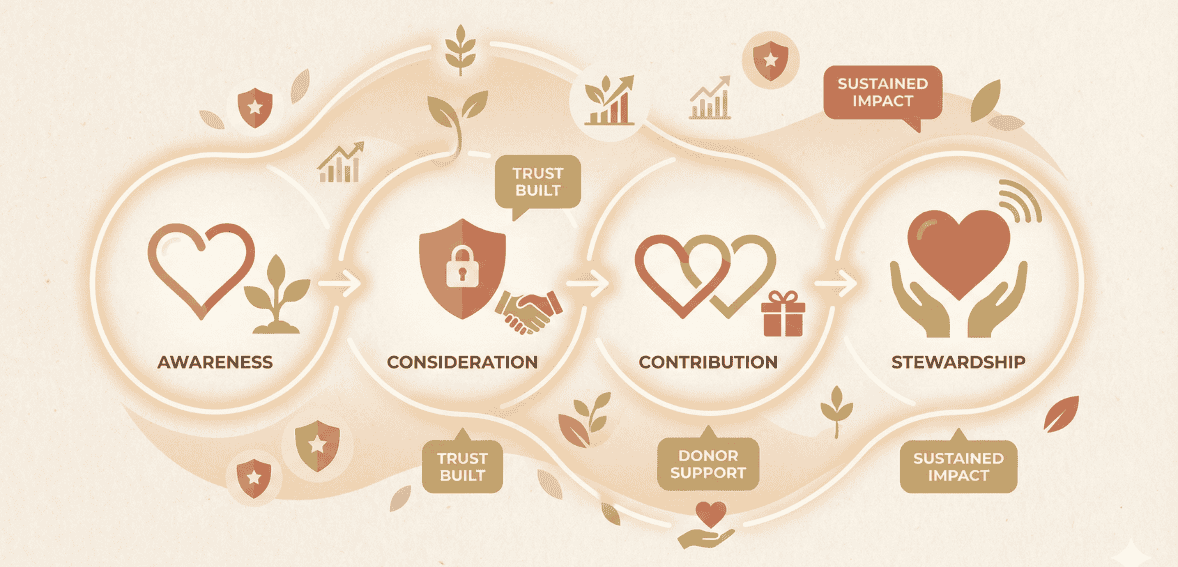
A successful crisis fundraising strategy requires urgency delivered with accuracy and respect. Donors respond when they understand the situation clearly and see that their contribution creates an immediate impact. Crisis messaging works best when it explains the problem, outlines the organization’s response, and presents a direct ask tied to visible outcomes. This clarity motivates giving without overstating conditions.
Ethical storytelling is essential. Images and stories must protect the dignity of those affected and avoid exploiting difficult circumstances. American donors look for organizations that communicate responsibly, especially during widely publicized disasters. Short, factual updates maintain credibility and guide donors toward decisive action.
Social media plays a central role because it quickly circulates information. Early updates should confirm verified details and link directly to the donation page. As the day progresses, messaging shifts toward brief operational updates that reinforce transparency. Email remains equally essential, offering space for slightly deeper explanation while maintaining a direct path to give. The strongest crisis appeals use consistent language across all channels, thereby strengthening donor confidence and increasing disaster relief donations.
Responsible Use of Restricted Gifts During Crises

Restricted gifts often increase donor confidence, particularly when the crisis is evident. Donors want assurance that their support will be explicitly used for emergency needs. Precise wording on the donation page helps nonprofits set expectations before gifts are made. If funds exceed immediate requirements, organizations should outline how remaining resources will support related recovery or preparedness efforts. This simple clarity strengthens trust throughout a crisis fundraising strategy.
Cloud Donor Manager makes this easier by allowing nonprofits to quickly adjust fund descriptions and communicate changes as the situation evolves. Transparent categorization of funds helps donors understand how their contributions fit into the broader relief effort.
Avoiding Donor Fatigue During Repeated Emergencies

Frequent emergencies can overwhelm donors, especially when appeals arrive too close together. Preventing fatigue begins with segmentation. Not every donor responds to every crisis, and sending too many appeals dilutes urgency. Identifying donors who have historically engaged in emergency giving enables organizations to maintain relevance without over-messaging.
Updates play an equally important role. Donors should see the impact of their previous support before being asked again. When nonprofits demonstrate how contributions were used, supporters remain engaged even when crises occur in rapid succession. Clear and timely communication helps maintain momentum for urgent fundraising appeals without eroding trust.
Technology That Enables Rapid Emergency Activation

The foundation of a successful emergency fundraising campaign launch is technology that supports fast activation without disruption. Crisis conditions often limit office access, reduce staff availability, and require remote coordination. A cloud-based platform becomes essential because it allows nonprofits to set up donation pages, update messaging, and manage contributions from any device. When systems depend on specific hardware or slow approval processes, organizations lose valuable momentum.
Cloud Donor Manager is well-suited to crisis conditions because campaigns can be deployed immediately and managed from anywhere. Nonprofits that relied on older tools during major emergencies experienced delays that cost them early engagement. Modern crisis fundraising relies on technology that removes those barriers and keeps the organization operational during unpredictable conditions.
Prepared communication templates also support rapid response. Instead of writing entirely new appeals during the crisis, staff can adjust ready-made versions to match the current situation. This speeds up communication and keeps messaging aligned across channels. U.S. donors expect prompt updates, and templates help teams deliver them without sacrificing accuracy.
A dependable payment system with backup capacity is equally important. Emergency donations often spike within minutes of major updates, and inadequate processors can slow or reject transactions. Platforms designed for high-volume moments prevent this issue. Mobile optimization is another critical factor, since most American donors give through their phones when reacting to a crisis. Streamlined pages reduce friction and improve conversion rates during rapid-response fundraising.
When nonprofits use technology that supports mobility, surge traffic, and fast customization, they increase their ability to respond effectively and maintain donor trust throughout the emergency.
Messaging That Responds to Evolving Emergency Conditions

Crisis conditions shift quickly, and a strong crisis fundraising strategy adapts messaging throughout the first day. Donors look for clear explanations of what happened, who is affected, and how the organization is responding. Early communication establishes credibility. As the situation develops, updates show progress and keep donors informed.
The tone of crisis messaging should remain steady and factual. Donors want clarity, not dramatization. As more details emerge, the organization should share what has been done, what remains unmet, and how donor support continues to make a difference. These updates reinforce urgency while maintaining transparency.
Different donor segments respond to other approaches. Major donors value direct outreach and specific needs. Longtime supporters want reassurance that the organization is balancing crisis response with ongoing commitments. First-time donors often prefer short, clear messages tied to immediate outcomes. Segmenting helps ensure communication stays relevant and prevents disengagement during urgent fundraising appeals.
Social media provides immediate reach, while email offers space for deeper context. Both channels should support one another with consistent messaging, verified information, and direct links to the donation page. This alignment strengthens the organization’s position as a reliable source during heightened public attention.
Turning Surge Donors Into Long-Term Supporters

Crisis moments attract new donors, many of whom give to the organization for the first time. Turning these individuals into long-term supporters requires careful stewardship. Donors should receive personalized acknowledgment that reflects the urgency of the situation and confirms how funds are being used. Meaningful appreciation builds trust for future engagement, especially among those drawn in by disaster relief donations.
Impact updates deepen this connection. Donors want to see how their contributions support relief efforts and how needs continue to evolve. Honest assessments help supporters understand the situation and reinforce the organization’s credibility. After the immediate crisis stabilizes, nonprofits should begin introducing these donors to broader mission-driven work, creating a natural bridge from emergency giving to sustained involvement.
Clear fund management is another essential component. Donors appreciate knowing how much has been used and what remains to support ongoing or future relief activities. This transparency encourages repeat giving. Cloud Donor Manager helps nonprofits share this information through accurate reporting and straightforward donor communication tools, supporting retention over time.
Post-Crisis Evaluation and Preparation for the Next Emergency
The end of the crisis marks the beginning of evaluation. Nonprofits must assess their response speed, messaging accuracy, donor engagement patterns, and technology performance. This review identifies delays and strengthens the next crisis fundraising strategy. Many U.S. nonprofits find that internal decision-making slowed their first response, which is why pre-set authority structures are essential for future emergencies.
Templates, protocols, and donation pages should all be updated based on what was learned. Reducing friction ensures that the next emergency fundraising campaign launch happens faster. Staff training also plays a role, helping teams stay confident even when an emergency disrupts standard workflow.
Technology should be reviewed as well. If systems slow down or fail during high demand, improvements are necessary. Reliable platforms prevent downtime and allow teams to act immediately, an advantage that directly affects donor engagement and response rates.
The Long-Term Value of Preparedness

When a nonprofit approaches emergency fundraising with intense preparation, every crisis becomes more manageable. Donors support organizations that demonstrate capability, readiness, and transparency, especially when lives or communities are at risk. Preparedness strengthens donor trust and allows nonprofits to mobilize resources quickly during the country’s most unpredictable moments.
A successful crisis response is built on clarity, infrastructure, ethical communication, and fast activation. When these elements align, organizations strengthen their mission and deepen long-term donor relationships, ensuring they are ready when the next emergency arises.
Conclusion
A well-prepared emergency fundraising campaign launch turns urgency into coordinated action. When a nonprofit can activate donation systems immediately, communicate with clarity, and steward donors with transparency, it becomes a trusted responder during the country’s most difficult moments. American donors value speed, honesty, and impact, and they support organizations that demonstrate readiness rather than reaction. Strong infrastructure, ethical storytelling, and clear fund management ensure that each crisis response strengthens long-term donor relationships rather than ending at a single moment of giving. When organizations approach emergency fundraising with structure and intention, they gain the capacity to serve communities faster, maintain donor confidence, and elevate their mission in times when every hour matters.
FAQs
How quickly can we realistically launch an emergency campaign?
Most nonprofits in the United States can launch within twenty-four to forty-eight hours when core systems, templates, and authority pathways are already established. A fast launch depends on having donation pages, payment processing, and communication assets prepared before any emergency. Cloud Donor Manager makes this timeline more achievable by allowing teams to activate pages instantly from any location.
What messaging creates urgency without feeling exploitative?
Crisis messaging should explain the immediate need, describe the organization’s response, and connect the donor’s gift to a specific outcome. This approach respects the gravity of the situation while avoiding sensationalism. U.S. donors respond strongly to authenticity, clarity, and dignity-centered storytelling, thereby strengthening trust and increasing support for urgent fundraising appeals.
Should nonprofits accept restricted gifts during a crisis?
Restricted gifts can increase donor confidence because supporters appreciate knowing how their contributions will be used. They also create obligations, so nonprofits must clearly state how funds will be applied and how any excess will support ongoing or future relief efforts. Transparent explanations and consistent updates help maintain trust throughout a crisis fundraising strategy.
How do we prevent donor fatigue when multiple emergencies occur?
Preventing fatigue begins with segmentation, ensuring that only donors who respond to crisis-specific content receive emergency messages. Donors must also receive meaningful updates before any new ask, which reinforces the impact of their previous support. When communication is thoughtful and spaced appropriately, donors remain willing to participate in rapid response fundraising even during back-to-back events.
What technology setup enables the fastest campaign launch?
A rapid launch requires cloud-based donation tools, mobile-first design, and payment systems that can handle sudden volume spikes. These features eliminate delays and allow staff to work from anywhere during a crisis. Cloud Donor Manager supports this readiness by offering instant setup, reliable performance, and flexible communication tools essential for a high-speed emergency fundraising campaign launch.