

Engaging Your Board in Fundraising: A Guide for Small Nonprofit Leaders
Nonprofit board fundraising is the involvement of nonprofit boards in fundraising activities that can create an organization that not only meets but even surpasses its goals, thereby, year after year, getting continuous support that is mainly driven by its mission. For small nonprofits and churches, the board is not just a governance body. It is a powerful extension of your fundraising voice. If the board members recognize their part, are equipped, and comprehend how their efforts are, then fundraising will be a joint responsibility instead of overloading the staff with it.
A lot of nonprofit executives are still in doubt about the depth of the board’s involvement in fundraising activities. Some are concerned about non-cooperation, while others are afraid of creating misunderstandings. The truth is, most board members are willing to provide help. However, the need for clarity, confidence, and guidance is the only reason why they are not already involved in fundraising activities. If not done properly, board engagement in fundraising may weaken the leadership, destroy the credibility of the organization among the donors, and may even be a factor in the creation of a culture of shared ownership around the mission.
This guide is intended for small nonprofit leaders who are in search of practical, realistic ways in which they could activate their boards. Focus is on expectation setting, board member equipping, task alignment with strengths, and keeping everybody motivated and responsible. It is not the intention of the guide to make every board member a professional fundraiser. The goal is to enable each individual to participate in the sustainable fundraising process in a way that is meaningful and comfortable for them.
Setting Clear Fundraising Expectations

One of the major errors nonprofits commit is to consider that the board members are completely aware of their role in fundraising. More often than not, they are not. From the very start, unambiguous expectations need to be created. In the absence of explicit expectations, board members frequently choose to play a passive role. When clear expectations are given, people are more inclined to take on the challenge.
Fundraising expectations should be a topic during board recruitment and onboarding. This entails openness about giving, participation, and advocacy. A “give or get” policy is a standard practice for many organizations. Each board member, in this case, either personally contributes or is responsible for raising a specific amount every year. The specified amount should be reasonable and considerate of personal capacities. The aim is to secure commitment, not to apply pressure.
Within the scope of the organization, there are also anticipated activities such as participating in campaigns, attending fundraising events, hosting small gatherings, and introductions to potential supporters. The point is clarity. Board members should have a clear understanding of the expectations and the criteria for success. Written role descriptions not only help reinforce this understanding but also diminish the likelihood of confusion at a later stage.
The board of a small nonprofit should regard its fundraising projections as attainable. The leaders should stress that participation is more valuable than perfect execution. There will be an inevitable increase in engagement if the board members consider making funds one of their leading responsibilities, not as a luxury task.
Training and Equipping the Board
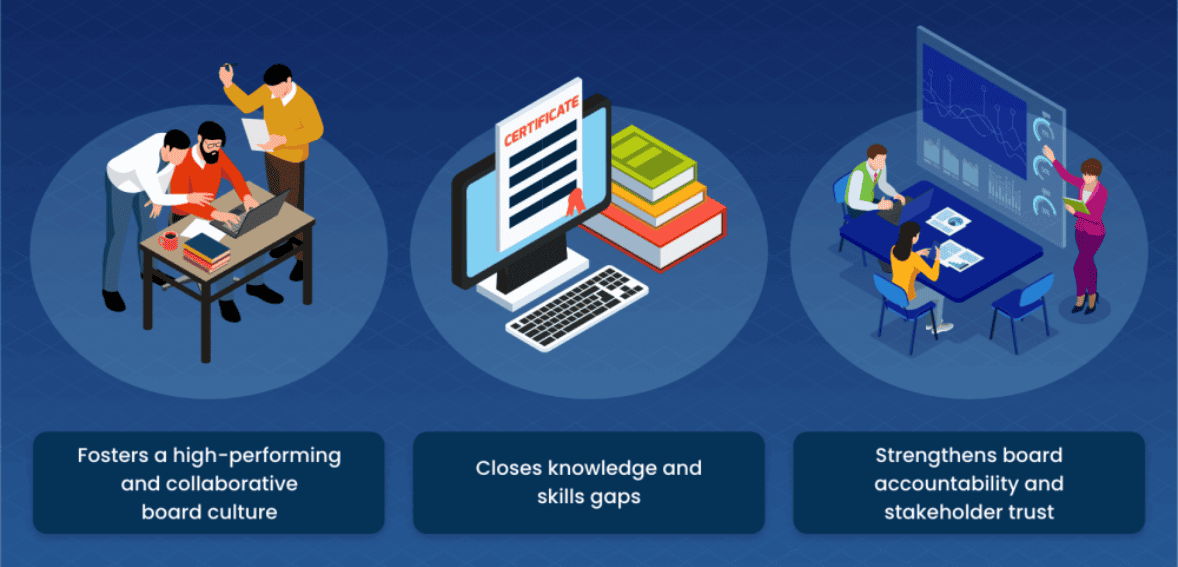
Nevertheless, the very willing board members might perceive themselves as not adequately trained to participate in the fundraising activities. The commonest reason for such an attitude is the fear of coming to the donors for money. Scared of not being able to explain the mission or the programs, they often remain silent. Therefore, training and support are very imperative for the development of the above-mentioned confidence.
First of all, ensure that all board members can very well say what the organization’s mission, impact, and financial needs are. Talking points in a simplistic way can be of great help. Board members are not to be given scripts; rather, they need the kind of vocabulary that is both natural and proper. Providing brief and clear explanations will help them to be more confident in their speech.
Moreover, basic training in fundraising is also beneficial. This education does not have to be complicated. The topics that could be covered in short workshops during board meetings, for instance, how and why to thank the donors, introducing the organization to a friend, and participating in the conversation with the donor, could be as simple as these. Then, the use of role-playing to practice the scenarios can help in reducing tension, thus paving the way to comfort.
Another approach would be to pair the new board members with the experienced ones. This way, the mentee has a chance to safely learn and ask questions throughout the process. This gradual learning also leads to the enlargement of the board engagement and fostering of a culture where fundraising is viewed as a normal and supportive practice rather than an intimidating one.
Also Read: Crafting the Perfect Fundraising Appeal: Tips for Donation Letters & Emails
Aligning Roles with Strengths

Normally, not every member of the board will be willing to directly solicit donations. This is nature. The fundraising activities of an efficient nonprofit board recognize the individual strengths and utilize them wisely. There are many ways to support fundraising besides making an ask; all these ways are equally valuable.
Some members of the board are pioneers in developing relationships. They may throw small parties or introduce the staff to prospective donors. Others would rather work in the background and send personal thank-you notes or assist with follow-up communication after the events. Some have an excellent professional network and are capable of getting sponsorship or partnership opportunities.
Digitally engaging is another possibility. Board members can promote donations via emails or social media, thereby increasing the outreach and trust. For the ones who dislike face-to-face interaction but still wish to participate, this method usually seems more inviting.
When the leaders assign the tasks according to the skills of the given board members, then the latter feel more self-assured and are not so reluctant. This practice also yields better results. People perform better when they do so in accordance with their skills and personalities. The gradual building of positive experiences creates the growth of involvement and the drawing of closer bonds.
Motivation and Accountability

All the board members, even the most dedicated ones, may easily lose their way without proper structure. Thus, through time, motivation and accountability will be the main factors keeping up the board’s engagement. The idea is to facilitate participation, but at the same time not to produce any pressure or feelings of guilt.
A very effective method is the setting of collective goals. Goals like 100% board giving or a certain amount raised by the board are very effective in splitting the responsibility. These goals must be communicated clearly and must be monitored consistently. Fundraising will be visible and will be kept in the minds of the members of the board through regular updates in the board meetings.
Besides, recognition plays an important role. Positive behavior is reinforced through the celebration of milestones, public thanks to board members, and acknowledgment of effort. However, recognition does not have to be large-scale. Even a simple ‘thank you’ goes a long way in lifting one’s spirit.
Accountability has to be fortifying and not stressful. Soft reminders, one-on-one conversations, and well-defined deadlines all contribute to the creation of a dynamic flow. When board members are able to see the outcomes and feel valued at the same time, then the excitement will grow even larger. The combination of encouragement and accountability is what keeps board engagement strong over a long period of time.
Integrating Board Efforts with Staff

The successful fundraising process is executed through a strong relationship between the board and the staff. Board and staff can become disconnected when there is a lack of clarity around the roles and weak communication. The merging of these two parties results in the creation of efficiency, the building of trust, and the attainment of better outcomes.
The regular contact of the board and staff every few days will help in giving out the required guidance and support. The staff will present materials, updates on donors, and talking points. The board members will give their feedback and tell the staff about the problems they have been facing. This constant communication helps to gain trust from both parties.
Setting clear limits is also a key factor. Staff should take care of the strategy, the systems, and the follow-up. Board members should deal with the advocacy and relationships. If everyone knows what to do, then there will be no overlap of duties, and the power will be used in the right way.
The joint team method raises the organization’s credibility with donors. The donation sources are more assured of the organization’s leadership when the board and the staff present the same viewpoint. This unity is even more crucial for organizations that depend on a strong fundraising plan to continue their programs and expand.
Building a Fundraising Culture Over Time

Getting the board involved in fundraising is not an isolated process; rather, it is a cultural shift. The leaders have to keep on communicating the idea that fundraising is an integral part of the leadership role and the nurturing of the mission.
This new culture takes off through demonstrating. The participation and giving of board leaders and executive staff serve as a model to which the rest will conform. Reporting on successes and setbacks also promotes trust. Board members are more apt to be active in their role when they see the money’s travel and how much good is being done.
Eventually, fundraising is no longer regarded with fear but as a process through which one works together. The board members have their assurance increased. Ties are strengthened. The good thing for the organization is that it will be supported more widely, and the leadership will be of a stronger quality. For both nonprofits and religious groups, this unified determination is a ray of hope for greater mission impact and longer sustainability.
Conclusion
Getting your board involved in fundraising is a process that requires a definite plan, a lot of patience, and being very clear. Board members consider themselves very useful in the area of fundraising when everything is spelled out, when they receive training, when their roles match their strengths, and when accountability is done in a supportive way. The tough path of leadership, donor trust, and success is made easier by this. Through the development of cooperation between board and staff and the establishment of a culture of shared responsibility, even small nonprofits, along with their boards, can tap into the complete power of the boards and make an impact that lasts.
FAQ
What if some board members are against fundraising?
It is quite normal to have opposing views, and the reason behind that can be a fear or a lack of understanding. Providing information, setting clear goals, and allowing various ways to assist can help ease worries and therefore drive more participation.
Should board members be given a specific amount of money they have to raise or get?
The majority of the organizations apply a model where one either contributes or picks up the amount of his/her contribution to motivate the commitment. The amount should not be too high and should mainly focus on participation rather than putting financial stress on the members.
How can I make it happen that even such board members who are extremely busy will still see fundraising as one of their priorities?
Try to make the tasks simple and quick to do. Also, prepare the tools for them and give constant acknowledgement of their input.
Can church boards or elder councils also be involved in fundraising?
Absolutely. In a religious context, the members of the board can not only take part in but also lead the giving campaign through their example.
When will board fundraising efforts start to show results?
The results differ, but generally, if the board is supportive and persistent in their efforts, they will be able to see a significant improvement within one or two fundraising cycles.