

Event Fundraising Ideas for Nonprofits
Event fundraising ideas for nonprofits keep evolving, but the goal stays the same: bring people together around a cause and inspire them to give. In a world of hybrid work, digital payments, and short attention spans, nonprofit fundraising events have to be more strategic, more experiential, and more data-driven than ever.
Recent reports show that charitable giving has bounced back, reaching record or near-record totals, helped by a strong economy and better use of technology. At the same time, nonprofits are facing more competition, shifting donor behavior, and rising costs.
That means your event fundraising ideas for nonprofits must do more than simply “put on a nice evening.” They need to build relationships, generate content, and plug directly into your broader fundraising strategy.
This guide walks through high-impact nonprofit fundraising event ideas, with practical details on planning, marketing, technology, compliance, and future trends—so you can design events that raise more today and set you up for long-term success.
Why Event Fundraising Still Matters
Even with digital and recurring giving on the rise, in-person, virtual, and hybrid event fundraising ideas for nonprofits are still central to a strong development plan.
Giving research shows that total charitable donations have grown again after a difficult period, driven by increased individual and corporate giving. Events play a big role in that recovery because they offer something no email or social post can match: real-time emotional connection.
Events give supporters a clear moment to act. A gala paddle raise, a finish-line donation appeal, or a live auction sparks urgency and social proof. People see others giving and are more likely to step up themselves. This is especially powerful for mid-level donors and first-time supporters who are still deciding how invested they want to be.
At the same time, event fundraising ideas for nonprofits create content the organization can use all year long. Photos, short videos, donor interviews, and impact stories from one big event can feed email campaigns, social media, and grant proposals for months. When you treat events as content engines, you make every dollar of event cost work harder.
Looking ahead, event fundraising will likely become even more experiential, data-driven, and hybrid. Trends point to increased use of mobile giving tools, peer-to-peer fundraising, and inclusive event formats that are accessible to people who can’t be there in person.
Nonprofits that build these elements into their event fundraising ideas now will be better positioned as donor expectations continue to rise.
Laying the Groundwork: Strategy Before Event Ideas

Before choosing specific event fundraising ideas for nonprofits, you need a clear strategy. The biggest mistake organizations make is jumping straight to “Let’s do a gala” without answering basic questions about goals, audiences, and capacity.
Start with a single primary goal for the event: Do you want to acquire new donors, upgrade existing donors, build recurring giving, or cultivate major gifts? You can have secondary goals, but one primary objective should guide your decisions.
For example, if donor acquisition is the focus, you might choose a lower-ticket, community-friendly event that encourages people to invite friends.
Next, define your audience segments. Are you targeting young professionals, corporate partners, parents, faith communities, or alumni?
Each group responds differently to event formats and price points. Event fundraising ideas for nonprofits work best when they are designed around a clear persona—what they value, where they spend time, and what motivates them to attend and give.
You also need a realistic budget and staffing plan. Factor in venue, catering, marketing, auction software, livestream tech, and credit card or payment processing fees.
Then, set revenue projections from ticket sales, sponsorships, donations, auctions, and peer-to-peer fundraising. Use past events and sector benchmarks as a guide, and build in a margin for unexpected costs.
Finally, map your event into your annual fundraising calendar. Event fundraising ideas for nonprofits should connect strategically to your year-end campaign, monthly giving push, or major-gift pipeline.
That means pre-event cultivation, on-site stewardship, and thoughtful post-event follow-up with clear next steps for each donor segment.
Classic In-Person Event Fundraising Ideas for Nonprofits
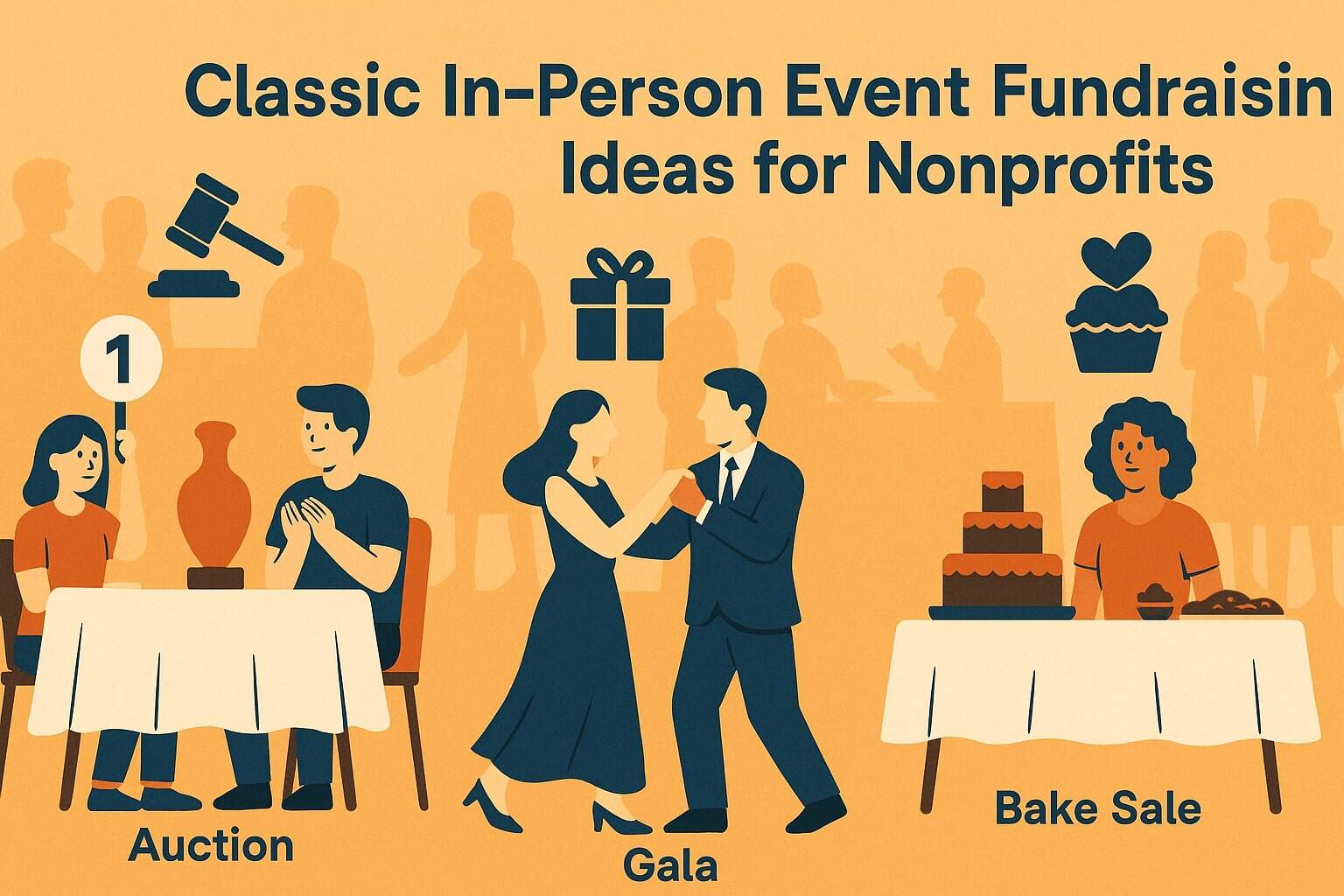
Well-executed traditional events still work. The key is to modernize them with technology, storytelling, and inclusive design. Here are some classic, proven event fundraising ideas for nonprofits and how to make them current.
Galas and Signature Benefit Dinners
Gala dinners have been a staple event fundraising idea for nonprofits for decades. They are especially effective for organizations with a strong board, an engaged major donor base, and corporate support. To make a gala work today, you need to treat it as more than just “dinner and speeches.”
First, design a compelling narrative arc for the evening. Every element—from the emcee’s opening to the video stories and live appeal—should reinforce a central message about impact. Keep speeches short and emotional, and use one or two powerful beneficiary or partner stories instead of a long program that drags on.
Second, integrate technology into the guest experience. Use mobile bidding software for silent and live auctions so guests can bid from their phones. Offer contactless check-in and payment options to reduce lines and improve data capture.
Many of the most successful event fundraising ideas for nonprofits now include pre-event online bidding and a “buy now” option to build momentum before guests arrive.
Third, re-think sponsorships. Instead of only offering logo placement, build packages around outcomes: “This sponsorship underwrites 50 scholarships” or “funds a full year of mental health counseling for 10 families.” This helps corporate partners justify the investment and connect the event to their corporate social responsibility goals.
Looking ahead, expect gala models to evolve into more inclusive, less formal experiences. Shorter programs, cocktail-style formats, and hybrid tickets that allow supporters to tune in from home will become more common. Smart nonprofits will use their signature gala as a platform, then spin off related micro-events throughout the year.
Walks, Runs, and Physical Challenge Events
Walks, runs, and challenge events remain some of the most scalable event fundraising ideas for nonprofits. They are highly visible, community-building, and perfect for peer-to-peer fundraising models where participants ask friends and family to sponsor them.
To modernize a walk or run, start by building an easy-to-use online registration and fundraising hub. Participants should be able to create personal pages, share on social media, and accept donations via mobile or digital wallets.
Peer-to-peer fundraising continues to grow and is especially strong when tied to events like 5Ks, bike rides, and endurance challenges.
Next, focus on experience. Add music, photo backdrops, branded swag, and interactive sponsor booths at the start/finish line. For families, consider kids’ dashes or accessible route options. For more serious athletes, offer timing chips, leaderboards, or training plans tied to fundraising milestones.
One of the most powerful future-proof strategies is to make your physical challenge hybrid. Allow “virtual” walkers or runners to participate from anywhere.
Provide a suggested route, a digital bib, and a participant kit shipped to their home. Hybrid walk/run events became popular out of necessity, but data shows they continue to expand reach and revenue when done well.
Over time, you can build an annual movement around your event. Use countdown content, training clubs, social media challenges, and community partner collaborations to keep attention on your cause long before and after event day.
Community Festivals, Fairs, and Open Houses
Community-based events like festivals, fairs, and open houses are excellent event fundraising ideas for nonprofits that want to raise visibility and engage families. These events typically combine food, entertainment, information booths, and donation opportunities.
Start by securing local partners. Food trucks, craft vendors, and small businesses can rent booths or sponsor zones at your event. A community festival can generate multiple revenue streams: ticket sales, vendor fees, sponsorships, merchandise, and donations on site.
Plan your layout and flow carefully. Make sure every attendee passes by clear donation opportunities and storytelling touchpoints.
A “mission zone” with hands-on activities or demonstrations can help visitors understand the need your nonprofit addresses. Short, guided tours or mini-talks every hour can deepen engagement without feeling like a long program.
To modernize this event fundraising idea for nonprofits, integrate digital elements. Use QR codes on signage for mobile donations, volunteer sign-ups, or newsletter subscriptions. Create an event hashtag and encourage attendees to share photos. Consider a livestream from your main stage or short interviews with beneficiaries or staff to repurpose later.
As cities become more focused on local culture, sustainability, and family-friendly activities, community festivals will likely grow as a fundraising and engagement tool. Nonprofits that position their event as a “can’t miss” neighborhood tradition can build loyal attendance and recurring revenue year after year.
Hybrid and Virtual Event Fundraising Ideas for Nonprofits
Hybrid and virtual formats are no longer emergency solutions—they’re strategic assets. Many of the strongest event fundraising ideas for nonprofits blend in-person and online participation to reach more people, reduce barriers, and gather better data.
Hybrid Peer-to-Peer Events and Challenges
Peer-to-peer fundraising, where supporters raise money from their own networks, is one of the most powerful event fundraising ideas for nonprofits today. It is especially effective when paired with hybrid events that allow both on-site and remote participation.
For example, you might host an in-person 5K, but also allow participants to complete their distance throughout the week in their own neighborhood. They track activity via a fitness app or your event platform, share progress on social media, and continue to solicit donations.
This approach dramatically extends your geographic reach and makes participation accessible to people with mobility, schedule, or location constraints.
Gamification is key. Offer badges, leaderboards, and challenges like “Raise $250 and unlock a coaching session” or “Recruit five team members to earn VIP event perks.”
Reward top fundraisers with recognition at the in-person event and online shout-outs. Many future-focused event fundraising ideas for nonprofits will lean into this kind of game-based, social experience.
You can also tie hybrid peer-to-peer events to specific campaign goals. For instance, participants might collectively aim to “walk around the globe” in miles or “climb a mountain” in feet of elevation. Visual trackers on your website or at the event show progress in real time, giving fundraisers a tangible sense of achievement.
As digital tools improve and people grow more comfortable with remote participation, expect hybrid peer-to-peer events to become a default choice. Nonprofits that invest in flexible, mobile-friendly platforms now will reap long-term benefits.
Livestream Galas, Telethons, and “Un-Gala” Events
Livestream events emerged as a major trend and remain one of the most cost-effective event fundraising ideas for nonprofits. Instead of a full traditional gala, you can host a shorter “un-gala” livestream with a mix of storytelling, performances, and live donation.
A typical format includes a 45- to 90-minute live program, broadcast from a small studio or venue. Viewers register in advance, receive a link, and are encouraged to host watch parties.
During the stream, they donate via text-to-give, QR codes, or donation buttons embedded on the event page. Chat moderators thank donors in real time and share impact milestones.
To make livestream fundraising successful, treat it like a TV show. Script segments tightly, invest in decent audio and lighting, and rehearse.
Integrate short pre-recorded videos to tell deeper impact stories while the live host prepares for the next segment. Livestream platforms now offer built-in donation tools, which simplifies the user journey and improves conversion rates.
In the future, expect more mixed-reality event fundraising ideas for nonprofits. For example, attendees at a small in-person gathering might interact live with a much larger virtual audience. On-screen donation thermometers, interactive polls, and breakout rooms for VIPs or sponsors can blend digital and in-person experiences in creative ways.
Virtual Learning, Workshops, and Networking Events
Not every fundraising event needs to be purely entertainment-focused. Educational and professional development events are strong event fundraising ideas for nonprofits, especially those serving business, health, education, or arts communities.
Examples include:
- Virtual panel discussions with subject-matter experts
- Online workshops teaching skills relevant to your cause
- Networking events for professionals connected to your mission
You can charge registration fees, offer “pay what you can” pricing, or use the event as a donor acquisition funnel where the main call-to-action is a monthly gift or sponsorship.
To add fundraising power, incorporate mini-appeals throughout the program. After a particularly compelling story or statistic, the host can invite viewers to give support to that specific solution. Polls and Q&A features keep participants engaged and make the event feel interactive.
Looking ahead, virtual education will remain a strong channel. Event fundraising ideas for nonprofits that blend learning and giving—like certification programs, continuing education credits, or exclusive masterclasses—will become more common as donors seek value and impact in how they spend time.
Low-Cost, High-ROI Event Fundraising Ideas for Small Nonprofits
Not every organization can pull off a large gala or race. The good news is that many of the most effective event fundraising ideas for nonprofits are low-cost and highly personal.
House Parties, Mission Dinners, and Salon Events
Small, intimate gatherings are powerful event fundraising ideas for nonprofits because they foster genuine connection and conversation.
A board member, volunteer, or donor hosts a gathering at their home, office, or community space. You provide talking points, materials, and a staff or leadership representative to share stories and answer questions.
Unlike large events, these “salon” style gatherings often focus on fewer, deeper conversations. The goal is to identify new prospects, move existing donors up the giving ladder, or launch a specific campaign.
You might ask the host to introduce you to three to five people they believe could be major supporters and then design the evening around those relationships.
Keep costs low by focusing on simple refreshments and meaningful content. A short video, a brief welcome, and a facilitated discussion about the issue your nonprofit addresses can be more impactful than a formal program.
The fundraising task can be made by the host or by your representative, with pre-printed pledge cards or a mobile donation link.
In the future, expect more hybrid versions of this event fundraising idea for nonprofits. For example, a house party might include a live video conversation with a field partner or beneficiary, bringing your mission directly into the room in a powerful, personal way.
Restaurant Give-Back Nights and Local Business Partnerships
Restaurant and retail give-back nights are classic, accessible event fundraising ideas for nonprofits. A local business agrees to donate a percentage of sales from a specific day or time window to your cause. Your job is to drive traffic and turn the occasion into a mini-event.
Success depends on promotion. Use email, social media, flyers, and personal outreach to encourage supporters to attend and bring friends. Consider adding a raffle, pop-up information table, or quick remarks from a staff member to turn the partnership into a more immersive experience.
Beyond food, think more broadly: salons, fitness studios, bookstores, and even car washes can participate. Many businesses are looking for ways to demonstrate community engagement; event fundraising ideas for nonprofits that help them do that can become recurring partnerships.
Over time, you can create a “shop for good” series or an annual giving week where different businesses host events on different days. This multiplies exposure for your organization and makes it easier for supporters to participate in multiple ways.
Pop-Up Experiences and Micro-Events
Pop-up events are short, focused experiences held in nontraditional spaces, like parks, malls, corporate lobbies, or co-working spaces. They work well as nimble event fundraising ideas for nonprofits that want visibility without big overhead.
Examples include:
- Pop-up photo booths with suggested donations
- Mini-concerts or performances during lunch hours
- Quick volunteer activities, like assembling care kits
Each pop-up can include QR codes for giving, information about upcoming larger events, and sign-ups for email or volunteer lists. Because they are small and portable, pop-ups are easy to test and scale.
Future-focused nonprofits will likely use pop-up events as “touch points” in a larger journey. For instance, a supporter attends a pop-up in the spring, a community fair in the summer, and a gala in the winter—all connected through consistent storytelling and follow-up.
Corporate and Major Donor–Focused Event Fundraising Ideas for Nonprofits
Corporate partners and major donors often require tailored event experiences that align with their goals and expectations. Designing targeted event fundraising ideas for nonprofits around these audiences can unlock significant revenue.
Executive Breakfasts, Briefings, and Roundtables
Invite business leaders, philanthropists, and key stakeholders to a short, high-value event like a breakfast briefing or lunch roundtable. These events focus on insight and impact rather than entertainment, making them efficient and attractive for busy professionals.
A typical format includes:
- Short networking window
- Welcome by board or leadership
- Brief presentation on your mission and recent impact
- Panel discussion or fireside chat with experts and beneficiaries
These event fundraising ideas for nonprofits work best when they are clearly linked to a campaign or strategic initiative. You can use the event to launch a corporate challenge grant, invite participation in a leadership giving circle, or present specific sponsorship opportunities.
Looking ahead, expect more blended in-person and virtual formats for executive events. Recording high-quality content and repurposing it as thought leadership also increases value for corporate partners who want visibility.
Golf Tournaments, Sporting Events, and “Play for a Purpose”
Golf tournaments and other sport-themed events remain popular event fundraising ideas for nonprofits, especially when targeting corporate teams and higher-capacity individual donors. They combine networking, competition, and philanthropy in one experience.
To maximize impact:
- Secure a title sponsor and additional hole or activity sponsors.
- Offer team packages that include a donation component and perks.
- Add contests like longest drive, closest to the pin, or putting challenges tied to additional giving.
Beyond golf, think about other “play for a purpose” formats: bowling nights, pickleball tournaments, trivia competitions, or e-sports events. Each of these can appeal to different demographics and price points, making them flexible event fundraising ideas for nonprofits.
Future growth in this area will likely include more inclusive and accessible sports events, as well as digital integration like live scoring apps, mobile bidding, and livestream highlights.
Seasonal and Themed Event Fundraising Ideas for Nonprofits
Aligning events with seasons, holidays, or awareness months is an effective way to ride existing waves of attention. Many event fundraising ideas for nonprofits perform better when they tap into moments when people are primed to give or participate.
Popular seasonal concepts include:
- Spring: garden parties, outdoor concerts, clean-up days, and youth-focused events.
- Summer: barbecues, block parties, runs/walks, and sports tournaments.
- Fall: harvest festivals, back-to-school drives, and outdoor film nights.
- Winter: holiday markets, concerts, and year-end giving celebrations.
You can also tie events to cause-specific observances such as Breast Cancer Awareness Month, Pride Month, or Domestic Violence Awareness Month. This creates natural media angles and partnership opportunities with peer organizations and corporate partners.
When designing seasonal event fundraising ideas for nonprofits, plan far in advance. Sponsors and major donors often set budgets early, and venues book quickly. Use a 12-month planning calendar to map potential themes, and layer your event promotions into a broader campaign plan.
Looking forward, expect more emphasis on inclusive and culturally sensitive themes, as well as climate-conscious planning. Donors are becoming more aware of sustainability, so eco-friendly choices in catering, decor, and transportation will increasingly matter.
Using Technology, Data, and Marketing to Maximize Event Revenue
No matter which event fundraising ideas for nonprofits you choose, technology and marketing will make or break your results. Donor expectations have shifted; they want simple, mobile-friendly experiences with clear information and secure payment options.
Start with a strong event landing page. It should clearly state the purpose, date, time, location (or virtual platform), and how funds will be used. Include compelling visuals, impact statistics, and clear calls-to-action to register, sponsor, or donate.
Invest in an event or fundraising platform that supports:
- Online registration and ticketing
- Peer-to-peer fundraising pages
- Mobile bidding and text-to-give
- Real-time reporting and data export
Email marketing and social media are essential before, during, and after the event. Build a content plan that includes save-the-dates, countdown posts, sponsor spotlights, behind-the-scenes peeks, and last-minute reminders. Use targeted ads or boosted posts if your budget allows.
During the event, project donation totals, show leaderboards, and give real-time shout-outs to donors. These tactics increase engagement and create friendly competition, especially in peer-to-peer and auction-based event fundraising ideas for nonprofits.
Afterward, segment your follow-up communications. New attendees, major donors, sponsors, volunteers, and peer-to-peer fundraisers should each receive tailored messages. Share results, impact stories, and a clear next step, such as joining a monthly giving program or signing up for your newsletter.
Future trends point toward even more personalization and automation. Event fundraising ideas for nonprofits will increasingly use data to send customized invitations, predict giving levels, and recommend specific event experiences or donation options to each supporter.
Compliance, Risk Management, and Accessibility Considerations
Great event fundraising ideas for nonprofits also have to be safe, legal, and inclusive. Ignoring compliance, risk, or accessibility can put your organization at financial and reputational risk.
Key areas to consider include:
- Licensing and permits: Many jurisdictions require permits for raffles, alcohol service, or large gatherings. Check local regulations well in advance.
- Insurance: Confirm that your general liability coverage includes events, and consider additional coverage for higher-risk activities like sports.
- Contracts: Review venue, vendor, and entertainment contracts carefully, paying attention to cancellation, force majeure, and liability clauses.
Accessibility is not optional. Ensure your event location is physically accessible, with ramps, elevators, and appropriate restrooms. Provide clear signage, seating options, and accommodations for people with vision, hearing, or sensory needs. For virtual events, use captions, screen-reader-friendly platforms, and clear instructions.
Risk management also includes health and safety. Even though emergency conditions may have eased, many attendees still appreciate visible hygiene measures, good ventilation, and clear communication about any safety expectations.
As expectations around inclusion and equity grow, event fundraising ideas for nonprofits that center accessibility and diversity will stand out. This includes diverse panels, culturally appropriate programming, and pricing models that do not exclude lower-income supporters. Scholarship tickets, sliding-scale pricing, or “pay it forward” options can help.
Measuring Success and Optimizing Future Event Fundraising Ideas for Nonprofits
To continuously improve your event fundraising ideas for nonprofits, you need to measure more than just total dollars raised. Build a scorecard that includes financial and engagement metrics.
Common metrics include:
- Total revenue vs. goal
- Net revenue (after expenses)
- Number of attendees and new attendees
- Number of new donors and recurring donors acquired
- Average gift size and median gift size
- Sponsorship revenue and retention
- Peer-to-peer fundraiser performance (pages created, average raised, top performers)
Qualitative data is just as important. Send post-event surveys to attendees, sponsors, volunteers, and staff. Ask what worked, what didn’t, and what they’d like to see next time. Capture quotes or testimonials that can be used in future promotions.
After each event, hold a debrief with your team. Document lessons learned while they’re fresh, and store them where the next year’s event committee can easily find them. Over time, this institutional memory becomes a powerful asset, especially given staff turnover in the sector.
Looking ahead, expect more nonprofits to use dashboards, benchmarking, and predictive analytics to refine event fundraising ideas. As more giving and participation data becomes available, organizations that use it will be able to forecast revenue more accurately and design events that better match donor behavior.
Frequently Asked Questions
Q.1: What are the most profitable types of fundraising events for nonprofits?
Answer: The most profitable event fundraising ideas for nonprofits usually combine high revenue potential with manageable costs and a strong fit for the organization’s audience.
Galas, golf tournaments, and large peer-to-peer events like walks or rides often generate significant revenue, especially when supported by sponsorships and major donors. However, profitability isn’t only about gross income; net revenue after expenses is what really matters.
Events with heavy production costs—like elaborate galas—can bring in big dollars but also eat up a lot of staff time and budget. Meanwhile, “lean” event fundraising ideas for nonprofits such as virtual galas, livestream appeals, or intimate house parties may generate less total revenue but have far higher net profit and stronger relationship-building outcomes.
Another factor is scalability. Peer-to-peer events can grow year over year because participants recruit new fundraisers and team members. This viral effect means that once the model is established, incremental growth can be achieved without a proportional increase in staff workload.
Ultimately, the most profitable events for your nonprofit are the ones that align with your mission, resonate with your core supporters, and are executed consistently over time.
Testing different event fundraising ideas for nonprofits, tracking net revenue, and evaluating intangible benefits like donor engagement will help you discover which formats are truly worth repeating.
Q.2: How far in advance should nonprofits plan fundraising events?
Answer: For most mid- to large-scale event fundraising ideas for nonprofits, a 6- to 12-month planning horizon is ideal. Large galas, walks/runs, festivals, and golf tournaments typically need close to a year of lead time to secure venues, sponsors, and key partners.
Many corporate sponsors plan budgets well in advance, so approaching them early increases your chances of securing support.
Smaller or virtual event fundraising ideas for nonprofits can be planned in a shorter window—sometimes 60 to 90 days—especially if you’re working with an existing audience and a simple format.
For example, a virtual panel discussion or “un-gala” livestream can come together relatively quickly once your content, platform, and speakers are confirmed.
Create a master event calendar for the year that includes major events, smaller cultivation gatherings, and virtual activities. Map out key milestones such as sponsor outreach, ticket launch, marketing campaigns, volunteer recruitment, and program finalization. This structured approach helps avoid burnout and reduces last-minute scrambling.
Looking to the future, more nonprofits are adopting multi-year event strategies, especially for signature events. Rather than reinventing the wheel each year, they refine and expand previous concepts, using lessons learned to optimize timelines and responsibilities. This long-view planning approach makes all event fundraising ideas for nonprofits more efficient and effective.
Q.3: How can nonprofits make fundraising events more inclusive and accessible?
Answer: Inclusivity and accessibility should be built into every stage of planning event fundraising ideas for nonprofits. Start by selecting venues that are physically accessible, including ramps, elevators, accessible restrooms, and easy parking or transit options.
For outdoor events, consider terrain, seating options, and accessible routes for participants with mobility challenges.
Communication is also critical. Use clear, plain language in invitations and event materials. Provide information about accessibility features up front so attendees can plan accordingly. For events that include presentations or performances, offer captions, sign-language interpretation when possible, and quiet spaces for individuals who may need a sensory break.
Pricing is another key area. High ticket prices can unintentionally exclude lower-income supporters or community members most affected by the issue you’re addressing.
Sliding-scale pricing, scholarship tickets, and free or low-cost community events can complement higher-dollar galas or tournaments, ensuring your event fundraising ideas for nonprofits are equitable.
Technology can both help and hinder accessibility. Choose platforms that work well with screen readers, offer captioning, and are mobile-friendly. Test registration forms to ensure they are simple and do not require unnecessary steps.
Nonprofits that invest in accessibility now will not only comply with legal standards but also build trust and loyalty among a broader base of supporters.
Q.4: How can nonprofits promote fundraising events effectively on a limited budget?
Answer: Even with limited budgets, nonprofits can successfully market event fundraising ideas using strategic, low-cost tactics. Start by leveraging your existing channels: email lists, social media accounts, website, and personal outreach from board members, staff, and volunteers. A clear, consistent message and strong visuals can go a long way.
Segment your email list by audience type—donors, volunteers, past event attendees, and partners—and tailor messages to each group. Encourage personal invitations; a direct ask from a friend or colleague remains one of the most effective ways to drive attendance.
Provide your board and ambassadors with ready-made email templates and social media posts so it’s easy to spread the word.
Collaborations also amplify reach. Partner with local businesses, community groups, or influencers who share your values and audience.
They can promote your event in their newsletters, social channels, or physical spaces in exchange for recognition or sponsorship benefits. These partnerships are especially powerful for community-based event fundraising ideas for nonprofits like festivals, restaurant nights, or pop-up events.
On social media, use event-specific hashtags, countdown graphics, short videos, and behind-the-scenes content to build excitement. Livestream brief updates or interviews with speakers and beneficiaries to give followers a preview of what to expect.
Over time, repurpose content from your events—photos, quotes, clips—to promote future activities, keeping your cause visible without constantly creating new material from scratch.
Q.5: Are fundraising events still worth it compared to digital and recurring giving?
Yes—when executed strategically, event fundraising ideas for nonprofits complement digital and recurring giving rather than competing with them. Events create powerful emotional experiences and social proof, which are difficult to replicate in purely digital channels.
They can be especially effective for acquiring new donors, upgrading existing supporters, and engaging corporate partners.
At the same time, events should not stand alone. Instead, think of them as one touchpoint in a donor’s journey. Use events to introduce attendees to recurring giving options, legacy giving, or volunteer roles. Collect data during registration and on site so you can follow up with tailored digital communications and long-term stewardship.
Research suggests that donors are increasingly open to multiple giving channels, including online, mobile, and peer-to-peer. Event fundraising ideas for nonprofits that integrate digital tools—like QR-code donations, mobile bidding, livestreams, and social media sharing—make it easier for supporters to give the way they prefer.
In the future, successful nonprofits will be those that treat events as integrated, multi-channel campaigns rather than one-off projects. When your signature event feeds into your digital strategy and recurring gift pipeline, the return on investment becomes much more compelling, and events remain a critical pillar of a diversified fundraising program.
Conclusion
Event fundraising ideas for nonprofits are more than a list of trendy concepts. They are tools to build relationships, tell your story, and create sustainable revenue streams. Whether you’re planning a gala, a hybrid walk, a house party, or a virtual workshop, the most important factors are strategy, relevance to your audience, and follow-through.
As charitable giving continues to evolve, events will remain a key way for supporters to experience your mission up close. Hybrid formats, peer-to-peer campaigns, and technology-driven experiences will expand what’s possible, while small, intimate gatherings will still offer unmatched depth of connection.
To put this guide into action:
- Choose one or two event fundraising ideas for nonprofits that align with your current capacity and audience.
- Map them into your annual fundraising calendar with clear goals and metrics.
- Invest in technology, storytelling, and accessibility from the start.
- Use each event as a launchpad for deeper engagement, recurring giving, and long-term partnerships.
By combining creativity with data, planning, and a strong sense of mission, your nonprofit can design fundraising events that not only hit today’s goals but also build a healthier, more resilient development program for the future.