
Grant Writing 101: How to Secure Small Grants for Your Nonprofit
Grant writing has a reputation as a complicated, competitive, and inaccessible process for small organizations. The majority of nonprofit organizations think that a professional grant writer or long experience is a must for success. This thinking pushes the chances of getting important funds away from the nonprofits. Grant writing is, in fact, an effective skill that can be mastered by small nonprofits and then used with self-assurance. When done properly and with good preparation, grants can be a source of support for beneficial programs, provide financial stability, and have a community impact without putting a lot of stress on the already limited staff or budgets.
Finding the Right Grants
The very first thing that should be done is to find an appropriate funding opportunity. Successful grant writing will be built on this foundation. A lot of nonprofits experience failures because they apply for grants that are not suitable for their size, mission, or capacity. The most promising tactic is to search for grants for small organizations working in defined areas. These chances are more accessible, and they often prefer local insight to a big one. Effective grant writing starts with identifying the right opportunities.
A community foundation is one of the finest places to start. They are very much in touch with the local needs and constantly provide support to the nonprofit sector doing work in education, housing, health, and social services. In addition, city and county governments fund various programs and provide financial assistance to nonprofits that help improve the community. Such grants may cover pilot programs, outreach efforts, and even essential services that directly benefit the residents. Grant writing often begins with connecting to these local funding sources.
Small nonprofits are also encouraged to search for local grants that favor grassroots impact. The grant providers generally prefer organizations that have established very strong connections with the people they serve. A small organization can easily win over the community trust and participation among the applicants through very clear means. Incorporating grant writing techniques ensures proposals highlight community engagement effectively.
An organization based on religion should not say that getting grants is out of the question. The religious nonprofit organizations are recognized as the major players in the area of social services by most foundations and family funds, so they are the ones who deserve the credit. The religious programs are not the ones directly teaching religion; rather, they are showing the outcomes like food security, shelter, counseling, or youth development. When applying for grants from the faith-based sector, it is imperative to understand the eligibility criteria and to modify the proposals in a way that the community will benefit. Strong grant writing in faith-based proposals emphasizes tangible community impact.
Online grant directories can be of great assistance for your research, but they should be used carefully. Nonprofits should not apply to hundreds of listings but rather make a shortlist of opportunities that are the closest match to their needs and requirements. Strategic grant writing involves using these directories efficiently to target the right grants.
Crafting a Compelling Proposal

The foundation grant application narrates a story that is clear and focused. The funders want to know the people you are serving, the problem you are solving, and the difference their funding would make. Use of complicated language does not help the application at all. On the contrary, straightforward writing fosters confidence and trust. Effective grant writing tells a clear story that funders can understand.
The proposal must start with a clear statement of need. This part states the problem that your organization deals with and explains its importance. To help your audience understand how the problem affects real people, you can present local data, share brief stories, or provide firsthand experiences. Do not use wide-ranging statements that have no context. Specific details are the way to go, as they will help the funders realize the urgency and importance of your work. Strong grant writing begins with a well-defined need statement.
After this, present your program or project in very pragmatic terms. Give the reasons for the activities that will be conducted, who will be the beneficiaries, and when the project will come to an end. The objectives should be attainable and quantifiable. The funders will be looking for proof that your organization is aware of its limitations and has a well-defined plan for execution. Clear grant writing ensures objectives and plans are communicated effectively.
Results are an indispensable aspect of grant applications. Walk them through the process of how you are going to assess success and what changes you would foresee. This might be in the form of the number of people that have been reached, increased accessibility to services, or even improved quality of life that can be quantified. Clarifying outcomes is necessary to show that your charity is committed to being accountable. Outcome-focused grant writing helps funders see the real impact.
In the budget portion, the funds need to be allocated proportionately with the project description. Clearly state the expenses and justify how much will be spent on each. Make sure that there aren’t any vague categories or numbers that are greatly inflated. Imagine that the grant does not suffice to pay for the complete project, then you should elaborate on how the balance is going to be covered, to say the least. Transparency and proper budgets are the means through which funders become more confident and less concerned with the need for follow-up inquiries. Budget clarity is an essential part of successful grant writing.
Avoiding Common Grant Pitfalls

Mistakes that can be avoided and not the quality of the project are the reasons for numerous grant applications being rejected. The most frequent problem is probably the one related to deadlines. It is important to remember that grant timelines are strict, and most of the time, late applications are not accepted. In order to avoid last-minute inconvenience, it is advisable to make a grant calendar and establish internal deadlines. Careful grant writing helps prevent these common mistakes.
Another thing that commonly happens and that is often considered a mistake is disregard for the application guidelines. Every funder has its own precise requirements concerning the format, word limits, and attachments. Not adhering to these instructions can result in the disqualification of an application, even if the project is really good. Therefore, it is important to review the guidelines carefully each time and make sure that all required documents are included. Thorough grant writing always follows the funder’s instructions closely.
Using vague language can be another factor that can damage an application. Reviewers will have a hard time getting your impact if you support your statements with no detail. Specify the services you provide, the population you are targeting, and the results you expect. Such clarity is a sign of professional preparation and sophistication. Clear grant writing communicates impact effectively to reviewers.
Proofreading is a must-do. Granting spelling errors, numbers that are inconsistent, and unclear sentences can turn the organization’s capacity into a question mark. Have someone from your colleagues or a board member take a look at the application before the submission. A second review often makes the text clearer and more accurate without changing the core message. High-quality grant writing always includes careful proofreading.
Creating and Nurturing Funder Relationships

Grant funding is a process that goes beyond mere application submission. It is essentially establishing long-term relationships with the funders. A good number of grantmakers actually encourage pre-application inquiries. A brief email or a telephone conversation could not only set up the right expectations but also answer the question of whether your project could fit in well. Effective grant writing begins with understanding the importance of these early communications.
Participation in nonprofit workshops or funder info-meetings might lead to an increase in the organization’s visibility. Of course, such activities provide an opportunity for the funders to get acquainted with the organization’s mission from a perspective different than that of the application. For instance, small nonprofits may become noticeable due to their being open, well-prepared, and quick to respond. Strategic grant writing includes using these opportunities to strengthen your proposal.
Post-grant communication is another area where the importance of communication is amplified. Be grateful to the funders right away and give updates when needed. Be honest while sharing the good and the bad. Reporting on impact shows that you are responsible and considerate of the partnership. Successful grant writing considers post-award reporting as part of the process.
Polite follow-up, even when an application is turned down, can sometimes yield valuable feedback, especially from funders that offer it. Positive interactions through communication can, in turn, increase the chances of getting support from the funders or being referred to other funders. Thoughtful grant writing includes respectful follow-up to build lasting relationships.
Also Read: Transparency and Accountability: Building Donor Trust Through Effective Communication
Making Grants an Essential Part of Your Funding Strategy
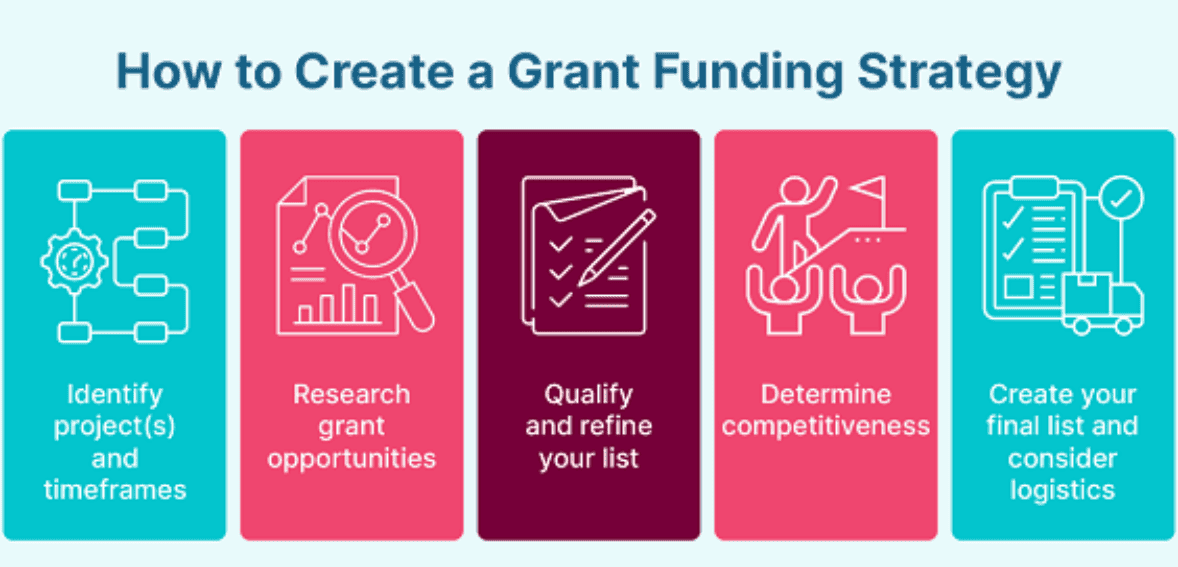
Grants can be a big plus for a nonprofit’s financial situation, but they are not to be the only income source. The money from grants is mostly limited and for a short period. If a nonprofit decides to depend on it, it can become unstable when there are changes in the awards or when they stop.
A well-balanced funding strategy involves not only individual donations, events, and recurring giving programs but also fundraising grants. Such revenue sources not only provide flexibility but also help cover operating costs, which may be outside the grant.
Grants are most effective when applied to certain projects, expansions, or pilot programs. If combined with donor support, nonprofits can make plans and adapt to the changes in community needs better.
For organizations that want to apply for nonprofit grants, the goal should be putting them together rather than being dependent on them. A diversified funding stream lessens the risk and helps in achieving long-term sustainability while letting grants contribute to the organization’s impact.
Conclusion
Writing proposals for grants is a hard task, yet it is a very useful skill for small charitable organizations. By considering realistic options, presenting honest and straightforward proposals, steering clear of typical blunders, and nurturing contacts with funders, nonprofits can raise their success rate. The granting process does not mean fighting against bigger charities. It is all about matching, getting ready, and talking. If the right procedures are followed, grants can be a source of growth, stability, and long-term positive impact on communities, thus being an aspect of a strong and well-planned fundraising strategy.
FAQs
Where can I find grant opportunities for a small nonprofit?
Community foundations, local or regional governmental programs, and donors with similar missions are preferable options to consider. Besides, collaboration with other nonprofits is very useful in finding opportunities.
How long does it take to write a grant proposal?
Writing simple applications may consume only a few weeks, while writing detailed proposals will require more time. It is recommended to plan to incorporate research, writing, and reviewing periods.
What if we do not have a grant writer on staff?
Nonprofits often count on their staff and/or volunteers to undergo the initial stages of grant writing training. Besides, they can take advantage of free training resources and occasional freelance support.
Do faith-based organizations qualify for grants?
A large number of grants consider faith-based nonprofit organizations eligible, especially those awarding for community services. The proposals should keep in mind the public benefit and the eligibility criteria.
How often should a nonprofit apply for grants?
Continuous application to a small number of selected opportunities should be a normal practice, as this will steadily help the nonprofit to gain experience and improve its chances of success, provided that the staff is not overwhelmed.