
Planning Your Nonprofit Communications Calendar: A Year-Round Engagement Guide
Consistent communication is one of the most critical factors in long-term donor engagement, yet it’s also one of the hardest for small nonprofits to maintain. When outreach is handled week by week or campaign by campaign, messages tend to become reactive, rushed, and overly focused on fundraising asks. Over time, that pattern can erode donor relationships and leave supporters feeling disconnected from your mission.
A nonprofit communications plan anchored by a clear engagement calendar helps solve this problem. Instead of scrambling to determine what to send next, your organization can plan intentional touchpoints throughout the year to keep donors informed, appreciated, and involved. This guide walks through how to build a practical, year-round communications calendar that works for small nonprofits in the United States—without adding unnecessary complexity.
Why You Need a Communications Calendar

Many nonprofits communicate only when something urgent comes up: a fundraising deadline, an unexpected expense, or an event that needs promotion. While those moments matter, relying on last-minute outreach often results in inconsistent communication. Supporters may hear nothing for months, then suddenly receive multiple emails in a short period.
A communications calendar shifts your organization from reactive to proactive. It provides structure for your donor communications schedule and ensures outreach is spread evenly throughout the year.
Without a calendar, nonprofits often run into predictable challenges:
- Messaging becomes inconsistent when different staff or volunteers respond to immediate needs.
- Key moments, such as awareness months or stewardship opportunities, are missed entirely.
- Donors experience fatigue when multiple appeals are sent close together with little context.
Even a basic content calendar can help nonprofit teams make communication more intentional. You can plan when to ask for support, when to share impact, and when to simply say thank you. This balance helps donors feel like partners in your work rather than a funding source you only contact when money is needed.
Planning ahead also reduces internal stress. Instead of debating what to send each month, your team can focus on refining messages, improving storytelling, and responding thoughtfully to unexpected opportunities.
Identify Key Seasons and Events Throughout the Year

The foundation of an effective outreach calendar is understanding the rhythm of your organization’s year. Most nonprofits already have natural peaks and quieter periods. A communications calendar helps you recognize those patterns and plan accordingly.
Start by mapping out the full calendar year and marking key milestones. These include widely recognized fundraising and engagement moments, as well as events specific to your mission and community.
For many US-based nonprofits, common anchor points include:
- GivingTuesday and year-end fundraising in November and December
- An annual spring or fall fundraising campaign
- Significant events such as galas, walks, or community days
- National or cause-related awareness months
- Program milestones, such as the start of a new service cycle or the graduation of participants
Faith-based or culturally rooted organizations may also plan around religious holidays or community observances that are meaningful to their supporters. These moments provide natural opportunities to align your mission with what donors already care about that season.
Once these key events are identified, schedule them first on your calendar. They serve as fixed points around which the rest of your messaging can be planned. This approach ensures that major campaigns are supported by lead-up communications and follow-up stewardship rather than standing alone.
When your annual nonprofit marketing plan covers the whole year rather than just peak fundraising moments, your messaging feels more cohesive and intentional to your audience.
Mixing Content Types to Keep Donors Engaged
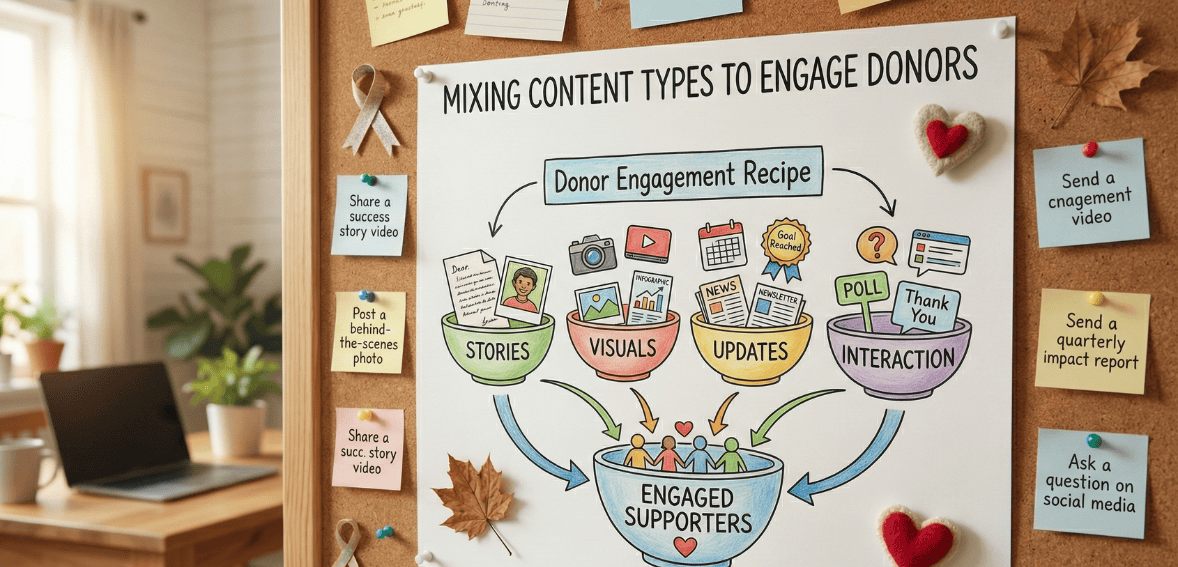
One of the most common donor complaints is that every message from a nonprofit feels like a money request. A well-designed communications calendar helps prevent this by intentionally rotating content types throughout the year.
Donors want to understand how their support makes a difference. They also want to feel acknowledged and included. By planning a variety of messages, you create space for storytelling, education, and appreciation alongside fundraising appeals.
Effective calendars usually include a mix of:
- Mission and impact stories that show real outcomes
- Educational content that explains the issue your nonprofit addresses
- Appeals that clearly connect funding to action
- Stewardship messages that thank donors and share progress
For example, instead of starting the year with an immediate ask, January might focus on a story that shows what donor support made possible the previous year. A spring fundraising appeal can then build naturally on that narrative by explaining what’s next and why support is needed now.
Spacing out appeals also helps donors stay engaged longer. If supporters receive two fundraising emails back-to-back, response rates often drop. A planned rotation ensures that each ask is supported by context and followed by gratitude.
Here’s an example of how variety might look across the year without overwhelming your audience:
- Early year: impact recap or success story
- Spring: targeted fundraising appeal tied to a specific need
- Early summer: program update or mid-year progress snapshot
- Fall: event invitation or awareness-focused content
- Late year: gratitude message followed by a year-end appeal
This kind of campaign scheduling keeps communication predictable without being repetitive. Donors come to recognize your organization as thoughtful and transparent, not transactional.
Coordinating Messages Across Multiple Channels
Supporters rarely engage with just one communication channel. They might read your emails, follow you on social media, visit your website, and occasionally receive a printed piece in the mail. Without coordination, messages across these channels can feel disconnected or redundant.
A shared communications calendar helps align outreach efforts, so messages reinforce one another rather than compete for attention. When planning a campaign or update, consider how the core message can be adapted for different platforms.
For example, if you’re running a June fundraising campaign:
- Email can explain the need in detail and include a clear call to action
- Social media can highlight short stories, quotes, or photos connected to the campaign
- Your website can host a landing page or blog post with deeper context
- A mailed postcard can reach donors who prefer offline communication
Consistent messaging across channels helps supporters understand priorities and increases the likelihood that they’ll engage. It also reduces confusion, since donors aren’t receiving mixed signals about what matters most right now.
Some nonprofits use tools like Cloud Donor Manager to track campaigns and ensure messages align with donor history and preferences. When your donor communications schedule is connected to your data, it’s easier to avoid sending irrelevant or poorly timed messages.
Coordination doesn’t require complex systems. Even a shared spreadsheet or simple calendar can help teams see what’s going out and when. The key is visibility. When everyone can see the plan, messaging stays consistent.
Also read: Multichannel Donor Communication Strategies for Better Engagement
Staying Flexible While Planning Ahead

A communications calendar is a guide, not a rigid rulebook. Unexpected events, urgent needs, or timely opportunities will arise throughout the year. The goal of planning is not to eliminate flexibility but to create enough structure that adjustments are easier to make.
When something unexpected happens, you can reschedule content rather than abandon your plan entirely. For example, if a sudden community need arises, you may pause a scheduled story and replace it with an urgent update. Because the rest of the year is already mapped out, you won’t lose momentum.
Building flexibility also means leaving some open space in your calendar. Not every week needs a scheduled message. Open slots allow you to respond thoughtfully rather than reacting under pressure.
At the end of the year, review how your communications performed. Look at open rates, response patterns, and donor feedback. Were certain months quieter than expected? Did some messages resonate more strongly than others? This reflection turns your calendar into a learning tool.
Organizations that use systems like Cloud Donor Manager often find it easier to review communication history and identify patterns over time. Even without advanced tools, simple tracking can reveal what’s working and what needs adjustment.
Each year, your calendar should improve. What starts as a basic plan can evolve into a refined nonprofit communications plan that reflects your audience’s preferences and your organization’s capacity.
Turning Planning into Consistent Engagement

The most significant advantage of a communications calendar is consistency. Donors who hear from your organization regularly—through stories, updates, and expressions of gratitude—are more likely to stay engaged over time. They understand your mission better and feel more confident that their support matters.
Consistency doesn’t mean more communication. It means more intentional communication. A planned engagement calendar ensures that every message has a purpose and fits into a larger story about your work.
When supporters receive steady, meaningful updates throughout the year, fundraising appeals feel more natural. Donors respond within an ongoing relationship rather than to a one-time request.
Planning also supports internal alignment. Staff, board members, and volunteers know what’s coming and can contribute ideas or content in advance. This shared understanding reduces last-minute stress and improves message quality.
Over time, your communications calendar becomes more than a planning document. It reflects your organization’s values of relationships, transparency, and trust.
Conclusion: Planning With Purpose Builds Stronger Donor Connections
A nonprofit communications calendar is not about sending more messages—it’s about sending the right messages at the right time, with intention behind every touchpoint. When your outreach is planned across the year, donors experience your organization as steady, transparent, and mission-driven rather than reactive or transactional. Each update, story, and appeal becomes part of a larger narrative that shows where you’ve been, where you are now, and where supporters can help take you next.
Planning also changes the internal experience of communications. Instead of racing deadlines and rushed decisions, your team gains clarity and confidence. You know what’s coming, why it matters, and how each message supports your broader goals. That clarity shows up in stronger storytelling, more thoughtful asks, and more meaningful stewardship. Donors notice when communication feels purposeful rather than hurried.
Most importantly, a year-round communications calendar helps protect donor relationships over time. Supporters who hear from you regularly—outside of fundraising moments—are more likely to stay engaged, trust your leadership, and respond when you do ask for support. Consistency builds familiarity, and familiarity builds commitment. By planning with intention, your nonprofit creates space for deeper connection, stronger retention, and a more sustainable future built on trust and shared purpose.
A well-used calendar is not just a planning document—it’s a reflection of how seriously your organization values its relationships. When donors feel informed, appreciated, and included throughout the year, they don’t just give once. They stay.
FAQs
1. How far in advance should a nonprofit plan its communications calendar?
Most nonprofits benefit from planning at least six to twelve months. This provides enough structure to support major campaigns while still leaving room to adapt when unexpected needs or opportunities arise.
2. How often should nonprofits communicate with donors?
Consistency matters more than frequency. Many small nonprofits communicate one to two times per month, using a mix of updates, stories, and appeals to stay top of mind without overwhelming supporters.
3. What if we don’t have enough content to fill a whole year?
A calendar doesn’t require constant messaging. Program updates, volunteer spotlights, and short impact stories often provide more than enough material when spaced thoughtfully across the year.
4. Should fundraising appeals be included in the communications calendar?
Yes, but they should be planned intentionally. Including appeals alongside stewardship and educational content helps donors understand why support is needed and prevents outreach from feeling one-sided.
5. How do we know if our communications calendar is working?
Review engagement metrics and donor feedback at the end of the year. Look for patterns in response rates, quiet periods, and periods of intense engagement, and use those insights to refine next year’s plan.