

Peer-to-Peer Fundraising: Empower Supporters to Raise More Online
Peer-to-peer fundraising has become one of the most effective ways for nonprofits in the United States to expand their reach without dramatically increasing staff time or marketing spend. Instead of relying solely on emails, ads, or direct appeals from the organization, peer-to-peer fundraising invites supporters to step into the role of fundraiser and share your mission with the people they know best.
This approach works because giving is personal. When someone donates through a friend, coworker, or family member, the request carries built-in trust. That trust translates into action. In fact, research from major fundraising platforms consistently shows that the majority of donations from supporter-led campaigns come from new supporters to the nonprofit. For organizations looking to increase awareness and attract new donors, supporter fundraising offers a practical, scalable solution.
This guide explains how peer-to-peer fundraising works, why it delivers strong results, and how nonprofits can launch campaigns that motivate supporters and build lasting donor relationships.
What Is Peer-to-Peer Fundraising (and Why It’s Powerful)?
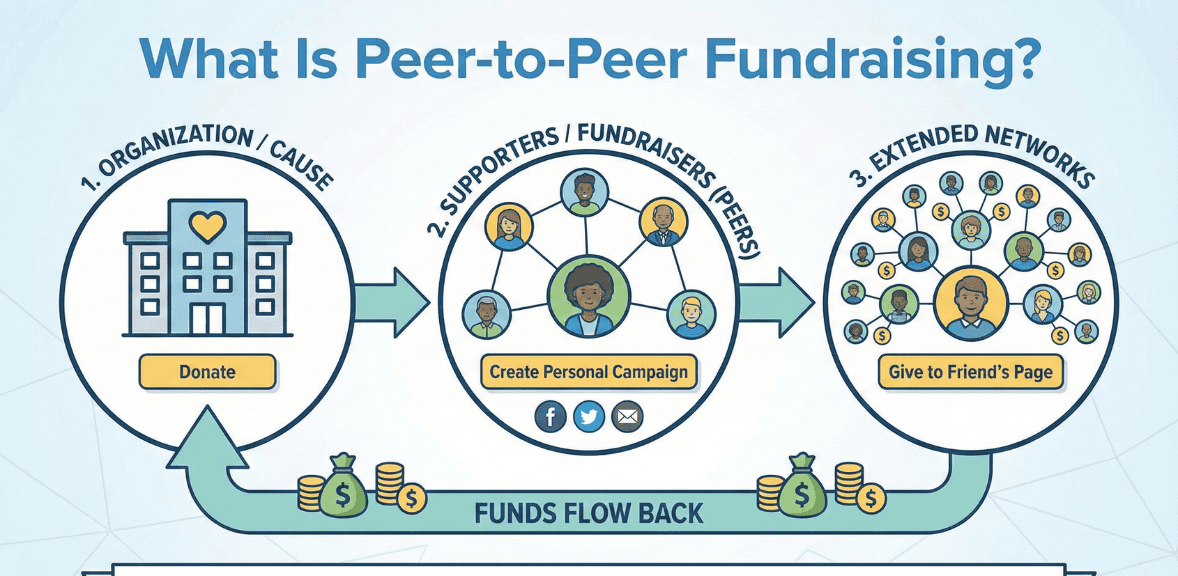
At its core, peer-to-peer fundraising is a model in which individuals raise funds for a nonprofit by asking their networks to donate. These individuals may be volunteers, donors, board members, event participants, or community advocates who care about your cause.
Instead of directing everyone to a single donation page, peer-to-peer campaigns typically give each supporter a personal fundraising page or simple tools to collect donations via social media. Contributions still go directly to the nonprofit, but they are credited to the individual fundraiser.
This model is powerful for a few key reasons.
First, it dramatically expands reach. A nonprofit’s email list and social following are limited. Supporters, however, collectively represent thousands of additional connections. Each participant introduces your mission to people you may never reach through traditional channels.
Second, it adds trust and relevance. People are more likely to give when someone they know explains why a cause matters to them personally. A message that begins with “I care about this because…” feels very different from a generic fundraising appeal.
Finally, peer fundraising excels at donor acquisition. Studies from large Crowdfunding platforms indicate that roughly 80% of people who give to peer-led fundraisers are new to the organization. That means these campaigns are not just raising money; they are opening the door to long-term relationships.
Benefits of Peer-to-Peer Fundraising for Nonprofits

While revenue is often the primary goal, the benefits of peer-to-peer fundraising extend far beyond the dollars raised.
New Donors and Greater Awareness
Every supporter who fundraises for you becomes a visible ambassador for your mission. Their friends and family learn about your work through a personal lens, not a marketing message. This exposure can lead to:
- First-time donors discovering your organization
- Increased social sharing and online visibility
- Greater awareness in communities where you have little presence
Because these donors are introduced through someone they trust, they are often more receptive to future communication.
Deeper Supporter Engagement
Supporters who fundraise on your behalf invest more than money. They invest time, reputation, and personal relationships. That level of involvement often leads to more substantial long-term commitment.
A volunteer who raises funds may later become a recurring donor. A donor who runs a birthday fundraiser may join a committee or attend events. Peer-to-peer fundraising gives supporters an active role, not just a transactional one.
Cost-Effective Fundraising
Traditional fundraising campaigns require staff time, paid advertising, and ongoing outreach. Peer-to-peer campaigns shift much of the outreach to supporters themselves.
Your organization still provides tools, guidance, and messaging, but the distribution happens organically through personal networks. This makes peer-to-peer fundraising especially attractive for small and mid-sized nonprofits working with limited budgets.
Community and Momentum
Many peer campaigns include friendly competition or shared milestones. Walk-a-thons, team challenges, and social fundraising drives create energy and a sense of collective purpose.
When supporters see progress bars moving or teammates reaching goals, they feel part of something bigger. That momentum often drives additional giving and participation.
How to Launch a Successful Peer-to-Peer Campaign

Launching a strong peer-to-peer campaign requires planning, but it does not have to be complicated. The most successful campaigns focus on clarity, simplicity, and supporter support.
Choose the Right Platform
You can technically run a peer campaign with basic online forms, but dedicated peer-to-peer tools make the process much easier for everyone involved. Many nonprofit fundraising platforms allow supporters to create personal pages, track progress, and share their efforts online.
The key is ease of use. If setting up a page or sharing a link feels confusing, supporters are less likely to participate fully.
Set a Clear Goal and Theme
Supporters are more motivated when they understand precisely what they are working toward. Instead of a general appeal, define a specific campaign goal and purpose.
For example:
- Raising funds to support a summer meal program
- Covering the cost of medical care for rescued animals
- Funding classroom supplies for a new school year
A clear theme helps fundraisers explain the campaign in their own words and makes the campaign’s impact easier for donors to understand.
Recruit the Right Fundraisers
Start by inviting your most engaged supporters. These might include volunteers, long-time donors, board members, or event participants. A personal invitation works far better than a mass announcement.
Make it easy to say yes. Explain what participation looks like, how much time it requires, and how you will support them along the way.
Provide Simple Toolkits and Guidance
Many people hesitate to fundraise because they do not know what to say. Providing clear, simple resources removes that barrier.
A basic toolkit might include:
- Sample emails or text messages
- Short social media captions
- Images or graphics sized for sharing
- Key talking points about your mission
These materials should feel optional, not mandatory. Supporters should be encouraged to personalize messages in their own voice.
Support and Motivate Throughout the Campaign
Peer-to-peer fundraising is not a “set it and forget it” effort. Ongoing encouragement makes a real difference.
Check in with fundraisers during the campaign. Celebrate milestones, share progress updates, and publicly recognize effort. Even a short message of appreciation can re-energize someone who feels unsure about asking again.
Close the Campaign with Gratitude
When the campaign ends, take time to celebrate the collective achievement. Thank fundraisers by name when possible and acknowledge the role they played in reaching the goal.
Closing firmly reinforces positive feelings and increases the likelihood that supporters will participate again.
Also read: Board Member Peer-to-Peer Fundraising Activation and Training
Tips to Empower and Motivate Your Fundraising Champions
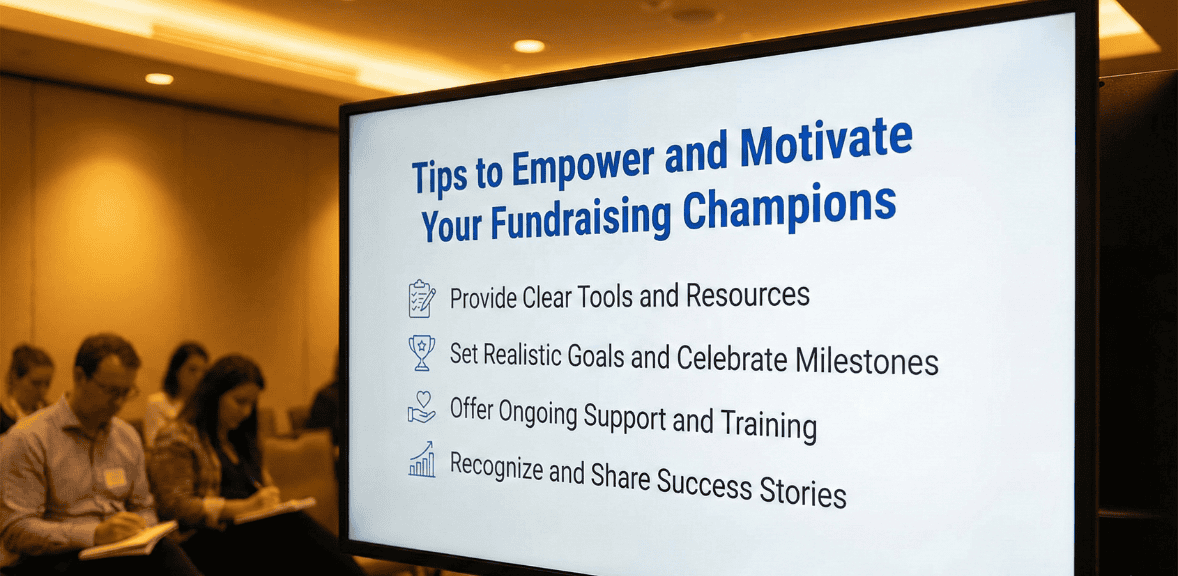
The success of peer-to-peer fundraising depends on how supported your fundraisers feel. Empowered supporters raise more and enjoy the process.
Encourage Personal Stories
The most effective peer appeals are personal. Encourage supporters to share why they care about your cause, not just what the organization does.
A short personal explanation adds context and authenticity, helping donors understand why the campaign matters.
Use Light Competition and Visibility
Leaderboards or progress trackers can motivate participation without pressure. Seeing progress creates momentum and shows fundraisers that their efforts matter.
Competition works best when it feels fun and optional, not high-stakes or stressful.
Make Participation Easy
Technology should remove friction, not add it. Donation pages should be mobile-friendly, and sharing should take only a few clicks.
If supporters struggle with the tools, they may stop promoting their page. Quick responses to questions or issues show that you value their time.
Recognize Effort, Not Just Results
Not every fundraiser will raise the same amount. Recognize participation and effort alongside top totals.
Public appreciation, thank-you messages, or small tokens of recognition help supporters feel seen and valued, regardless of outcome.
Following Up: Turning Peer Donors Into Long-Term Supporters

One of the most overlooked parts of peer-to-peer fundraising is what happens after the campaign ends, because many peer donors are giving for the first time, and follow-up matters.
Welcome New Donors Thoughtfully
Peer donors often give because of a relationship with the fundraiser, not familiarity with your organization. After the initial thank-you, introduce them to your mission in greater detail.
A short welcome series can:
- Thank them for their gift
- Explain how their donation made an impact
- Invite them to stay connected through updates or newsletters
This helps move the relationship from a one-time gift to ongoing engagement.
Coordinate Gratitude With Fundraisers
Encourage peer fundraisers to thank their donors personally as well. When donors hear appreciation from both the organization and the individual they supported, it reinforces trust and goodwill.
Track and Nurture Relationships Over Time
As peer campaigns grow, tracking donor relationships becomes more important. A cloud donor manager can help organizations identify which donors came through peer-to-peer fundraising and tailor follow-up accordingly, without adding unnecessary complexity to staff workflows.
Over time, include these donors in regular communications and share stories that show continued impact. Some may give again, volunteer, or even become peer fundraisers themselves.
Think Beyond a Single Campaign
Peer-to-peer fundraising works best as part of a broader engagement strategy. Each campaign builds awareness, relationships, and confidence for the next one.
Organizations that invest in thoughtful follow-up often find it easier to recruit fundraisers in the future, because supporters can see real results from past efforts.
Conclusion: Turning Supporters Into Partners in Your Mission
Peer-to-peer fundraising works because it reflects how people actually give: through relationships, trust, and shared purpose. When supporters are invited to fundraise, they are not just amplifying your message—they are lending their credibility to your mission.
For nonprofits, this approach offers a practical way to reach new audiences, strengthen existing relationships, and build community without relying solely on staff-driven outreach. For supporters, it provides a meaningful way to take action beyond making a single donation.
The most successful organizations treat peer-to-peer fundraising as more than a campaign. They see it as an entry point. Each fundraiser is a potential long-term advocate. Each donor is a future supporter who discovered the mission through someone they trust.
By equipping supporters with clear goals, simple tools, and genuine appreciation, nonprofits can transform supporter fundraising into a powerful engine for growth—one that extends impact far beyond a single appeal and strengthens the mission for years to come.
FAQs
Do we need special software for peer-to-peer fundraising?
Specialized software is not required, but it is helpful. Purpose-built tools enable supporters to create personal fundraising pages, track progress, and easily share links. Social platforms like Facebook also offer built-in fundraising features for birthdays and special occasions. These tools simplify the process and reduce administrative work for nonprofits.
How do we motivate supporters actually to fundraise?
Motivation starts with a personal ask and a clear explanation of impact. Supporters are more likely to participate when they understand how their effort translates into tangible outcomes. Providing templates, recognizing progress, and sharing success stories from other fundraisers can also build confidence and momentum.
Is peer-to-peer fundraising only for significant events?
No. While peer fundraising is common at events such as charity walks or runs, it also works well for small, casual campaigns. Birthday fundraisers, short-term challenges, or seasonal appeals can all use a peer-to-peer approach. Even one enthusiastic supporter who fundraises within their network can make a meaningful difference.
What kind of results can nonprofits expect?
Results vary depending on audience size and engagement, but many organizations see substantial donor acquisition through peer campaigns. Average amounts raised per fundraiser typically fall in the hundreds of dollars, while top participants raise much more. Beyond revenue, nonprofits gain active advocates and new relationships that can grow over time. Using a cloud donor manager can help track these outcomes and inform future campaigns.
How do we measure success beyond total dollars raised?
While revenue matters, peer-to-peer fundraising success should also be measured by donor growth and engagement. Key indicators include the number of new donors the campaign attracts, the number of supporters who actively participated as fundraisers, and whether peer donors remain connected after the campaign ends. Tracking follow-up engagement, such as repeat gifts or email sign-ups, helps nonprofits understand the long-term value of their supporter fundraising efforts.