
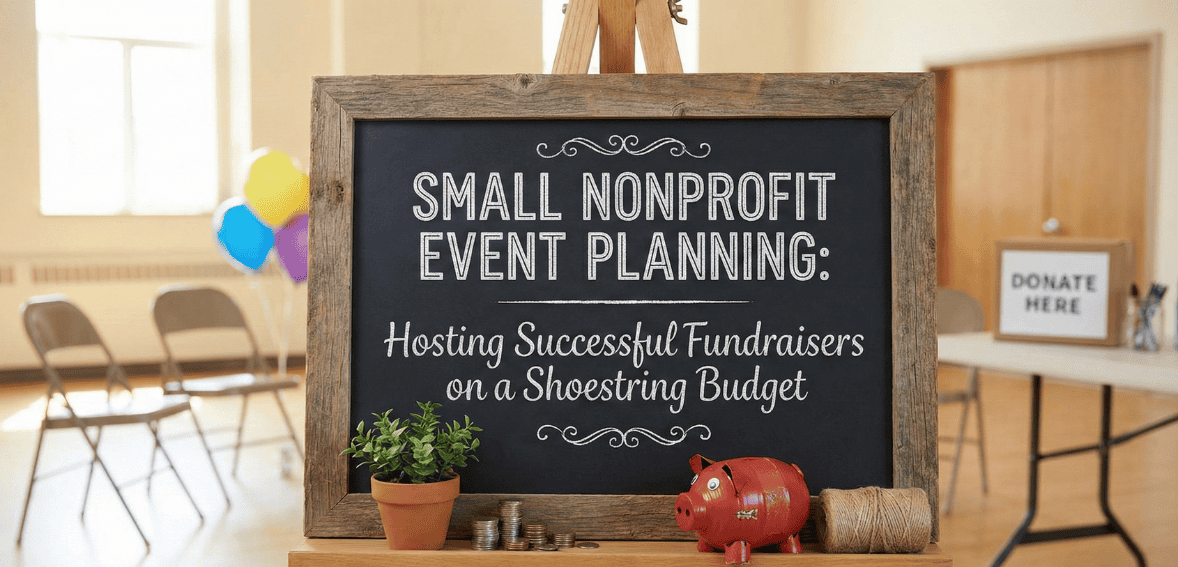
Small Nonprofit Event Planning: Hosting Successful Fundraisers on a Shoestring Budget
Fundraising events play a critical role in helping small nonprofits raise money, strengthen relationships, and build community trust. Yet for organizations operating with limited staff, volunteers, and financial resources, event planning can feel risky. One poorly planned fundraiser can drain time, energy, and money instead of generating support.
The good news is that small nonprofit event planning does not require a large budget to be effective. Many of the most successful low-budget fundraising events focus on connection rather than production value. When events are designed around community interests, supported by volunteers, and managed with realistic expectations, they can raise meaningful funds while deepening long-term engagement.
This guide walks through practical strategies for low-budget fundraising events that work well for small nonprofits across the United States. From choosing the proper event format to keeping costs down, mobilizing volunteers, and following up effectively, the focus is on maximizing impact without overextending your organization.
Picking the Right Event Format for Your Capacity

One of the most common mistakes in community fundraiser planning is choosing an event that is too complex for the organization’s size and resources. High-end galas, ticketed banquets, or large-scale festivals often require months of planning, upfront expenses, and specialized expertise. For small nonprofits, these events can strain staff and volunteers while delivering unpredictable results.
Instead, successful small nonprofit event planning starts with an honest assessment. Consider how many people can realistically help plan and run the event, how much money can be spent up front, and which activities resonate with your community.
Low-budget fundraising events work best when they are simple, familiar, and easy to participate in. Across the US, community-centered events often outperform elaborate productions because they feel accessible and authentic.
Examples of budget-friendly nonprofit events that consistently perform well include:
- Community potluck dinners are hosted in church halls or community centers
- Charity yard sales or rummage sales using donated items
- Walk-a-thons or fun runs that emphasize participation over competition
- Trivia nights or bingo evenings with donated prizes
- Virtual fundraising challenges that allow supporters to give and share online
The key is choosing an event format that aligns with your supporters’ lifestyles. A family-friendly nonprofit might succeed with a picnic or game night, while a faith-based organization may find strong turnout for a fellowship meal or service-based fundraiser. Cultural relevance matters, especially in diverse US communities where engagement varies by neighborhood, age group, and tradition.
When the event fits your audience, promotion becomes easier, and participation feels natural rather than forced.
Budget-Friendly Planning Tips That Protect Your Bottom Line

Once the appropriate event format is chosen, the next step is to control expenses. For low-budget fundraising events, every dollar saved can go directly toward the mission. Careful planning can dramatically reduce costs without diminishing the attendee experience.
Venue costs are often among the most significant expenses, yet among the easiest to minimize. Many small nonprofits successfully host events at:
- Public parks or recreation areas with minimal permit fees
- Community centers, libraries, or school gyms
- Church halls or partner organization facilities
In many US towns, local institutions are willing to donate space for charitable causes, especially when they receive recognition or community goodwill in return.
Food and supplies are another area where creativity pays off. Instead of purchasing everything outright, nonprofits often secure donated or discounted items by reaching out to local businesses. Restaurants may contribute food, grocery stores may donate beverages, and small retailers may provide raffle prizes or gift cards. These partnerships benefit both parties by increasing visibility while reducing expenses.
Promotion is another place where costs can quietly add up. Printed invitations and mailed flyers are expensive and often unnecessary. Digital outreach via email and social media is not only cost-effective but also highly practical for community fundraising planning. Many supporters expect to receive event information online, and sharing posts allows your message to spread organically.
Simple tools can also keep planning organized. Some nonprofits use donor management platforms like Cloud Donor Manager to track event participants, donations, and follow-up communications in one place. When used thoughtfully, tools like this can save time and reduce administrative errors without adding complexity.
Mobilizing Volunteers as the Core of Affordable Events
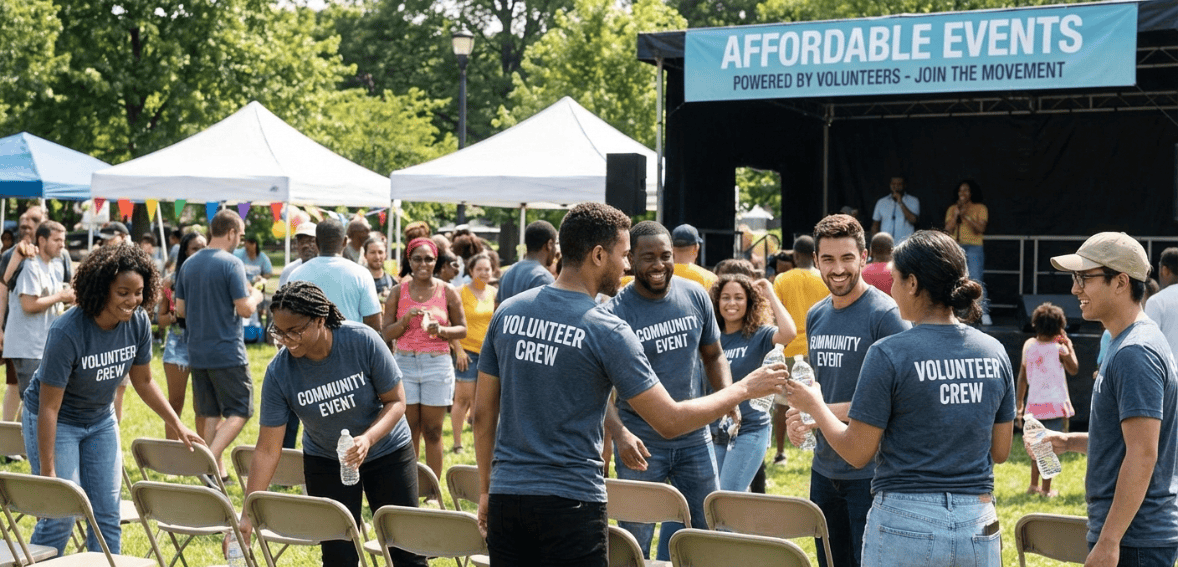
Volunteers are the backbone of successful budget-friendly nonprofit events. Without them, even the most straightforward fundraiser becomes difficult to execute. The goal is not just to recruit volunteers, but to organize them effectively so responsibilities are shared and manageable.
Start by clearly defining the tasks required for your event. These may include setup, registration, food coordination, entertainment, clean-up, and follow-up. When roles are specific, volunteers are more likely to commit because they understand what is expected of them.
Creating a small volunteer event committee can significantly reduce the burden on any single person. Instead of having a single staff member handle everything, a committee allows tasks to be divided and completed in parallel. This approach is efficient for small nonprofits with limited staff capacity.
Faith-based organizations often have a built-in advantage in securing event volunteering. Congregations, small groups, and ministry teams can each take ownership of a portion of the event. Assigning responsibilities such as hospitality, decorations, or logistics to different groups creates accountability while fostering shared ownership.
Volunteer appreciation should not be overlooked. Even a simple thank-you message or public acknowledgment can make volunteers feel valued. When volunteers feel appreciated, they are more likely to help again, reducing recruitment challenges for future events.
Maximizing Engagement and Revenue Without Raising Costs

Raising funds at an event does not require expensive add-ons or aggressive asks. Many fundraising event tips focus on increasing engagement, which naturally leads to higher giving. When attendees feel connected to the mission, they are more likely to contribute beyond the ticket price or entry fee.
One practical approach is to include small, optional fundraising opportunities during the event. These additions should feel integrated rather than disruptive. For example, a raffle featuring donated items can generate excitement while raising additional funds. Similarly, selling simple merchandise such as branded mugs or baked goods made by supporters can increase revenue with minimal upfront cost.
Technology can also play a role when used thoughtfully. Mobile giving options allow attendees to donate quickly during the event without standing in line or handling cash. Some nonprofits quietly integrate tools such as Cloud Donor Manager to efficiently process and record these donations, ensuring accurate records for follow-up and stewardship.
Equally important is engaging attendees emotionally. A short speech from a staff member, volunteer, or beneficiary can remind people why the cause matters. Sharing a brief story or testimonial helps attendees see the real-world impact of their support. This connection often motivates people to give more generously than any sales pitch could.
Visual elements such as photos or a short video can also reinforce the mission without requiring elaborate production. The goal is clarity and authenticity, not perfection.
Post-Event Follow-Up on a Dime

The success of a fundraising event does not end when the last chair is stacked. Post-event follow-up is a critical part of small nonprofit event planning, yet it is often rushed or overlooked. Thoughtful follow-up strengthens relationships and sets the stage for future support.
Thanking participants should be a priority. A heartfelt email sent within a few days of the event lets attendees, volunteers, and sponsors know their efforts were appreciated. Including a specific result, such as the amount raised or the number of people helped, gives supporters a tangible sense of impact.
For key volunteers or major contributors, handwritten notes can be especially meaningful. While they take more time, they stand out in a digital world and reinforce personal connections.
Social media also plays a vital role in post-event stewardship. Sharing photos, tagging sponsors, and publicly thanking volunteers helps extend the event’s life while demonstrating transparency and gratitude. These posts also serve as a subtle promotion for future fundraisers by showing an active, engaged community.
Accurate recordkeeping supports effective follow-up. Keeping track of who attended, who volunteered, and who donated makes future outreach more personal. Some nonprofits rely on donor management systems such as Cloud Donor Manager to organize this information so no supporter is overlooked.
Also read: Maximizing Corporate Giving: Matching Gifts and Corporate Partnerships Explained
Measuring Success Beyond Dollars Raised
While fundraising totals matter, they are not the only measure of a successful event. For low-budget fundraising events, success should also be evaluated through long-term impact.
Consider questions such as:
- Did the event attract new supporters or volunteers?
- Did existing donors deepen their engagement?
- Did the event increase community awareness of the mission?
An event that breaks even financially but brings in new volunteers or donors may still be a substantial investment. Over time, these relationships often lead to greater support than a single high-revenue event.
Setting realistic goals before the event helps guide planning and evaluation. Rather than aiming for an arbitrary dollar amount, align goals with capacity and mission needs. This approach reduces pressure and helps teams focus on meaningful outcomes.
Building Sustainable Fundraising Through Simplicity
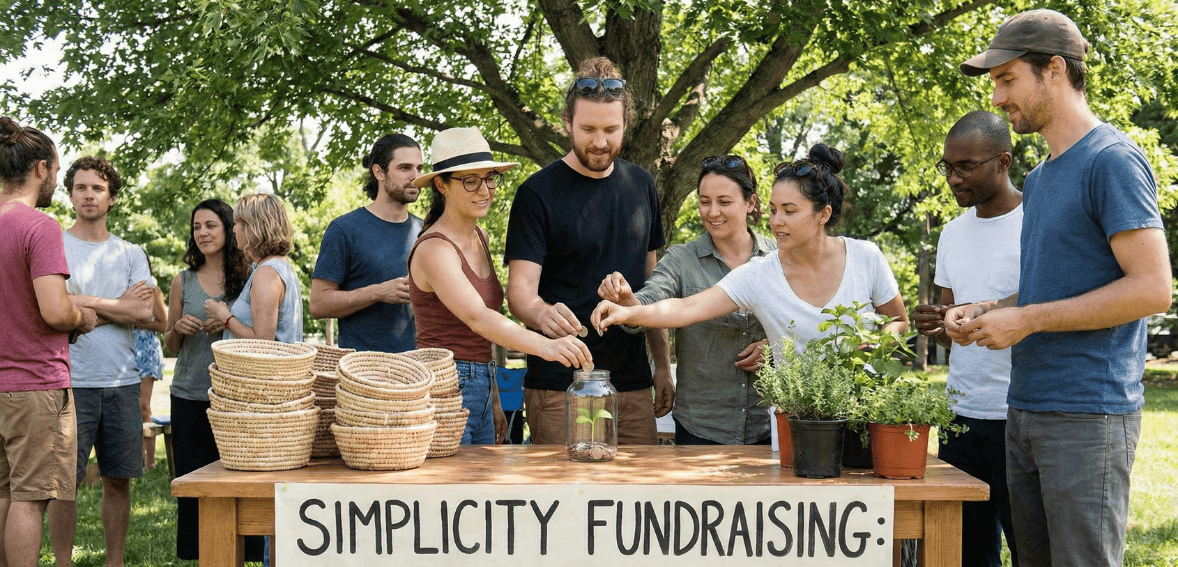
Fundraising does not need to be expensive or overwhelming to be effective. In fact, many small nonprofits find that simpler events create stronger connections and more sustainable support. By choosing the proper event format, controlling costs, empowering volunteers, and engaging supporters authentically, organizations can host budget-friendly nonprofit events that deliver real value.
Small nonprofit event planning is ultimately about stewardship. When resources are used wisely, and supporters feel valued, trust grows. That trust is what fuels long-term fundraising success, not flashy venues or large budgets.
With creativity, careful planning, and community-centered thinking, even the most modest fundraiser can strengthen relationships, build momentum, and move your mission forward—without breaking the bank.
Conclusion: Small Events, Lasting Impact
Successful fundraising is not about how much you spend—it is about how well you connect. For small nonprofits, the most powerful events are often the simplest: gatherings that reflect your values, respect your capacity, and invite your community to participate meaningfully. When planning is realistic, volunteers are empowered, and costs are kept in check, fundraising events become sustainable rather than stressful.
Low-budget fundraising events also build something money cannot buy—trust. Each well-run event reinforces confidence in your organization’s leadership and stewardship. Over time, these moments of connection turn attendees into advocates and one-time donors into long-term supporters.
Small nonprofit event planning is not about doing more. It is about doing what matters, consistently and thoughtfully. With intention and care, even modest events can generate lasting support for your mission and the people you serve.
FAQs
What is the best type of fundraising event for a small nonprofit?
The best event is one that matches your capacity and community. Simple formats like potlucks, fun runs, or trivia nights often work well because they require low upfront costs and encourage broad participation.
How far in advance should a low-budget fundraiser be planned?
Most small events can be planned in 6 to 10 weeks. This allows enough time to recruit volunteers, secure donations, and promote the event without overwhelming staff or supporters.
How can nonprofits keep fundraising events affordable?
Cost control starts with donated venues, in-kind contributions, and volunteer labor. Using digital promotion and borrowing equipment also helps reduce expenses while maintaining quality.
Are fundraising events worth the effort for small organizations?
Yes, when goals are realistic. Even modestly funded events can generate new donors, strengthen relationships, and increase visibility in the community.
How should nonprofits follow up after an event?
Timely thank-you messages, impact updates, and public recognition show appreciation and accountability. Consistent follow-up helps turn event participants into long-term supporters.