

Thank-You Call Assignments That Help Board Members Support Donor Stewardship
Transforming your nonprofit’s donor relationships with a single board member’s phone call is easy, and it won’t turn your volunteers into fundraisers.
Donors give to people, not to organizations, and a phone call from a board member is always better than a staff-written thank-you letter. Most nonprofits don’t use this simple and effective method because board members feel awkward using it, and no one has taken the time to create an easy system for it.
This article shows you how to create a system for board members to make thank-you calls. It shows you what makes these calls effective and how to assign calls to board members to avoid creating call anxiety. It also covers how to track calls to ensure the calls are actually made. This is not a fundraising strategy. It shows donors the human side of your organization, helps retain them, and fosters a deeper, more meaningful relationship with your mission.
Stewardship Is a Separate Lane from Fundraising
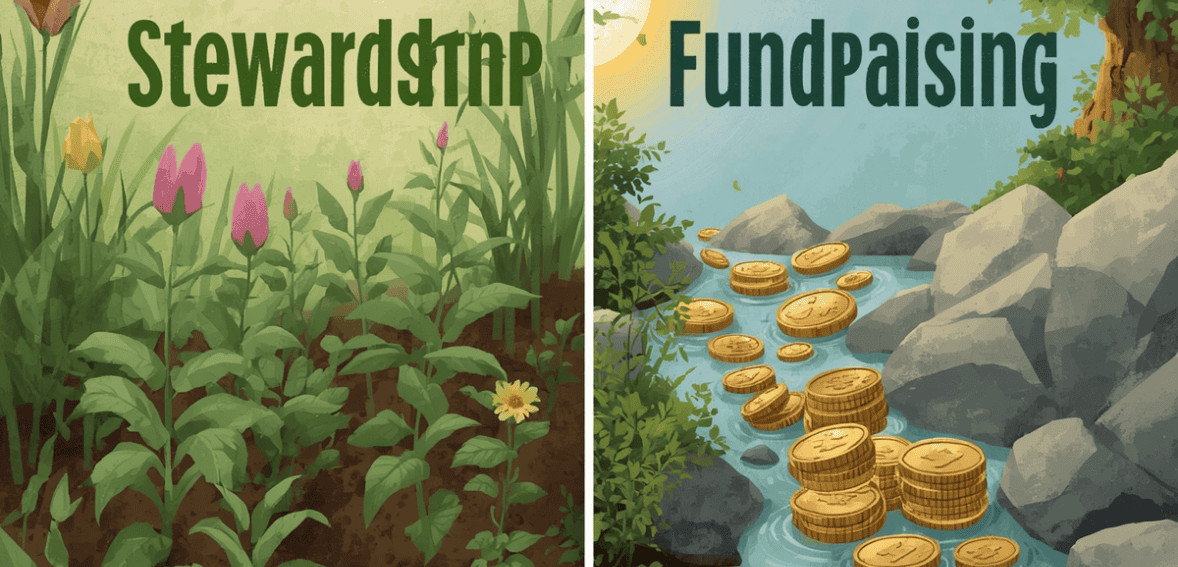
A major issue many nonprofits face is confusing stewardship with solicitation. The request to “call donors” conjures images of money requests in the minds of many board members. This alone creates reluctance to support, avoidance, and failure to act fully.
Calls to thank donors are in a completely different category. The purpose of these calls is to say thank you. There is no solicitation. The purpose of the calls is to say donors should feel appreciated, and so should those who support the mission. Framing board participation in this way completely shifts the action from fundraising to stewardship.
This is important because it shapes how board members understand and approach the calls. A board member does not have to make a funding request, so they approach the call more relaxed and sincere, with a greater degree of belief in the purpose of the call. Donors really appreciate this difference. The call is not driven by a gift acknowledgment protocol and a development officer. Thank you. Calls are not a precursor to a solicitation. They are not a request to be funding board members in disguise. They are simply one human being telling a donor, “Your support matters.”
Why Board Member Thank-You Calls Outperform Staff Calls for Major Donor Retention

Research shows that outreach from leaders improves donor retention compared with typical acknowledgment methods. Thank-you calls from board members signal something different from staff calls; they demonstrate that an organization volunteer acknowledges that a donor’s contribution warrants a personal conversation.
Donors appreciate this level of acknowledgment. Board members are not employees who have a job requirement to keep donors satisfied. They are mission-driven volunteers. That level of outreach makes a difference. Thank you. Calls from board members lead donors to tell their friends, donate again at a higher level, and increase their donations the following year.
The donor retention numbers are impressive. Research consistently shows that a personal thank-you call within a day results in higher renewal rates; some studies report retention improvements of 40% or more. For organizations with a large number of mid- to high-level donors, this retention improvement translates into dramatically higher revenue over the years. A call from a member is not just a courtesy; it is a retention strategy with measurable improvement.
Staff members sometimes struggle to balance the natural flow of conversation that board members typically have. Board members can explain their personal reasons for each choosing to join the board. They can tell the story of when the organization’s efforts impacted and inspired them. They can relate to a donor through shared beliefs and interests. That authenticity is the whole value proposition.
How to Assign Calls So Board Members Feel Prepared, Not Pressured
The greatest barrier to implementing an effective program for making thank-you calls is not one of reluctance — most board members will help if asked. The real problem is a lack of clarity. Board members avoid making calls if they do not know what to say, who to call, when to call, or what to do if the donor asks an unexpected, challenging question. Inevitably, the opportunity for the thank-you call is lost.
Eliminate ambiguity with good assignment design, and be clear about what you want each person to do.
To begin, make the calls in weekly batches. As gifts are processed, direct the gift to the call assignment as a thank-you call and do not allow the gift to proceed to the standard appreciation letter. Assign calls based on the donor’s previous relationships when appropriate. Board members who served on a committee with the donor or the donor’s child’s coach, or who sat in the same congregation, have a relationship that makes the call much more comfortable. In the absence of a relationship, assign based on who has the time to make the calls this week and who has already completed their call assignment.
Give each board member a short, one-page call guide. This document should include the donor’s first name, the gift amount, what the gift supported, and one or two-sentence prompts — not a script, but a starting point. Something like: “You might mention that this gift directly funds [program name], which [brief impact statement].” Remind board members on the sheet that the call should be conversational and short. Two to three minutes is ideal. If they reach voicemail, a warm, brief message is just as valuable.
Anticipate questions that board members do not want to answer. What if the donor wants to know where their donation goes? What if they get annoyed about an issue? Answer these questions in one simple paragraph. Board members will be more confident in handling difficult questions with your call guide and, as a result, will make the calls.
The timing of your calls is important. A call thanking the donor for their contribution is much more appreciated when made within two days of their donation, rather than three weeks later. Build the call lists so they reach the board members soon, ideally on the same day the donations are recorded. If the donations are processed weekly, build and distribute the call lists at the beginning of each week.
Logging Call Completions So No Donor Gets Missed or Called Twice
Even the best-designed call program falls apart without a tracking system. Nonprofit thank-you calls need to be logged the same way any donor interaction is logged — with a date, the board member who made the call, a brief note about how it went, and confirmation that it is complete.
Without this, two things happen. Donors go uncontacted and forgotten when board members assume someone else is handling the task of reaching out to them. Or members of the board call the same donor multiple times, causing confusion to the donor and an embarrassing lack of communication within the organization.
Bloomerang
Bloomerang is a nonprofit-specific donor management system that excels at managing call logs. Donor records can maintain a history of contacts. If a board member makes a thank-you call, either the staff member, board member, or the call’s author can add the log and note to the history. This maintains an orderly record and removes the donor from the pending call list.
Salesforce Nonprofit Success Pack (NPSP)
Salesforce’s Nonprofit Success Pack is a typical CRM for larger organizations with complex donor portfolios. Call assignments can be tracked as tasks assigned to specific users. Tasks have due dates and completion statuses. Tasks communicate with their respective records upon completion, making it easy for a development director to run a weekly report to see which assignments are still pending and which have been completed.
Bloomerang, Little Green Light, and Similar Tools
Smaller organizations that don’t use a dedicated CRM system can track the same info using a shared Google Sheet. Donor name, gift date, assigned board member, call status, date completed, and notes. To be effective, the sheet should be updated and reviewed weekly. Assign one staff member to update the sheet.
Regardless of the system you adopt, incorporate a weekly check-in for the development tracker. A quick five-minute review at the start of each week should be sufficient to identify anything that has been stagnant for over 48 hours and assign it to a member of the team to take care. If a board member has a history of not completing assignments, have a direct conversation with them to address the issue. It may be that they need a different task to complete that involves the same outcome, such as sending a note to a donor instead of a phone call.
Conclusion
Nonprofit thank-you calls made by board members are one of the highest-return stewardship activities available to any development program. They cost almost nothing. They take only a few minutes. And they communicate something no letter or email can replicate — that a real human being who chose to dedicate their time to this organization thought the donor’s generosity was worth a personal conversation.
The organizations that do this well are not doing anything complicated. They have a clear assignment process, a simple call guide, a reliable tracking system, and a cultural understanding that stewardship is its own category of board work — separate from fundraising, and equally important.
If your board members are hesitant, start small. Ask for three calls per board member per quarter. Build the muscle. Let them experience the warmth of the resulting conversations. Once they feel how well these calls go, the hesitation disappears. Donors are almost universally grateful to receive them. Board members are almost universally surprised by how easy and rewarding the calls are.
That is where donor retention is built — not in the ask, but in the thank-you.
Frequently Asked Questions
Q: How long should a board member’s thank-you call last?
Two to three minutes is the ideal length for most donor thank-you calls. The goal is warmth, not comprehensiveness. A brief, genuine expression of gratitude is more memorable than a long conversation that risks feeling rehearsed. If the donor wants to talk longer, that is a great sign — let them lead.
Q: What if a board member reaches voicemail on a nonprofit thank-you call?
Voicemail is still valuable. Encourage board members to leave a short, warm message — their name, their role on the board, a brief thank-you, and their number in case the donor wants to connect. Many donors never call back, but they listen to the message and remember it. The emotional impact is nearly the same as a live conversation.
Q: How do we handle donors who prefer not to receive calls?
Check your donor records before assigning calls. Many donors flag a communication preference during the giving process or have indicated it previously. Respecting those preferences is part of good stewardship. For donors with no listed preference, a call is generally well-received — especially when it comes from a board member rather than staff.
Q: How often should board members make thank-you calls?
A reasonable ask is two to four calls per month per board member, depending on the organization’s gift volume and board size. This keeps the commitment manageable while ensuring the most significant donors hear from someone personally. For year-end giving season, you may increase the cadence temporarily — just make sure your assignment and tracking systems can handle the volume.