
What Is Donor Fatigue? How to Avoid It
Donor fatigue occurs when supporters feel emotionally and mentally drained from being asked to give, exposed to nonstop crises, or unable to see a clear connection between their generosity and real outcomes.
When this kind of giving exhaustion sets in, people don’t necessarily stop caring. They often stop responding. They may ignore emails, skip events, delay renewals, give smaller gifts, or quietly concentrate their generosity on fewer organizations they trust most.
It’s important to be clear: this challenge isn’t always about money. Many supporters can afford to give and still feel overwhelmed by constant requests, repetitive messaging, or unclear results.
In that sense, donor fatigue is closely related to attention burnout. Supporters have limited time, focus, and emotional bandwidth. When outreach feels like an endless stream of “urgent” appeals without enough appreciation or proof of progress, disengagement becomes much more likely.
The good news is that this form of supporter burnout is preventable, measurable, and reversible. Avoiding it doesn’t mean asking less forever. It means asking smarter—through better timing, stronger storytelling, improved segmentation, and thoughtful stewardship so supporters feel respected and inspired.
When fundraising is designed around the donor experience, organizations protect long-term retention and revenue, even in years when audiences are flooded with competing appeals.
Understanding Donor Fatigue (And Why It’s More Than “Asking Too Much”)
Donor fatigue refers to a gradual decline in a supporter’s willingness to engage or give because the experience of being a donor begins to feel draining, confusing, or thankless. Some supporters reach this point after repeated solicitations.
Others disengage because they’re overwhelmed by emotionally heavy stories across every channel. In some cases, people pull back when they feel their contribution won’t meaningfully move the needle.
A common misconception is that this problem only affects small donors. In reality, every segment is vulnerable—first-time donors, recurring givers, major contributors, and even long-time advocates. The triggers differ by group, but the outcome looks similar: declining response rates, lower retention, and reduced enthusiasm.
Another misconception is that donor burnout is “the donor’s problem.” In practice, it’s often a symptom of system design issues: unclear donor journeys, inconsistent communication, limited preference controls, or a culture of constant urgency.
When every message is framed as a crisis, supporters eventually stop believing any of them are. That’s how disengagement quietly takes hold.
In today’s attention economy, this challenge is amplified. People are constantly solicited by brands, subscriptions, causes, and peer-to-peer campaigns. Without disciplined communication and earned trust, supporter fatigue becomes increasingly common.
Why Donor Fatigue Happens (The Most Common Root Causes)
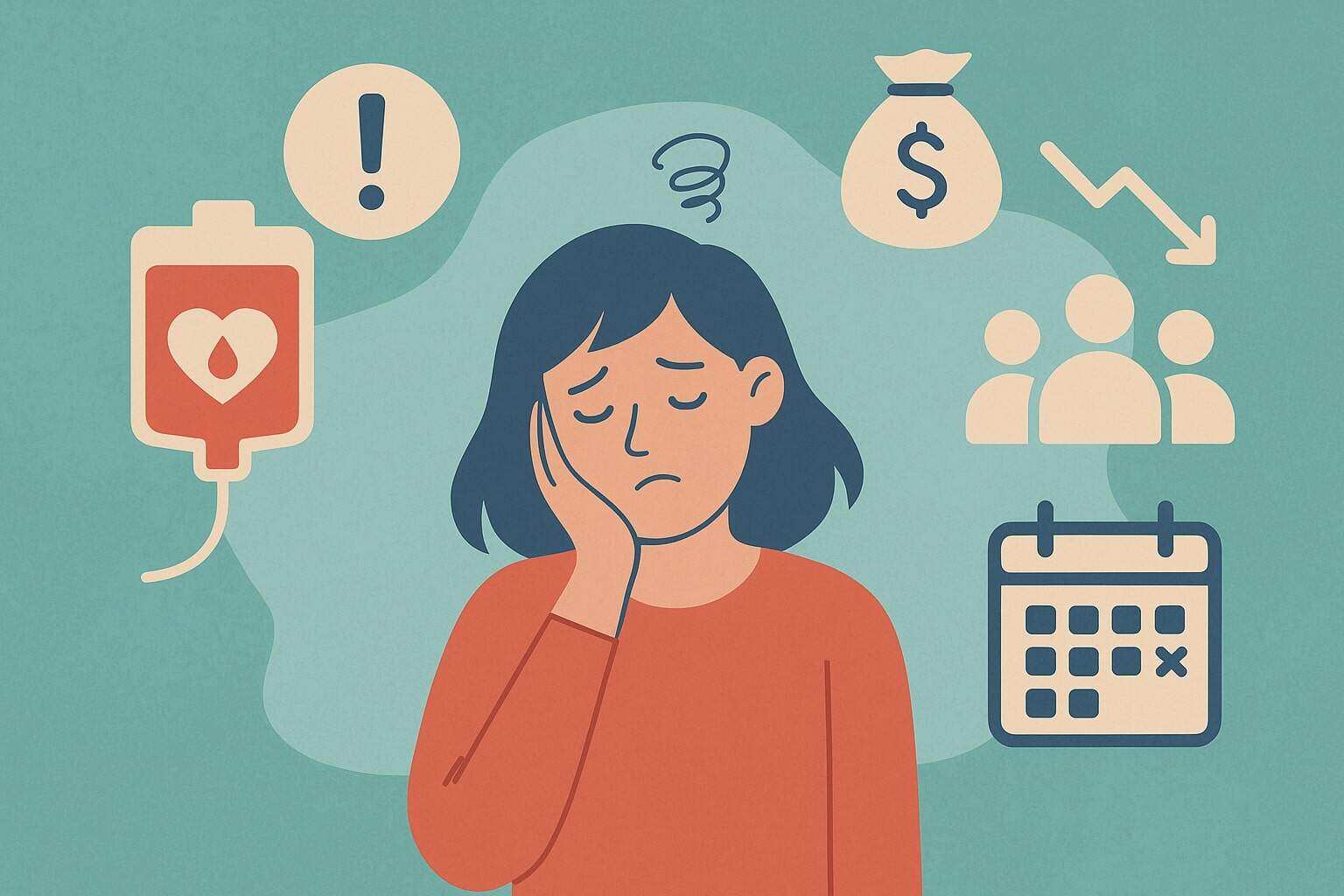
Giving exhaustion rarely has a single cause. It usually builds from small, repeated frictions that make generosity feel stressful instead of meaningful. The biggest drivers are over-solicitation, weak impact visibility, and inconsistent trust-building.
Many organizations unintentionally create disengagement by running nonstop campaigns without a stewardship plan between appeals. A supporter gives, receives an automated receipt, and then gets another request days later. Over time, that pattern teaches donors that generosity only leads to more pressure—not connection.
Another contributor is repetitive or generic messaging. When every email sounds the same (“urgent,” “final hours,” “we need you now”), people stop reading. This isn’t apathy—it’s psychological self-preservation.
Finally, uncertainty about where funds go fuels disengagement. Transparency matters. If supporters can’t easily understand how money is used or what changed because of their contribution, they may pause—not because they don’t care, but because they don’t feel confident.
Frequency And Channel Overload (When “More Touches” Backfires)
One of the fastest ways to trigger supporter burnout is high-frequency outreach across too many channels without coordination. A supporter might receive two emails, one text, three social retargeting ads, and a mailed letter in the same week. Each message alone might be reasonable. Together, they feel like pressure—and disengagement grows.
Channel overload is especially risky when donors didn’t clearly consent to certain touchpoints or don’t have easy preference controls. If a donor can’t reduce the frequency, they may unsubscribe completely. That’s burnout turning into list loss.
Over-asking also creates decision fatigue. When donors are repeatedly forced to decide whether to give, upgrade, or join another campaign, their default response becomes “not now.” Over time, “not now” becomes “not anymore,” which is how engagement quietly erodes.
A healthier approach is cadence discipline: plan a contact rhythm that balances asks with value. Donors should regularly receive impact updates, gratitude, and mission education that require nothing from them. When donors feel informed and appreciated, burnout drops—even if you still run multiple campaigns each year.
Lack Of Impact Clarity And Trust (The Silent Driver Of Donor Fatigue)
Supporter exhaustion grows when donors feel uncertain about results. People give because they want to create change. If they don’t see evidence of progress, they start questioning whether their giving matters. That doubt is exhausting and leads to disengagement.
Sector research consistently highlights transparency as a key retention factor. When donors feel organizations are unclear about outcomes or finances, they become more cautious. Some will reduce giving. Others will concentrate support on fewer causes they perceive as more accountable.
Trust problems don’t always come from wrongdoing. Sometimes they stem from vague reporting (“your gift helps us serve the community”) with no specifics. Or from constant emergency framing that doesn’t match what donors see publicly. When the story feels inconsistent, donors pull back to protect themselves emotionally and financially.
The fix is not overwhelming donors with data. It’s closing the loop: what you did, who benefited, what changed, and what happens next. When supporters can mentally complete the story, burnout declines because the experience feels whole.
Signs Of Donor Fatigue (What To Watch For In Data And Behavior)
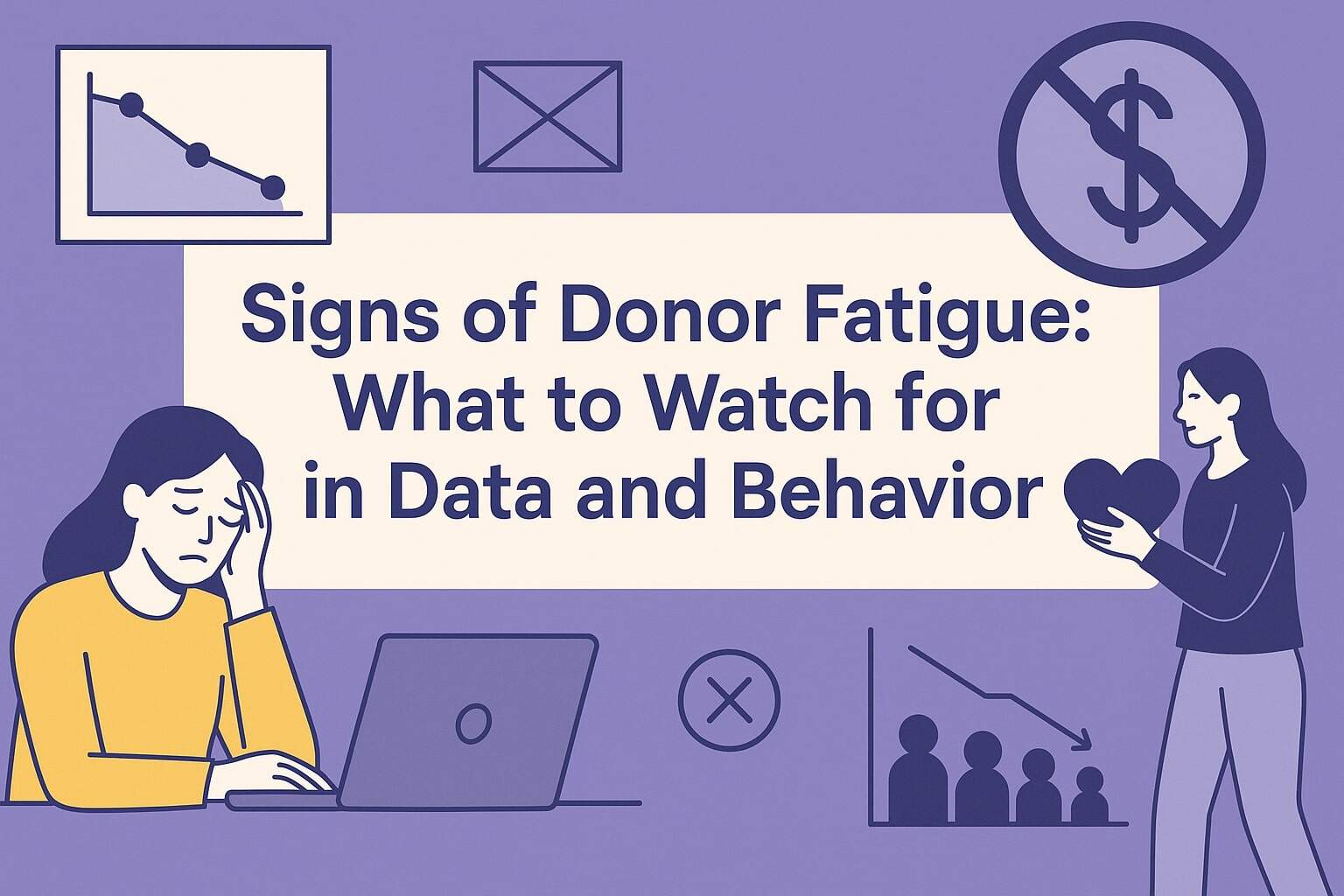
This challenge appears in both behavior and metrics. Supporters may stop opening emails, skip events, or avoid calls while still expressing verbal support for the mission. That’s a classic sign of caring without capacity.
In data, warning signs include declining response rates, lower average gifts, fewer upgrades, rising unsubscribe rates, and weaker renewals. You may also see more one-time donors who never return.
The Fundraising Effectiveness Project estimated an overall donor retention rate of 42.9% for Q4, 2024, highlighting how widespread engagement challenges have become.
These numbers don’t prove burnout on their own, but they reinforce the importance of protecting donor energy in a crowded fundraising landscape.
A Practical Donor Fatigue “Early Warning” Dashboard
To catch donor fatigue early, track a small set of indicators weekly or monthly—especially during campaign seasons. Start with engagement: email open rate trends, click trends, SMS opt-out rates, and direct mail response trends. Donor fatigue often shows up as a gradual decline rather than a sudden crash.
Next, track donor movement: first-time-to-second-gift conversion, renewal rate by cohort, and the percentage of donors who downgrade (giving less than last year). If donor fatigue is rising, upgrades usually slow down first, then renewals weaken later.
Also track “pressure signals”: number of asks per donor per month (across channels), number of “urgent” subject lines used, and how often donors receive repeated appeals without an intervening thank-you or impact update. If your ask-to-value ratio becomes too high, donor fatigue becomes predictable.
Finally, add qualitative feedback: short donor surveys, reply-to-email themes, and frontline fundraiser notes. When donors say things like “I’m getting too many emails” or “I’m not sure what happened after my gift,” that’s donor fatigue talking. Treat that feedback like gold—it tells you exactly what to fix.
How To Avoid Donor Fatigue (A Donor-Centered Prevention System)
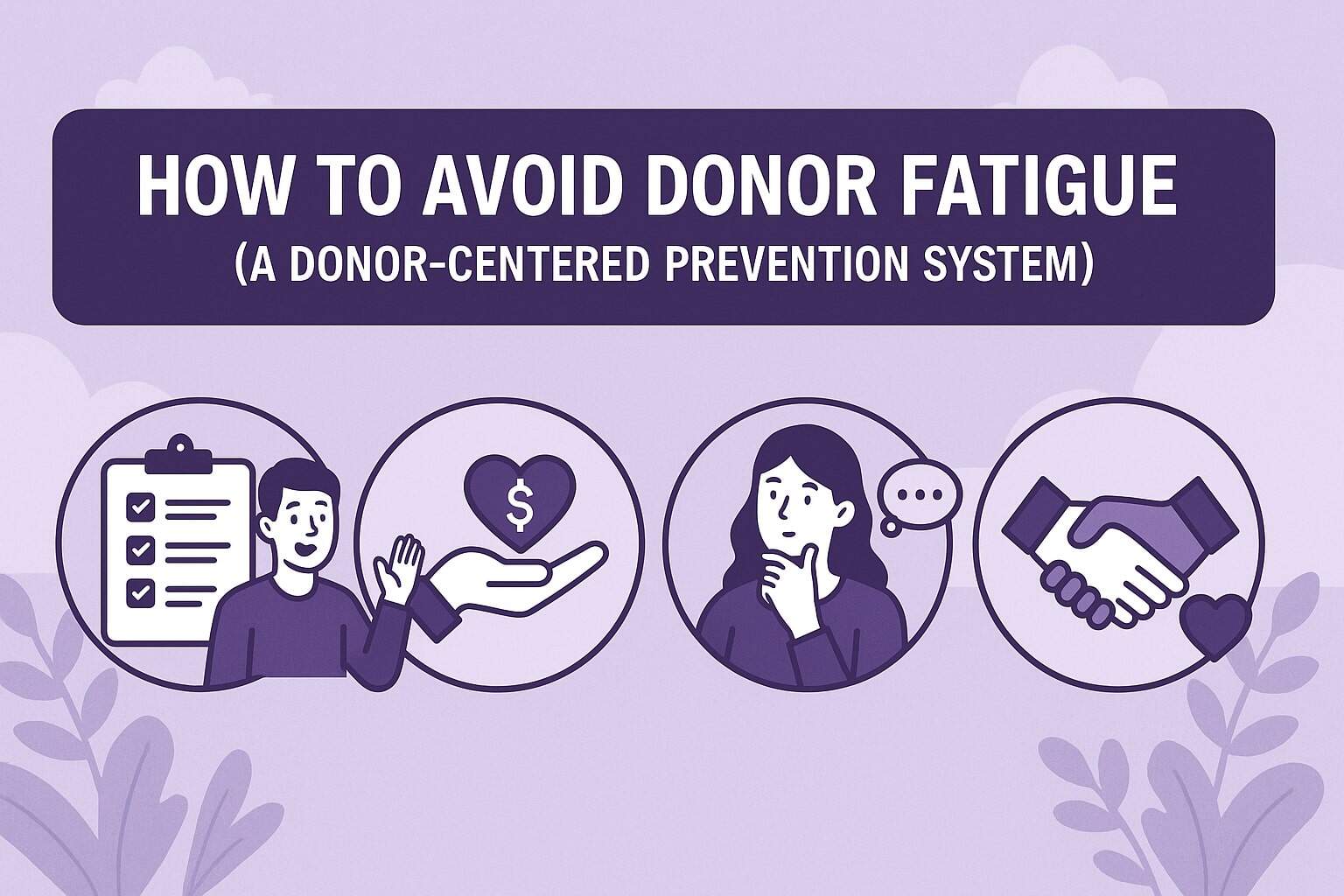
Avoiding donor fatigue is easier than reversing it, and it’s mostly about designing a better donor experience. The strongest prevention systems balance four things: respectful cadence, meaningful impact reporting, personalization, and genuine appreciation. When those are present, donor fatigue drops because donors feel valued and in control.
First, build your outreach around donor journeys, not campaign calendars. A first-time donor needs a welcome series that makes them feel like insiders. A monthly donor needs reinforcement that their ongoing gift matters. A long-time donor needs recognition and proof of momentum. If everyone gets the same messages, donor fatigue rises.
Second, plan stewardship “breathing room.” Not every touch should ask for money. Some touches should deliver value: a short impact story, a behind-the-scenes update, a beneficiary quote, or a quick video from staff. These touches reduce donor fatigue because they restore emotional energy instead of consuming it.
Third, respect donor preferences. Let supporters choose frequency, topics, and channels. Preference centers reduce donor fatigue because donors can stay connected without feeling trapped. This is especially important for SMS and email where opt-outs are one click away.
Finally, improve your segmentation. Donor fatigue often comes from treating donors like a monolith. Segment by recency, frequency, and monetary value (RFM), by interest area, and by engagement style. The more relevant your outreach feels, the less donor fatigue you create.
Smart Cadence And Segmentation (How To Ask More Effectively Without Asking “More”)
Cadence discipline is one of the most powerful tools to prevent donor fatigue. The goal is not silence—it’s intentional pacing. Donors can handle frequent communication when it’s varied, helpful, and tailored. Donors experience donor fatigue when communication feels constant, generic, and demanding.
Start by setting a maximum solicitation frequency per segment. For example, a first-time donor may receive fewer direct asks until they’ve received onboarding, appreciation, and at least one impact update.
A high-intent donor who clicks and attends events may tolerate more asks because they’re actively engaged. The same volume would trigger donor fatigue in a low-engagement donor.
Next, coordinate channels. If you’re running direct mail, reduce email asks to that same audience for a short window. If you’re using SMS for a deadline reminder, don’t also send three “last chance” emails. Donor fatigue often comes from stacked urgency, not one well-timed message.
Then, vary your asks. Mix “give,” “share,” “join,” and “learn” actions. When donors have ways to help that don’t require money, they stay connected without donor fatigue. Over time, that connection makes future giving more likely.
Gratitude And Impact Reporting (The Anti–Donor Fatigue Habit)
If you only master one donor fatigue prevention habit, make it this: close the loop quickly and clearly after every meaningful gift. Donors should never wonder, “Did that matter?” When they know it mattered, donor fatigue falls.
Gratitude should be fast, specific, and human. A receipt is not gratitude. A strong thank-you references the donor’s action, the mission outcome, and the shared values behind the gift. Even a short personalized line can reduce donor fatigue because it signals respect.
Impact reporting should be understandable, not overwhelming. Donors don’t need every metric. They need a narrative of change supported by a few concrete proof points. What changed? Who benefited? What’s next? When you do this consistently, donors build confidence and give with less hesitation.
Also, don’t wait for annual reports. Micro-updates—one photo, one story, one stat—reduce donor fatigue by keeping donors emotionally rewarded throughout the year. And when you later make an ask, donors don’t feel ambushed. They feel invited.
In the long run, gratitude and impact reporting turn giving into a positive identity experience (“I’m the kind of person who helps”), which is one of the strongest protections against donor fatigue.
How To Recover From Donor Fatigue (Re-Engagement That Doesn’t Feel Like Another Ask)

When donor fatigue is already present, the biggest mistake is to push harder. If donors feel pressured, donor fatigue deepens. Recovery works best when you lower pressure, increase listening, and rebuild trust. Think of it like repairing a relationship: empathy first, requests later.
Start with a “reset” communication. This can be a short email acknowledging that inboxes are crowded and giving donors control. Offer choices: fewer emails, only impact updates, specific interest areas, or a pause option. Donor fatigue often comes from lack of control, so giving control restores goodwill quickly.
Next, re-engage with non-monetary value. Share a behind-the-scenes update, a program milestone, or a story that shows momentum. Avoid heavy crisis framing for a while. Donors in fatigue don’t need more urgency; they need hope and clarity.
Then, invite feedback. A two-question survey (“What do you care about most?” “How often should we contact you?”) can reduce donor fatigue and improve segmentation at the same time. You’ll also learn whether the problem is volume, relevance, trust, or timing.
Finally, when you do ask again, make it specific and modest. A “small win” ask—like a focused project or a tangible need—often performs better than a broad appeal during donor fatigue recovery.
Winning Back Lapsed Donors Without Triggering More Donor Fatigue
Lapsed donors are not “lost.” Many are simply overwhelmed or unconvinced, which is donor fatigue in a different form. A win-back strategy should be gentle, personalized, and oriented around reconnection, not guilt.
Begin by separating lapsed donors into groups: recent lapsers (missed one renewal cycle), mid-term lapsers (1–2 years), and long-term lapsers. Donor fatigue recovery messaging should differ for each group.
Recent lapsers often need a reminder and a clear impact update. Long-term lapsers may need a reintroduction to your mission and proof that your organization is effective and trustworthy.
Use “we” language, not blame language. Avoid lines that imply moral failure (“you abandoned us”). Donor fatigue often includes emotional overload; guilt adds to that overload and pushes donors away.
Offer an easy re-entry path: a small suggested gift, a monthly option, or even a non-donation action like signing up for impact updates. The objective is to rebuild engagement first. Once donors re-engage, donor fatigue tends to decline because they feel connected again.
If you have the capacity, add a human touch. A short, sincere call or personal email from a staff member can outperform automated win-back sequences—especially for donors who previously gave more.
Channel-Specific Strategies To Prevent Donor Fatigue
Donor fatigue is shaped by channels because each channel “feels” different. Email fatigue is common because inboxes are crowded. SMS fatigue is common because texts feel intrusive. Direct mail fatigue is common when letters look identical.
Social fatigue is common when content is all crisis, all the time. A smart channel plan prevents donor fatigue by using each channel for what it does best.
Email works best for storytelling, impact updates, and segmented appeals. Keep paragraphs short, use clear subject lines, and avoid constant urgency. Build an “impact-first” newsletter so donors associate your emails with value, not pressure.
SMS should be used sparingly and only with clear permission. Treat texts like VIP messages—short, respectful, and occasional. Overuse creates donor fatigue fast because donors feel interrupted.
Direct mail can reduce donor fatigue when it feels tangible and personal. Handwritten notes, real signatures, and specific project framing can stand out in a way digital messages don’t. But too many similar letters create donor fatigue through sameness.
Events are powerful for reducing donor fatigue because they create community and emotional renewal. The key is not to make every event a hard ask. Build events that deepen connection, then follow up with a thoughtful invitation to give.
Matching The Message To The Channel (So Donors Don’t Feel Chased)
A major cause of donor fatigue is channel mismatch: using every channel to shout the same appeal. Instead, assign roles. For example, email delivers the full story, SMS delivers one reminder, direct mail delivers a tangible narrative, and social delivers ongoing mission moments.
Use “campaign waves” rather than constant noise. A wave might be: pre-campaign impact story, campaign ask, mid-campaign update, final reminder, then post-campaign gratitude and results. Donor fatigue drops when donors can sense a beginning, middle, and end.
Also, maintain a consistent emotional tone. If your social feed is hopeful but your emails are panic-driven, donors feel cognitive dissonance—and donor fatigue rises. Align tone with reality, and keep urgency truthful and limited.
Finally, build suppression rules. If someone donated this week, suppress them from the next appeal. If someone opted down frequency, honor it. Nothing accelerates donor fatigue like feeling ignored after expressing preferences.
Future Outlook: Donor Fatigue Trends And Predictions For The Next Few Years
Donor fatigue is likely to remain a major fundraising challenge because attention will keep getting more expensive. Donors are exposed to more causes, more peer-to-peer campaigns, and more subscription-style spending than ever.
That means organizations that rely on volume alone will face worsening donor fatigue, while organizations that prioritize donor experience will gain an advantage.
One trend is stronger donor selectivity. When giving grows overall in some years, donors may still concentrate their gifts into fewer organizations they trust most.
For example, recent reporting highlighted charitable giving growth in inflation-adjusted terms in 2024 compared with 2023, signaling a healthier giving environment overall. Even in “good” years, donor fatigue can still rise if donors feel overwhelmed—so retention strategy remains essential.
Another trend is a growing focus on retention and small donor health. Benchmark reporting has emphasized shifts in donor participation and retention, and many organizations are rebuilding strategies around keeping donors engaged long-term rather than chasing endless acquisition.
This aligns with donor fatigue prevention: fewer, better relationships beat more, weaker relationships.
Expect personalization to become standard. Donors will increasingly expect communications that reflect what they care about, how they give, and how they want to be contacted. Organizations that use thoughtful segmentation, preference controls, and authentic storytelling will reduce donor fatigue and outperform competitors.
Finally, trust and transparency will become even more central. As donors demand clarity and proof, donor fatigue will increasingly be a trust issue, not just a frequency issue. If donors believe you are effective and honest, they can tolerate more communication without burning out.
FAQs
Q.1: How many donation requests cause donor fatigue?
Answer: There’s no universal number because donor fatigue is driven by relevance, timing, trust, and channel mix—not just volume. One donor might tolerate frequent outreach because they feel deeply connected and see clear impact.
Another donor might feel donor fatigue after only a few asks if messages feel generic or emotionally manipulative.
A practical approach is to set segment-based frequency caps and then watch engagement trends. If open rates fall, opt-outs rise, or renewals weaken after increasing solicitations, that’s a sign donor fatigue is building.
Also consider “stacking”: donors often experience donor fatigue when multiple channels hit them with the same ask in the same week.
The safest strategy is to maintain a strong non-ask communication stream. If donors regularly receive gratitude and meaningful updates, they’re less likely to experience donor fatigue—even if you run multiple campaigns annually.
Q.2: Is donor fatigue real, or is it just an excuse for poor fundraising?
Answer: Donor fatigue is real, but it’s often intertwined with fundraising quality. Donors rarely say, “I have donor fatigue.” They say, “I’m overwhelmed,” “I’m getting too many emails,” or they silently disengage. In many cases, donor fatigue is triggered by fundraising systems that overuse urgency, underuse stewardship, or ignore donor preferences.
That said, declining results are not always donor fatigue. Economic uncertainty, competing campaigns, seasonal patterns, and audience changes can also reduce response rates. The way to tell is to look for consistent patterns: falling engagement across multiple campaigns, rising opt-outs, and declining retention—especially among once-engaged donors.
Treat donor fatigue as a diagnostic signal. If you respond by improving relevance, gratitude, and transparency, you’ll often see recovery.
Q.3: What’s the fastest way to reduce donor fatigue?
Answer: The fastest donor fatigue reducer is giving donors control and relief. Offer a preference center, reduce frequency temporarily, and shift communications toward appreciation and impact rather than more asks. Donor fatigue often eases when donors feel respected and not chased.
Next, improve your “after-the-gift” experience. Quick, human thanks plus clear outcomes rebuild positive emotion around giving. When donors feel their gift mattered, donor fatigue declines.
Finally, stop sending redundant messages. Coordinate channels, suppress recent donors from appeals, and avoid repeating the same “urgent” language. Less noise, more meaning—that’s the fastest path out of donor fatigue.
Q.4: Can monthly giving prevent donor fatigue or cause it?
Answer: It can do both, depending on how it’s managed. Monthly giving can prevent donor fatigue because it removes repeated decision pressure. Donors don’t have to decide every month whether to give—they’ve already committed. This often increases retention and stability.
But monthly giving can also create donor fatigue if you treat monthly donors like one-time donors. If a monthly donor receives constant upgrade asks, frequent crisis emails, and little recognition, they may cancel.
The key is to steward monthly donors differently: emphasize belonging, show ongoing impact, and ask for upgrades only occasionally and thoughtfully.
A strong monthly program reduces donor fatigue by making donors feel like partners, not targets.
Q.5: How do you talk about urgent needs without creating donor fatigue?
Answer: Urgency is not the enemy—constant urgency is. Donor fatigue rises when every message claims a deadline, disaster, or “final chance.” To use urgency responsibly, reserve it for situations that are truly time-sensitive, explain why timing matters, and follow up with results.
Balance urgent asks with hopeful progress. If donors only hear about emergencies, they feel helpless, which fuels donor fatigue. When donors also see wins, momentum, and solutions, they feel empowered and continue engaging.
A helpful rule: for every urgent appeal, plan at least two non-ask touches afterward—gratitude and impact. That closes the loop and prevents donor fatigue from compounding.
Conclusion
Donor fatigue happens when giving feels like pressure instead of purpose. It shows up as lower engagement, weaker renewals, and quieter donors—not always angry donors. And while donor fatigue is common in modern fundraising, it is not inevitable.
The most reliable way to avoid donor fatigue is to redesign your fundraising around the donor experience: coordinated cadence, strong segmentation, preference controls, rapid gratitude, and clear impact reporting. When donors feel respected, informed, and emotionally rewarded, donor fatigue drops—even in crowded seasons.
If donor fatigue is already present, recovery is possible. Reduce pressure, listen, reconnect through value, and rebuild trust before you ask again. Over time, the organizations that grow will be the ones that treat donors like partners, not prospects.
In the coming years, donor fatigue will likely increase for organizations that rely on volume and urgency alone. At the same time, organizations that invest in transparency, personalization, and stewardship will stand out.
The future of fundraising belongs to donor-centered systems—because the best way to earn ongoing generosity is to make giving feel meaningful again, not exhausting.