
Why Donors Leave Your Donation Form Before They Finish
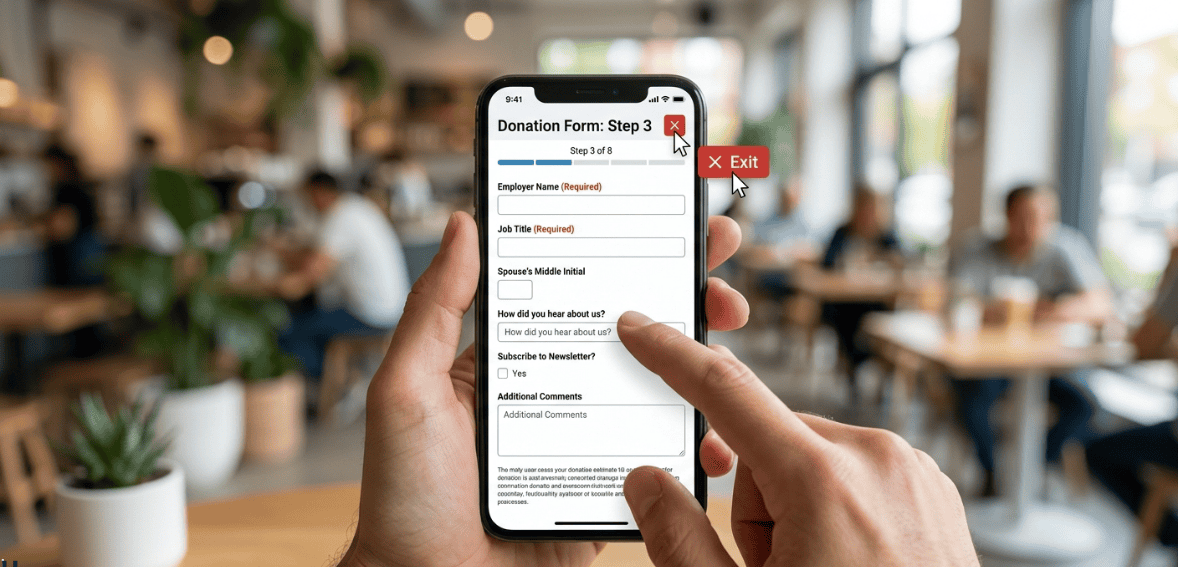
Donation form abandonment is one of the biggest reasons nonprofits lose potential donations online. A supporter lands on your website with the intention of contributing to your cause. They click the donate button, ready to help. They start filling out the form, but something stops them before they finish. The form appears too lengthy to complete. The user interface creates a feeling of uncertainty. The user experiences delays because of slow page loading. They leave the site for a specific reason.
Nonprofit websites face this issue daily. Many organizations spend time and money bringing donors to their donation page, but lose them during the final step. The real problem is not donor interest. It is friction in the giving experience.
The good news is that most causes of donation form abandonment can be fixed. Nonprofits achieve higher gift completion rates by streamlining their forms, enhancing the user experience, and eliminating obstacles. A better donation experience does not just increase revenue. It builds trust and motivates donors to make additional contributions.
The Most Common Reasons Behind Donation Form Abandonment
The initial step in solving the problem is understanding why donors exit the donation process. The majority of donors do not complete the form because they lose interest. The exit occurs because they encounter something that makes the process extremely challenging.
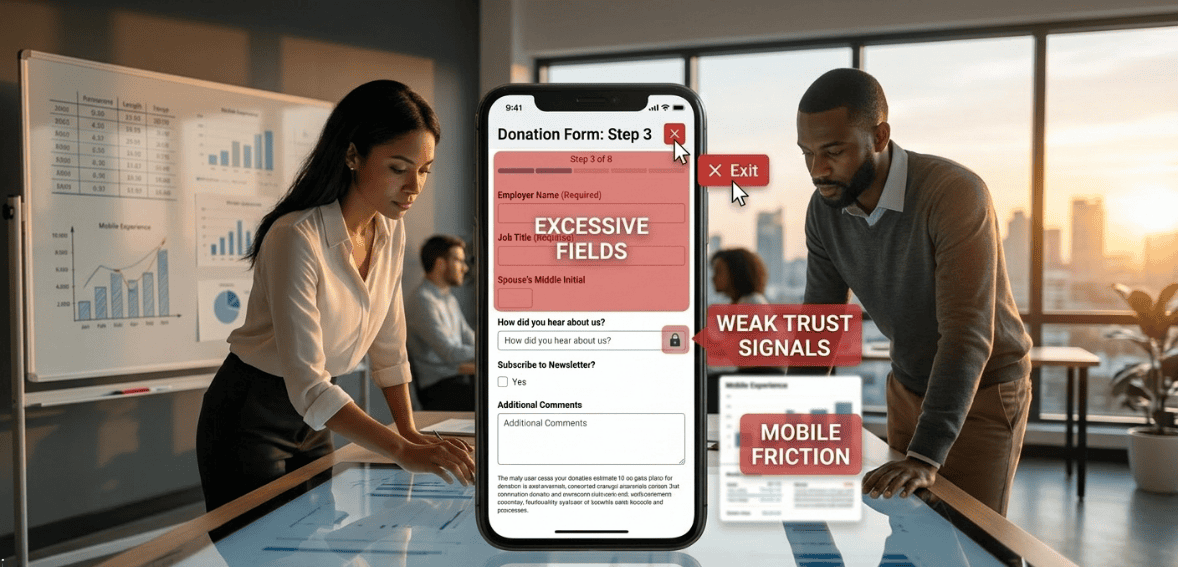
The main issue arises when organizations request excessive details from their clients. When donors see too many required fields, they may feel the process will take too long. The best nonprofit donation form practices require organizations to request only the necessary information to complete the donation process. All additional questions should be saved for later.
Sometimes, the design of a donation form makes it difficult for donors to complete their gift. Donors experience confusion about their next steps due to unclear instructions and a cluttered form design. A clean design with clear steps helps donors move through the process with confidence.
Donation form abandonment occurs due to technical issues. Common donation checkout errors include broken buttons, failed transactions, and unclear messages, which cause immediate user frustration. Many donors stop trying to complete their donations after encountering these problems.
Page speed is another overlooked factor. Donors expect websites to work quickly. Users who visit a donation page experience slow load times, leading them to abandon the page because they refuse to wait.
What Information You Should Not Ask for on the First Page
A well-designed donation form helps donors complete their gift quickly. The first section should be simple and guide donors through the process without confusion. The design should guide donors step by step so they always know what to do next.
The first section should only ask for essential details, such as donation amount, name, email, and payment information. At this stage, donors should feel the process is quick and easy to complete.
The system should postpone the collection of less important data until later in the process. The donation form abandonment rate increases when organizations collect excessive data from users at the start of their experience.
Online giving form optimization should focus on donor time and convenience. Forms that respect donor time usually see higher completion rates. Donors who encounter a straightforward process are more likely to complete their gifts.
How Trust Signals and Receipts Affect Donor Decisions
Online giving relies heavily on trust as its most important element. Donors need to trust that their personal information will remain safe before they provide their payment information. The absence of security information in your form will make donors uncertain about proceeding with their donations.
Visible trust signals decrease the number of users who abandon donation forms, according to research. Users need to see secure payment icons together with privacy statements, nonprofit registration details, and contact information to establish trustworthiness. The small elements provide donors with reassurance that their donation will remain protected.
Receipts are vital components of the donation process. Donors need proof that their donation was processed successfully. The receipt email provides clear documentation that establishes trustworthiness and demonstrates business expertise.
CloudDonorManager and similar donation systems enable nonprofits to create seamless user experiences through automated receipt generation and donor record maintenance. The automated system increases donor trust, helping nonprofits achieve higher conversion rates through improved operational efficiency.
Why Mobile Friction Causes Faster Donation Losses
Mobile giving continues to grow, but many nonprofits still struggle to create good mobile experiences. Given this, nonprofit organizations need to solve the acute problem of checkout friction.
Mobile users often deal with small screens, slow internet, and forms that are difficult to complete, leading many donors to abandon the process before completing their donation. These issues, in turn, lead to a higher rate of form abandonment than among desktop users.
Improving mobile usability can directly increase fundraising results by making it easier for donors to complete the form. Simple changes, such as reducing typing, enabling autofill, and using mobile-friendly buttons, can greatly increase donor form usability and, in turn, improve donor completions.
Nonprofits that improve their mobile experience often see higher conversion rates because fewer barriers stop donors from completing their gifts.
How Payment Methods and Technical Issues Affect Donation Completion
Donors require flexible options for their online payment transactions. Users who cannot access their desired payment method will abandon the form.
The donation page conversion rate improves when we offer multiple payment methods, including credit cards, debit cards, ACH payments, and digital wallets. Donors can complete their gifts successfully when we offer flexible payment options.
The donation checkout process needs clear error handling to help customers resolve issues. Donors need to receive clear information about payment failures, along with step-by-step instructions for resolving their issues. Donation form abandonment increases because donors receive confusing error messages that leave them unsure about their next steps.
Successful online giving form optimization requires organizations to minimize payment friction throughout their processes.
A Quick Donation Form Audit Checklist for Nonprofit Teams

Every nonprofit should regularly review its donation form to identify potential sources of donor frustration. Even minor changes create measurable results.
Start by reviewing the number of fields. Best practices for nonprofit donation forms require organizations to develop short, dedicated forms. The organization needs to eliminate unnecessary questions to achieve better results.
Next, test your form on both desktop and mobile devices. This evaluation process helps identify usability problems that affect donor form usability. Try completing the form yourself to experience what donors experience.
The organization needs to conduct speed testing because it holds significant value. The presence of slow pages creates problems that lead to higher donation form abandonment rates. Your organization needs to ensure that all pages load quickly while maintaining proper functionality.
Nonprofits will streamline their donation process through ongoing testing, thereby enhancing their donation forms.
What Cloud Donor Manager Users Should Monitor After Their System Updates
Nonprofits need to evaluate their new form design to determine its effectiveness through performance assessment. The lack of data makes it impossible to verify whether changes produce desired results.
CloudDonorManager enables nonprofits to monitor vital performance metrics, including completion rates, donor behavior, and points at which users abandon their activities and complete gift records. The data shows whether the changes to the donation form successfully reduced abandonment.
Nonprofits need to track four essential metrics: completion percentage and mobile completion rates, average donation value, and payment error rates. The organization uses these metrics to track its progress toward increasing conversion rates for its nonprofit activities.
Nonprofits use data-driven improvements to establish better decision-making processes, leading to enhanced donor experiences over time.
How Better Forms Lead to More Donors Completing Their Donations
A donation form, designed for perfection by designers, serves two functions. It creates a better experience for donors to the organization. Donors complete their donations and become repeat donors when they experience a simple process that respects their time.
Nonprofits achieve stronger supporter connections through better donation form design, which reduces the number of people who abandon their donations. The organization benefits from clean donor data that flows directly into their systems, eliminating the need for manual entry.
Better forms also mean fewer support requests because donors encounter fewer problems. Nonprofit teams can dedicate more time to their core mission work because they spend less time solving technical problems.
Organizations that treat their donation forms as an important part of the donor journey often see stronger fundraising outcomes and better long-term donor retention.
Immediate Improvements Nonprofits Can Make to Their Donation Forms
Small improvements to your donation form can boost completion rates. The small modifications lead to important changes that benefit your organization.
You need to begin your project by removing any extraneous questions and creating clearer operational guidelines. The system functions better when users access the form through mobile devices. Your website needs to display trust elements through transparent authentication methods. You need to measure page loading time. The payment system must be evaluated at each step.
Donor trust increases through these upgrades, which decrease obstacles to giving. Even small improvements you make today can help your organization increase the number of completed donations.
The goal is simple. The objective is to create a donation process that donors find secure, fast, and easy to complete. Donors complete their donations when they feel safe to do so.

Conclusion
Organizations can solve donation form abandonment because it represents a preventable issue. Most donors who left were ready to give. The process made it difficult for them to understand how they could make their donations.
Nonprofits that focus on simplifying their forms, improving usability, and reducing friction see immediate operational improvements. Organizations that provide better donation experiences achieve higher gift completion rates, stronger donor relationships, and improved fundraising results.
You can enhance your donation process by evaluating it today, as this evaluation will help you eliminate obstacles, build trust, and create a more positive donation experience for all supporters who wish to support your mission.
FAQ
What is a good donation form completion rate?
Most nonprofits see completion rates between 50% and 70%. Your form becomes easier to use when users achieve higher completion rates.
How many details should a nonprofit donation form request?
Most experts recommend keeping forms between 5 and 10 fields. The number of questions on a donation form directly affects how many users will complete it.
Should nonprofits ask for a mailing address on every gift?
Ask for information only when it becomes essential. The donor experience and completion rates improve when organizations decrease their information requirements.
Do tribute options increase form drop-off?
Complex tribute options create problems for users. Using simple tribute options prevents users from becoming confused.
How often should we test our donation form?
The testing schedule requires testing to occur every six months. Regular reviews help maintain strong performance and usability.