
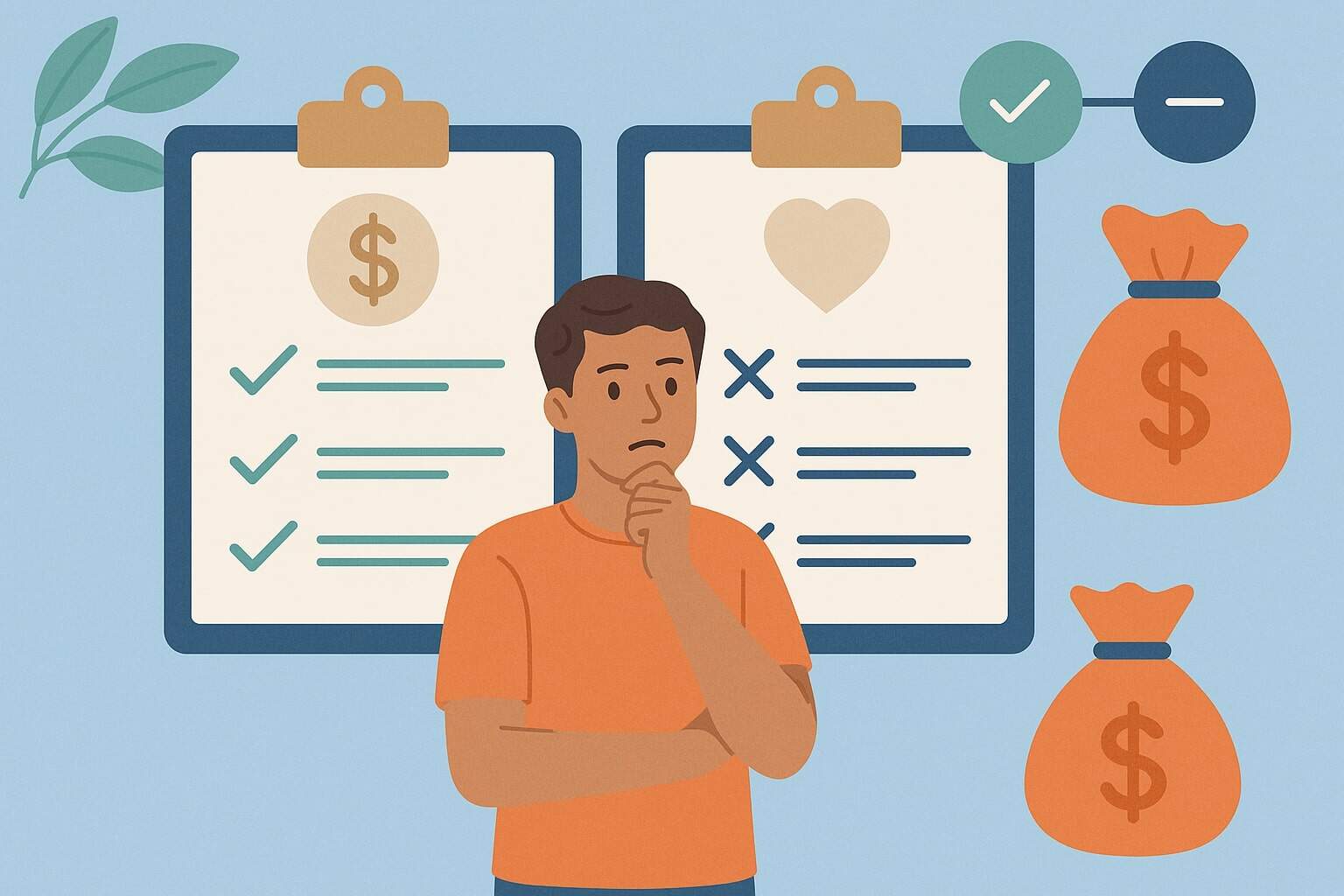
Monthly Giving vs. One-Time Donations: Pros & Cons
Donors usually support causes in two main ways: Monthly Giving (recurring, subscription-style support) and one-time donations (single gifts tied to a moment, campaign, or personal trigger).
The “monthly giving vs. one-time donations” decision matters because it affects how predictable funding is, how engaged donors feel, and how much time and cost it takes to keep fundraising healthy.
Monthly Giving is often positioned as the “steady engine” that keeps programs running in the background—rent, supplies, staffing, and ongoing services. Fundraisers like it because revenue is easier to forecast, and donor relationships can deepen over time.
Industry research also frequently shows recurring donors tend to be retained at higher rates than one-time donors, which can raise long-term value and reduce re-acquisition costs.
One-time donations are still essential. They power emergency response, capital projects, year-end pushes, special events, peer-to-peer campaigns, and tribute giving. They also create a low-friction entry point for first-time supporters who aren’t ready to commit.
In practice, the best fundraising programs don’t choose one forever—they build a smart blend: use one-time donations to acquire and energize, and use Recurring Donations to stabilize and retain.
This guide breaks down the pros and cons of Monthly Giving vs. one-time donations with practical examples, donor psychology, payment considerations, stewardship best practices, and future predictions—so your program is easy to run, easy to understand, and built to perform.
Understanding Monthly Giving: How It Works and Why It’s Growing

Monthly Giving is a recurring donation model where a supporter authorizes automatic gifts on a regular schedule—most commonly every month. In Recurring Donations, a donor chooses an amount (like $10, $25, or $50), selects a payment method, and then the donation repeats without needing the donor to re-enter details.
The biggest shift Monthly Giving creates isn’t just financial—it’s behavioral. Monthly Giving turns a single act of generosity into a habit, which is why many organizations treat it like a “membership” experience even when there are no physical perks.
Monthly Giving has grown alongside subscription habits in daily life. People are comfortable with predictable monthly expenses, and Recurring Donations feels budget-friendly compared to a large one-time donation.
That’s important because donors don’t always give based on maximum capacity—they give based on comfort, convenience, and confidence that their gift will be used well. Monthly Giving also reduces the mental load of deciding when to give.
Once a donor starts Recurring Donations, the organization’s job becomes keeping the donor informed, appreciated, and confident.
From an operational viewpoint, Monthly Giving improves planning. It can smooth out seasonal spikes (especially year-end surges), reduce dependence on one campaign, and support staffing decisions with more certainty.
Many sector conversations in recent years have highlighted “subscription giving” as a defining fundraising trend because it matches donor preferences for simplicity and ongoing impact.
However, Monthly Giving is not “set it and forget it.” It needs donor care, payment maintenance, and messaging that reinforces value without over-soliciting. When done well, Recurring Donations becomes the backbone of sustainable fundraising; when done poorly, it can lead to churn, failed payments, and silent cancellations.
Monthly Giving Advantages for Organizations: Stability, Retention, and Long-Term Value
The most obvious advantage of Monthly Giving is predictable revenue. Predictability is powerful because it supports better budgeting, better staffing decisions, and steadier program delivery. Instead of guessing whether a campaign will hit a goal, Monthly Giving creates a baseline you can build on.
That baseline becomes especially valuable during slow seasons, unexpected news cycles, or economic uncertainty—times when one-time donations may fluctuate.
Monthly Giving is also strongly associated with higher retention in many fundraising analyses. When donors give monthly, they’re repeatedly reaffirming a relationship with the cause. That repeated “yes” often results in longer donor lifetimes and stronger lifetime value.
For example, Blackbaud Institute analysis around GivingTuesday shows donors who give on that day have higher repeat rates than donors who gave earlier in the year, highlighting how donor segments can behave differently over time—and why retention strategy matters.
Monthly Giving can reduce fundraising costs over time. Acquiring donors is typically more expensive than keeping them, and recurring programs can lower the pressure to constantly chase brand-new supporters.
Monthly Giving also creates more opportunities for stewardship touchpoints—impact updates, behind-the-scenes stories, and mission milestones—without asking for another gift every time.
Still, Monthly Giving requires disciplined operations: clear donor communications, simple self-service tools, and strong payment management to prevent avoidable cancellations.
If an organization treats Recurring Donations as “easy money,” the donor experience can degrade. But when the donor experience is cared for, Monthly Giving can become one of the highest-performing revenue channels in a modern fundraising mix.
Monthly Giving Drawbacks: Payment Failures, Donor Fatigue, and “Invisible” Stewardship Risks
Monthly Giving has real challenges that can quietly weaken performance if they aren’t managed. One of the biggest operational risks is failed payments. Cards expire, banks reissue numbers, and fraud controls sometimes block legitimate charges.
Some nonprofit payment benchmarks frequently cite meaningful percentages of recurring gifts failing due to payment issues, which can create “involuntary churn” that looks like donor attrition but is actually a billing problem.
Monthly Giving also carries a stewardship risk: because gifts happen automatically, donors may forget they are giving—until they notice a charge and reconsider it. This is why Recurring Donations requires proactive communication that helps donors feel the impact regularly.
If donors don’t remember why they joined Monthly Giving, the relationship becomes fragile. A recurring donor who feels disconnected can cancel without complaint, and you may never learn why.
Another drawback is perception. Some donors dislike subscriptions and want control over timing. Others worry that Monthly Giving locks them in. If your Monthly Giving pitch feels like pressure—“do this every month or you’re not helping enough”—it can backfire.
The best Monthly Giving messaging emphasizes flexibility (“change or cancel anytime”), transparency, and ongoing value.
Finally, Monthly Giving can create internal complacency. Teams may rely too heavily on recurring revenue and underinvest in acquisition, storytelling, and community building. A healthy program treats Monthly Giving as a foundation, not a ceiling. It supports one-time donations, events, and major gifts, instead of replacing them.
Understanding One-Time Donations: Why They Still Matter
A one-time donation is a single gift given once—online, by mail, by phone, at an event, or through a peer-to-peer fundraiser. One-time donations are often tied to emotion, urgency, social proof, or a clear moment: a disaster, a news story, a birthday fundraiser, a year-end appeal, or a friend’s request.
Because the decision happens in one moment, the donor experience must be simple and confident. Clarity is everything: what the donation supports, why it matters now, and how the donor’s gift will be used.
One-time donations are often the easiest way for a new supporter to begin. The donor doesn’t need to commit, doesn’t have to remember a password, and doesn’t have to think about future budgeting.
In the “monthly giving vs. one-time donations” conversation, one-time gifts are frequently the “front door.” They bring in new names, re-engage lapsed supporters, and rally communities around a specific goal.
One-time donations also allow donors to express identity. Some donors want to be “the person who helps in emergencies,” or “the person who funds a specific scholarship,” or “the person who gives at the holidays.” That kind of personal meaning is powerful and can create a lasting relationship even without Monthly Giving—if you steward it well.
At the same time, one-time donations can be unpredictable. A campaign can exceed expectations one year and underperform the next. One-time donors are also at higher risk of not returning if follow-up is weak.
The goal isn’t to “convert everyone.” The goal is to use one-time donations strategically—acquire, thank, report impact, and then offer Monthly Giving as an option when the donor is ready.
One-Time Donation Advantages: Flexibility, Fast Results, and Campaign Momentum
The greatest strength of one-time donations is flexibility. Donors can give when it feels right—after reading a story, attending an event, celebrating a milestone, or responding to an urgent appeal. That flexibility makes one-time donations ideal for campaign fundraising, where the organization needs to move quickly and create momentum.
One-time donations are also excellent for large gifts that don’t fit into a monthly budget. A donor may be able to give $500 or $5,000 once, but not monthly. One-time donations can support capital improvements, technology upgrades, emergency grants, and special projects that are easier to explain as a single goal with a clear finish line.
From a marketing perspective, one-time donations are shareable. Peer-to-peer campaigns, giving days, and social fundraising thrive on one-time gift behavior because people respond to a friend’s request or a public goal.
Blackbaud Institute reporting on GivingTuesday highlights how certain giving moments can bring in donors with stronger-than-average repeat behavior, reinforcing the value of well-designed one-time campaigns that lead into year-round stewardship.
One-time donations can also help donors feel immediate impact. If your donation page clearly connects a gift amount to a result, donors often experience a stronger sense of agency—“I did something meaningful right now.”
That emotional reward can be the start of a longer relationship that later includes Monthly Giving, volunteering, or advocacy.
One-Time Donation Drawbacks: Revenue Volatility and Lower Long-Term Predictability
The biggest challenge with one-time donations is unpredictability. One-time donations rise and fall with the economy, media cycles, competing causes, and donor attention. This makes budgeting harder.
If an organization relies heavily on one-time donations, staffing and program decisions may become reactive—expanding after a strong year and cutting after a weak one.
One-time donations also tend to require repeated re-asking. You may need multiple appeals per year to maintain revenue. If donor communications aren’t thoughtful, this can cause Donor fatigue: donors may feel “asked for money too often” or feel unclear about the results of their previous gift.
When donors don’t see impact, they often don’t return, and the organization is forced back into acquisition mode.
In the “Monthly Giving vs. one-time donations” debate, one-time donors are also harder to forecast for long-term planning. They may give once and disappear—especially if the thank-you is delayed, generic, or overly transactional.
That doesn’t mean one-time donations are bad; it means they require excellent follow-up. One-time donors need a donor journey: immediate confirmation, a sincere thank-you, a short impact update, and a relationship-building message that doesn’t instantly ask for more.
Finally, one-time donations can create dependence on a few peak periods, especially year-end. That dependence increases operational stress and can lead to rushed campaigns that sacrifice clarity or donor experience.
A balanced program uses Monthly Giving to stabilize and one-time donations to energize—so neither channel has to carry the entire year.
Monthly Giving vs. One-Time Donations: A Practical Pros & Cons Comparison
When people compare Monthly Giving vs. one-time donations, they often focus only on “which makes more money.” But the smarter comparison looks at four dimensions: donor experience, organizational health, cost to fundraise, and resilience.
Monthly Giving often performs best when the organization delivers ongoing programs that donors can emotionally subscribe to—like meals served, rescue operations, housing support, research progress, or education initiatives. In these cases, Recurring Donations storytelling is natural: “Here’s what your monthly support makes possible.” Monthly Giving can reduce budget anxiety because it creates a repeatable baseline of support.
One-time donations often perform best when there is a clear moment or measurable goal: an emergency, a scholarship fund, a matching challenge, a campaign deadline, or a public progress meter. One-time donations make it easy for donors to jump in quickly and share the ask with others.
From an operational standpoint, Monthly Giving has fewer “big peaks,” but it requires ongoing maintenance—billing, donor updates, and retention work. One-time donations are simpler transactionally, but they require constant creative production and repeated campaign planning.
The cost tradeoff is real: Monthly Giving reduces future re-acquisition needs, but it increases the need for lifecycle management and payment optimization.
The best programs treat Monthly Giving and one-time donations as complementary. One-time donations acquire attention and introduce donors to the mission. Recurring Donations builds a stable community that protects the organization during unpredictable seasons.
In an environment where overall giving can be influenced by economic sentiment, market volatility, and policy shifts, resilience matters—and recurring revenue is often a key resilience tool.
Pros & Cons for Donors: Control, Commitment, and Emotional Satisfaction
For donors, the “Monthly Giving vs. one-time donations” choice is often about identity and comfort. Monthly Giving is attractive because it feels responsible and consistent. Donors can pick an amount that fits their monthly budget and feel like they’re part of a sustained solution.
Monthly Giving also reduces decision fatigue—once set up, the donor can focus on the impact rather than the transaction.
But Monthly Giving can trigger concerns about control. Some donors worry they’ll forget they signed up. Others dislike the idea of ongoing charges. That’s why the donor-first framing matters: Monthly Giving should be easy to manage, easy to change, and easy to cancel. Transparency builds trust.
One-time donations are great for donors who want flexibility. A one-time gift can match a moment—like a tribute, an emergency, or a personal celebration. One-time donations also allow donors to give larger amounts when they have extra capacity. The emotional payoff can be strong because the donor feels like they acted decisively.
The downside is that one-time donors may feel “done” after giving once, especially if the organization doesn’t explain what happens next. One-time donations can also feel less personal if the follow-up is automated and generic. Many donors don’t mind automation, but they do mind feeling unseen.
In reality, donor preference often changes across life stages. Some donors start with one-time donations and shift to Recurring Donations after trust is built. Others begin with Monthly Giving because it’s convenient, then add one-time gifts during emergencies or matching campaigns. A donor-centered program offers both paths clearly and respects the donor’s choice.
Payments, Fees, and Reliability: The Hidden Engine Behind Donation Type

Payment mechanics heavily influence whether Monthly Giving or one-time donations succeed long-term. For one-time donations, friction must be minimal: fast page load, mobile-friendly form, and trusted payment options. For Monthly Giving, reliability is the priority: preventing failed payments, reducing churn, and making account updates painless.
One important reality is that recurring gifts can fail simply because payment details change. Many recurring programs are dominated by card-based payments, and card expirations or reissues can disrupt Monthly Giving.
Some recurring giving analyses highlight that a meaningful share of monthly gifts are lost to failed payments if organizations don’t use strong retry logic, reminders, and account updater tools.
To protect Monthly Giving, organizations often invest in:
- Automated retries with smart timing
- Email/SMS reminders when a payment fails
- Self-service donor portals to update payment info
- Account updater services (where available)
- Clear receipts and consistent impact reporting
For one-time donations, payment failure is less frequent, but cart abandonment can be high if the form is confusing or too long. A donor who intended to give once may never return if the process is frustrating.
The “best” payment rail depends on context. Bank-based payments can reduce certain fee costs and reduce expiration issues, while card payments are familiar and fast for donors.
What matters most is matching donor preference with reliable processing and clear communication. The donation type isn’t only a fundraising decision—it’s also a payments and user experience decision.
Reducing Recurring Churn: What Actually Keeps Monthly Giving Active
Keeping Monthly Giving active is part stewardship and part systems design. Stewardship is the emotional side: donors stay when they feel valued and when they understand their impact. Systems design is the technical side: donors stay when the payment keeps working and when managing their gift is effortless.
The biggest preventable churn in Recurring Donations is “involuntary churn”—donors who didn’t choose to stop, but whose payment failed and never recovered. This is why the first 48 hours after a failed payment matter.
A friendly, helpful message—“Your monthly gift didn’t go through; update in one click”—can recover donors who otherwise disappear.
The next major driver is “silent dissatisfaction.” Donors cancel when they don’t feel connected. If they only hear from you when you want something, Monthly Giving starts to feel like a bill instead of a relationship. A strong Monthly Giving program creates a rhythm:
- Welcome message (why the donor matters)
- A quick impact story in the first month
- Periodic updates that show progress
- Occasional “surprise and delight” gratitude
- Annual summary and receipt clarity
Research-oriented organizations often emphasize that recurring givers can deliver higher lifetime value because they stay longer and sometimes still make additional one-time donations.
That means your Monthly Giving retention work can pay off twice: it keeps the baseline, and it strengthens future one-time opportunities.
In short, the secret to Monthly Giving retention is not pressure—it’s clarity, ease, and appreciation.
How to Choose the Right Ask: When to Push Monthly Giving vs. One-Time Donations
In a high-performing fundraising strategy, you don’t randomly ask for Recurring Donations or one-time donations. You choose the ask based on donor intent, timing, and story fit. The simplest rule is: ask for Monthly Giving when the impact is ongoing, and ask for one-time donations when the impact is immediate or time-bound.
Monthly Giving works well when:
- The program runs year-round (services, research, care, prevention)
- You can tell a “per month” impact story (meals, supplies, check-ins)
- You want donors to join a community identity (partners, sustainers)
- You want predictable revenue to stabilize operations
One-time donations work well when:
- There’s urgency (deadline, match, crisis response)
- There’s a clear goal (fund a project, fill a gap, sponsor a need)
- Peer-to-peer sharing is likely
- The donor is new and needs a low-commitment first step
A smart “Monthly Giving vs. one-time donations” approach also uses sequencing. For many donors, the best journey is:
- One-time donation →
- Strong thank-you + impact proof →
- Invitation to Monthly Giving as the next step
But sometimes it flips. If a donor arrives already motivated—like from a subscription-minded audience—Monthly Giving can be the first ask, with a one-time upgrade later.
Ultimately, your goal isn’t to force conversion. Your goal is to match the ask to the donor’s readiness and to the story’s natural shape. When you respect the donor’s perspective, both Monthly Giving and one-time donations become easier to grow.
Messaging That Converts Without Pressure: Trust, Transparency, and Choice
How you communicate Monthly Giving vs. one-time donations often matters more than the donation type itself. Donors respond to clarity and trust. If Recurring Donations is presented as an “automatic charge,” people get cautious. If Monthly Giving is presented as “ongoing impact you control,” people feel safer.
High-performing Monthly Giving messaging usually includes:
- A clear name (“Monthly Giving,” “Sustainers,” “Partners”)
- A simple impact explanation (“every month, you help…”)
- Flexibility language (“change or cancel anytime”)
- A donor-first tone (“choose what fits your budget”)
- Realistic impact framing (no exaggerated promises)
For one-time donations, messaging should emphasize:
- Why now (urgency or importance)
- What the gift does (specific outcomes)
- Confidence signals (privacy, security, transparency)
- Gratitude and follow-through
Avoid making Monthly Giving sound like the only “good” option. That can shame donors and reduce total giving. The healthiest donor relationships come from respecting how donors want to participate. Some donors love Recurring Donations. Others prefer one-time donations but give consistently every year. Both are valuable.
Also, avoid long paragraphs and over-explaining. Donation decisions are emotional and quick. Use short paragraphs, clear headings, and easy language. A clean donation experience plus honest storytelling will outperform complicated persuasion almost every time.
Future Predictions: Where Monthly Giving and One-Time Donations Are Headed
The future of Monthly Giving is likely to keep expanding, mainly because it aligns with subscription behavior and because organizations need resilience in uncertain economic cycles. Fundraising thought leadership continues to emphasize “subscription giving” as a growing model, supported by improved mobile experiences and easier recurring management.
Three shifts are likely to shape Monthly Giving vs. one-time donations over the next few years:
First, smarter personalization. AI-driven segmentation is already influencing how organizations tailor ask amounts, timing, and content. That means Monthly Giving invitations may become more customized—offered to donors when they’re most likely to accept, with messages that reflect their interests and prior actions.
Second, more payment choice and stability tools. Expect more emphasis on reducing failed payments: better account update systems, improved retry logic, and more donor self-service. This is crucial because recurring churn can be driven by payment failures as much as by donor intent.
Third, policy and economic influences. Giving levels are influenced by market performance, disposable income, and tax policy shifts. Recent analysis tied to annual giving trends highlights how these forces can push donor behavior in different directions, affecting both monthly and one-time giving patterns.
One-time donations will remain essential because human behavior will always respond to moments—emergencies, social movements, personal milestones, and time-bound matches.
The likely future isn’t “Monthly Giving replaces one-time donations.” It’s that the best organizations will run a dual engine: Monthly Giving for stability and one-time donations for momentum, acquisition, and storytelling peaks.
FAQs
Q.1: Is Monthly Giving always better than one-time donations?
Answer: No—Monthly Giving isn’t automatically “better,” even though it often improves predictability and can improve retention. Monthly Giving is best when an organization can demonstrate ongoing impact and maintain strong donor communication.
If the organization can’t reliably steward donors or manage recurring payments, Recurring Donations can underperform due to churn, failed payments, and donor disengagement.
One-time donations are often the best fit for donors who want flexibility, donors who give large gifts occasionally, or donors who are responding to a specific campaign. One-time donations are also critical for urgent funding needs and for peer-to-peer fundraising that spreads through social sharing.
The strongest approach is usually not choosing one, but building a donor journey that supports both. Many donors begin with a one-time donation, then later choose Monthly Giving once trust is established.
Others start with Monthly Giving because it’s convenient and then add one-time donations during special moments. The “Monthly Giving vs. one-time donations” decision should be donor-centered: offer options, explain the difference, and let supporters choose what fits their comfort and budget.
If you want long-term strength, measure both channels honestly: retention, average gift, lifetime value, cancellation reasons, and payment failure recovery. Then improve the experience, not just the pitch.
Q.2: What is a “good” Monthly Giving amount to suggest?
Answer: A “good” Monthly Giving amount depends on your audience, your mission, and the donor’s relationship stage. The best practice is to provide a range of suggested monthly options that feel realistic and easy to choose.
Common Monthly Giving tiers (like $10, $25, $50) work because they fit many budgets and are familiar. But the best programs also personalize suggestions when possible—based on prior giving, engagement, or the campaign source.
Your suggested amount should connect to impact. Monthly Giving works best when a donor can quickly understand what their monthly gift does.
Instead of saying “support our mission,” explain outcomes: “helps provide supplies,” “supports ongoing services,” or “funds continued research.” Keep the language honest and avoid promises that imply guaranteed outcomes from a single gift.
Also, avoid making the lowest tier feel meaningless. If your minimum Monthly Giving amount is too low, donors may choose it without feeling invested. If it’s too high, donors may abandon the form. The right approach is testing: run A/B tests on tiers, track conversion and churn, and adjust.
Most importantly, include flexible language. Donors are more likely to start Monthly Giving when they feel in control—able to change the amount, pause, or cancel easily.
Q.3: How do you reduce cancellations in Monthly Giving?
Answer: To reduce cancellations in Monthly Giving, focus on two categories: emotional retention and technical retention. Emotional retention is about keeping donors connected to impact. Technical retention is about preventing payment failures that cause accidental churn.
For emotional retention, build a strong welcome series. In the first 30–60 days, remind the donor why their Monthly Giving matters. Send short impact updates, not long newsletters. Make gratitude specific. Highlight progress and show what ongoing support enables. Donors stay when they feel seen and when they believe their monthly gift is meaningful.
For technical retention, treat failed payments as urgent. Use quick notifications, easy update links, and respectful tone. Many recurring programs lose a notable share of monthly gifts due to failed payments if they don’t use recovery workflows. A clean “update your payment in one minute” experience can recover donors who would otherwise vanish.
Also, make Monthly Giving easy to manage. A donor should be able to update billing, change the amount, or cancel without frustration. When donors feel trapped, they cancel faster and trust less.
Finally, survey cancellations. Ask one simple question: “What made you cancel?” Even a small amount of feedback can reveal patterns—economic stress, communication frequency, unclear impact, or technical issues.
Q.4: Should you ask first-time donors to start with Monthly Giving?
Answer: Sometimes yes—but not always. Asking first-time donors for Monthly Giving can work when the donor arrives with high intent and the offer feels natural.
For example, if the donor comes from a story about ongoing services, Monthly Giving can feel like the most logical way to help. Subscription behavior is familiar, and many people like the simplicity of a monthly commitment.
However, many first-time donors prefer a one-time donation because it’s lower commitment. In the “Monthly Giving vs. one-time donations” journey, a one-time gift can be the easiest entry point. If you push Monthly Giving too aggressively at first contact, you risk losing donors who would have happily given once.
A balanced approach is offering Monthly Giving as a clear option without making it a barrier. For example:
- Default to one-time, with a visible Monthly Giving toggle
- Suggest Monthly Giving as “most helpful” but keep one-time easy
- Follow up after the first one-time gift with a Monthly Giving invitation
The best strategy depends on your traffic source. Donors from giving days may behave differently than donors from a newsletter or community event. Track conversion rates and long-term retention, not just immediate revenue, and let data guide how prominently you feature Monthly Giving for first-time supporters.
Q.5: Can Monthly Giving and one-time donations work together in the same strategy?
Answer: Yes—and they work best together when you design them intentionally. Monthly Giving provides stability and long-term planning power. One-time donations provide momentum, urgency, and acquisition opportunities.
The “Monthly Giving vs. one-time donations” conversation becomes far more productive when you stop treating it as a battle and start treating it as a system.
A strong combined strategy often looks like this:
- Use one-time donations to attract new supporters through campaigns, events, and matching challenges.
- Steward one-time donors with gratitude and proof of impact.
- Invite the right donors into Monthly Giving with a donor-first message.
- Keep Monthly Giving donors engaged, then offer occasional one-time opportunities that feel meaningful (not constant upsells).
This is also where segmentation matters. Monthly Giving donors are not the same as event donors, tribute donors, or peer-to-peer donors. Some donors will never choose Monthly Giving—and that’s fine. If you respect that, they may still become loyal annual one-time donors or major donors later.
The goal is a healthy revenue mix that is resilient. When overall giving is influenced by economic conditions and policy changes, organizations benefit from having both predictable Monthly Giving and energetic one-time campaign power
Conclusion
If you’re choosing between Monthly Giving vs. one-time donations, the most practical answer is that you should build a strategy that uses both—because donors are different, giving moments are different, and organizational needs change throughout the year.
Monthly Giving shines when you need predictable support, better planning, and stronger long-term donor relationships. It can stabilize revenue and reduce the stress of seasonal fundraising. But Monthly Giving demands strong stewardship and strong payment management, especially to prevent failed payments and silent cancellations.
One-time donations shine when you need urgency, campaign momentum, social sharing, and flexible donor participation. They help you acquire new supporters and fund time-bound goals. But one-time donations can create volatility and require consistent follow-up to avoid “one-and-done” relationships.
The winning approach is donor-centered: keep both options clear, keep the donation process simple, and build a communication rhythm that proves impact.
Use one-time donations to open the door, and invite donors into Monthly Giving when it fits their readiness and your mission story. When you combine stability with momentum, both Monthly Giving and one-time donations can grow—and your fundraising becomes stronger, calmer, and more resilient.