

Engaging Millennial Donors and Gen Z Donors: A Guide to Next-Gen Philanthropy
Nonprofits in the United States are entering a pivotal transition period. For decades, charitable giving has been sustained mainly by Baby Boomers and older generations, but that balance is steadily shifting. Millennial donors, generally defined as those born between the early 1980s and mid-1990s, are now firmly established in their careers and beginning to give at higher levels than earlier in adulthood. Gen Z donors, while younger and often contributing smaller amounts, are already showing strong engagement with social causes and nonprofit advocacy.
Together, these groups represent the future of charitable giving in the US. Over the next several decades, trillions of dollars will change hands through inheritance, and a significant portion of that wealth is expected to be directed toward philanthropy. Nonprofits that establish relationships with younger donors before this transfer accelerates will be better positioned to sustain programs, adapt to change, and remain mission-driven long term. Engaging younger donors early is not about immediate revenue growth alone; it is about relevance, continuity, and trust.
Younger donors also bring value beyond financial contributions. They are often vocal advocates, digital connectors, and community builders. When Millennials or Gen Z supporters believe in a cause, they tend to share it across social platforms, involve peers, and volunteer time or skills. This behavior expands a nonprofit’s reach in ways traditional fundraising channels cannot replicate. Ignoring these generations risks shrinking visibility and losing cultural relevance, especially as older donors reduce giving or age out of active engagement.
Understanding the Values Driving Young Donor Engagement
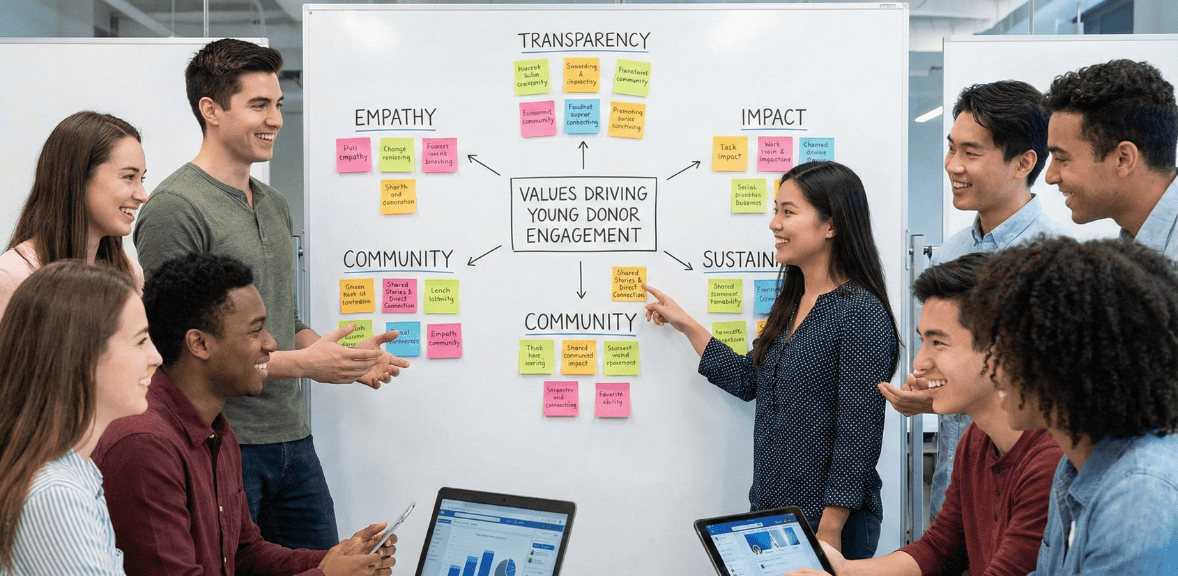
To engage Millennials and Gen Z, nonprofits must understand how these generations think about giving. Research consistently shows that younger donors are more likely to be cause-driven rather than institution-loyal. They care deeply about equity, environmental sustainability, mental health, access to education, and community well-being. Still, they do not automatically support organizations simply because they are established or well-known.
For this reason, nonprofits must clearly articulate how their work creates real-world outcomes. Younger donors want to understand what their contribution accomplishes, not just that it supports a mission statement. A clear explanation of how funds are used and what changes result from that investment builds confidence and encourages repeat giving. Transparency is not a bonus feature for younger donors; it is an expectation shaped by years of access to information and peer reviews in other areas of life.
Another defining trait of next-gen philanthropy is the importance of community and social proof. Millennials and Gen Z are influenced by what their peers support and how causes show up in shared digital spaces. Giving is often viewed as participation in a movement rather than a private transaction. This means nonprofits benefit when they make supporter involvement visible, relatable, and easy to share, while still respecting donor privacy and consent.
Digital fluency also shapes how younger donors engage. Millennials grew up alongside the rise of the internet, while Gen Z has never known a world without smartphones and social media. As a result, these generations expect to discover organizations online, interact through digital channels, and complete actions quickly. Long forms, slow-loading pages, or outdated communication styles can create friction that stops engagement before it begins.
Digital Fundraising Expectations of Millennial Donors and Gen Z Donors
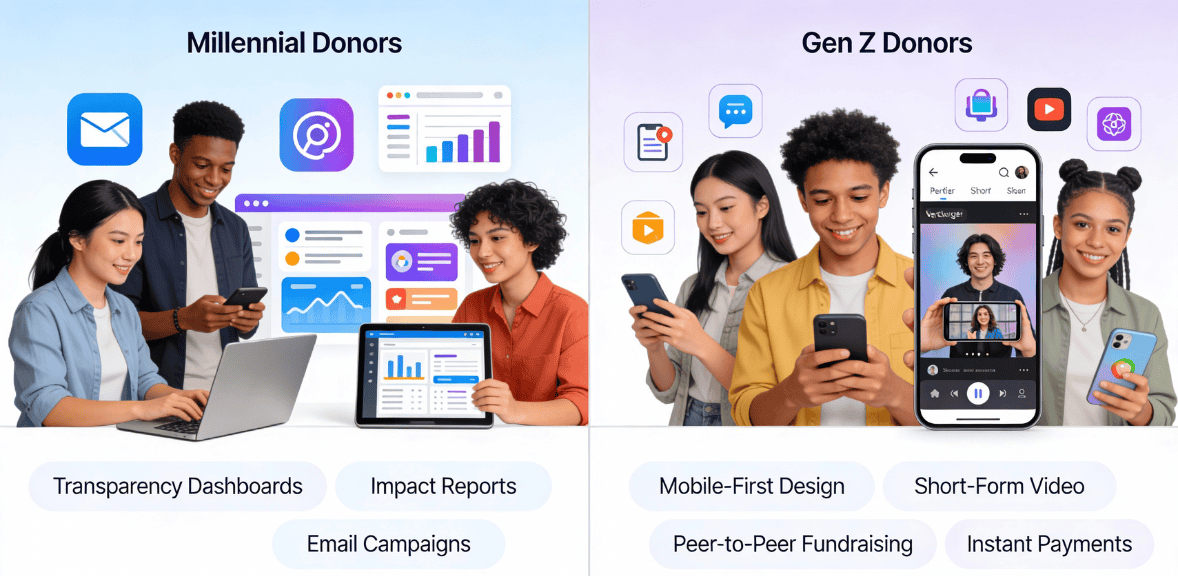
A strong digital presence is no longer optional for nonprofits seeking to engage younger donors in the United States. For Millennials and Gen Z, online interaction is often the first and primary touchpoint with an organization. Websites, donation pages, and social media profiles function as signals of credibility and relevance.
Mobile access is essential. Many younger donors learn about causes through their phones and expect donation experiences to work seamlessly on smaller screens. If a donation page is difficult to navigate, requires excessive steps, or does not support familiar payment options, potential donors may abandon the process altogether. This behavior does not reflect a lack of interest in the cause; it reflects frustration with the experience.
Social media also plays a central role in engaging younger donors. Platforms such as Instagram, TikTok, and X are where many Millennials and Gen Z consume information, discuss social issues, and discover organizations aligned with their values. Nonprofits that use these platforms to share authentic stories, impact updates, and behind-the-scenes perspectives are more likely to capture attention than those relying solely on formal announcements or fundraising appeals.
Digital fundraising for younger audiences often succeeds when it feels participatory. Peer-to-peer campaigns, social challenges, and supporter-driven fundraising initiatives resonate because they allow individuals to contribute in ways that feel personal and communal. These approaches align with how younger generations already interact online, turning fundraising into a shared experience rather than a one-way request.
Messaging That Resonates With Millennial Donors and Gen Z Donors

Effective communication is one of the most critical factors in building long-term relationships with younger donors. Messaging that resonates with Millennials and Gen Z tends to prioritize clarity, authenticity, and relevance. Overly formal language or broad claims about doing good are less effective than specific, human-centered narratives that show how change happens.
Younger donors respond strongly to messages that explain impact in tangible terms. When a nonprofit explains what a specific contribution enables, it helps donors visualize their role in the outcome. This clarity reinforces trust and makes giving feel meaningful rather than abstract. It also supports retention by reminding donors why their involvement matters beyond the moment of donation.
Authenticity is equally essential. Millennials and Gen Z are quick to disengage from messaging that feels scripted or disconnected from reality. They value organizations that acknowledge challenges, communicate openly about progress, and speak in a human rather than institutional tone. This does not mean abandoning professionalism; it means communicating with honesty and intention.
Storytelling is particularly compelling when it reflects experiences that younger audiences can relate to. Highlighting the voices of young beneficiaries, volunteers, or advocates helps foster peer connection. When supporters see people like themselves involved in a cause, it lowers the barrier to engagement and strengthens emotional investment.
Social and cultural values also influence how younger donors perceive nonprofits. Many Millennials and Gen Z supporters care deeply about inclusion, equity, and sustainability. When these principles are genuinely embedded in an organization’s work, clearly communicating them helps align the nonprofit with its audience’s values. This alignment is critical in the US context, where social issues often intersect with local communities and lived experiences.
Timely follow-up reinforces these messages. Younger donors are accustomed to quick feedback in digital environments, and they often expect acknowledgment and updates soon after taking action. Prompt, thoughtful communication after a donation helps confirm that the contribution was received, appreciated, and used intentionally.
Also read: Healthcare Nonprofit Donation Compliance: HIPAA, Donor Privacy, and Fundraising Best Practices.
Creating Opportunities for Young Donor Engagement Beyond Financial Giving

For many Millennials and Gen Z supporters, engagement with a nonprofit extends beyond writing a check. While financial contributions are essential, younger donors often want to feel personally connected to the mission through action, voice, and community involvement. This is especially true for Gen Z donors, who may have more time or skills to contribute even if their financial capacity is still developing.
Volunteer opportunities provide one of the most effective entry points for deeper engagement. When nonprofits offer flexible, skills-based, or short-term volunteer roles, they make participation more accessible to younger adults balancing work, education, and family responsibilities. Advocacy efforts, such as awareness campaigns or community education initiatives, also resonate because they allow supporters to contribute to change without a financial barrier.
Leadership and advisory opportunities further strengthen relationships with younger donors. Creating spaces where Millennials and Gen Z can share ideas, provide feedback, or participate in planning helps them feel valued as partners rather than passive supporters. These experiences often lead to long-term loyalty, as individuals invited into decision-making processes develop a stronger sense of ownership and commitment to the organization’s success.
Social and educational events designed for younger audiences can also deepen engagement. Informal gatherings, virtual discussions, or interactive webinars provide opportunities to learn, connect, and ask questions without the formality that may deter younger participants. These interactions humanize the organization and help supporters see the people behind the mission.
Building Long-Term Relationships With Future Donors

Sustainable fundraising depends on more than attracting new donors; it requires retaining them over time. For Millennials and Gen Z, retention is closely tied to feeling seen, informed, and appreciated. After an initial gift, consistent communication that focuses on impact rather than repeated solicitations helps build trust and reinforces the value of continued involvement.
Regular updates that show progress, share outcomes, or highlight stories from the field remind younger donors that their support contributes to ongoing change. These updates do not need to be lengthy or formal, but they should be specific and timely. When donors can see how their contribution fits into a greater effort, they are more likely to remain engaged.
Inviting feedback is another effective way to strengthen relationships. Younger donors are accustomed to sharing opinions and participating in dialogue, and they often appreciate being asked what issues matter most to them or how they prefer to stay involved. Even small gestures, such as short surveys or interactive Q&A sessions, signal that the organization values their perspective.
Technology can support these efforts when used thoughtfully. A donor management system, such as Cloud Donor Manager, can help nonprofits track engagement patterns, personalize communications, and ensure younger donors receive relevant updates without overwhelming them. When used responsibly, technology enhances relationship-building rather than replacing human connection.
Framing Impact, Legacy, and Aspirations for the Next Generation

Although legacy giving is often associated with older donors, Millennials and Gen Z are also motivated to shape the future. Many younger supporters are deeply concerned about the long-term consequences of today’s decisions across climate, education, health, and social equity. Framing a nonprofit’s mission in terms of lasting impact helps connect current actions to the future they want to see.
Monthly giving programs often appeal to younger donors because they align with familiar subscription models and make ongoing support manageable. Even modest recurring contributions create a sense of commitment and allow donors to see themselves as consistent partners in the mission. Over time, these habits often grow alongside donors’ financial capacity.
Recognition also helps sustain engagement. Public acknowledgment, when done with consent and sensitivity, can reinforce a sense of belonging and pride. Younger donors may appreciate recognition in digital channels or community updates, especially when it highlights collective impact rather than individual status.
Ultimately, engaging Millennials and Gen Z is about more than adapting tactics; it is about embracing a mindset that views younger supporters as collaborators in building a better future. When nonprofits invest in relationships early, they create a foundation for long-term sustainability and shared purpose.
Conclusion: Preparing Today for the Donors Who Will Shape Tomorrow
Engaging Millennial and Gen Z donors is no longer a future consideration for US nonprofits; it is a present-day responsibility. These generations are already influencing how philanthropy looks, feels, and functions, and their expectations are reshaping the sector in lasting ways. Organizations that recognize this shift and respond with intention will be better positioned to remain relevant, trusted, and sustainable in the years ahead.
Younger donors are not asking nonprofits to abandon proven practices, but they are asking for clarity, authenticity, and meaningful connection. They want to understand how their support drives change, see their values reflected in the work, and feel like active participants rather than passive contributors. When nonprofits meet these expectations, they build relationships that extend far beyond a single campaign or donation.
The most successful organizations will be those that view younger engagement as an investment, not a short-term tactic. By creating accessible digital experiences, communicating impact honestly, and inviting Millennials and Gen Z into the organization’s life, nonprofits can cultivate loyalty that grows alongside these donors’ capacity to give. In doing so, they secure not only future funding but a new generation of advocates committed to advancing the mission for decades to come.
FAQs
What types of causes do Millennial donors and Gen Z donors care about most?
Younger donors in the US often prioritize causes related to social justice, environmental protection, mental health, access to education, and community well-being. Lived experiences and current social challenges shape these interests. They are especially drawn to causes that demonstrate clear impact and address issues affecting marginalized or underserved communities.
How can nonprofits attract younger donors without losing older supporters?
Engaging younger donors does not require abandoning traditional approaches. Nonprofits can segment communication and offer different engagement paths for various audiences. When older donors understand that younger engagement supports long-term sustainability, they often view these efforts as a positive sign of growth.
Why is digital fundraising so crucial for engaging younger donors?
Millennials and Gen Z are accustomed to discovering and interacting with organizations online. Digital fundraising meets them where they already spend time and reduces barriers to participation. A smooth, accessible online experience signals credibility and respect for donors’ time.
How can nonprofits keep younger donors engaged after their first gift?
Retention depends on timely thanks, meaningful updates, and ongoing opportunities to connect. Younger donors want to see the results of their support and feel included in the organization’s journey. Consistent, impact-focused communication helps turn one-time gifts into lasting relationships.
Do younger donors really prefer small or recurring donations?
Many younger donors favor manageable contributions that fit their budgets and routines. Recurring giving allows them to support causes consistently without financial strain. Over time, these contributions often grow as donors’ income and connection to the organization increase.