

California RRF-1 and CT-TR-1 Recordkeeping for Small Nonprofits
Running a small nonprofit in California is a labor of love. But that love comes with paperwork. Every year, the state expects your organization to renew its registration and show where the money went. Miss a step, and your charity can land on a delinquency list. Worse, you could lose your tax-exempt status.
The great part? California RRF-1 and CT-TR-1 filings are easy for nonprofit organizations once you get used to them. This guide is intended to simplify the RRF-1 form, CT-TR-1 form, and all the recordkeeping that supports small charities’ compliance and good standing.
What Is the RRF-1 and Why It Matters
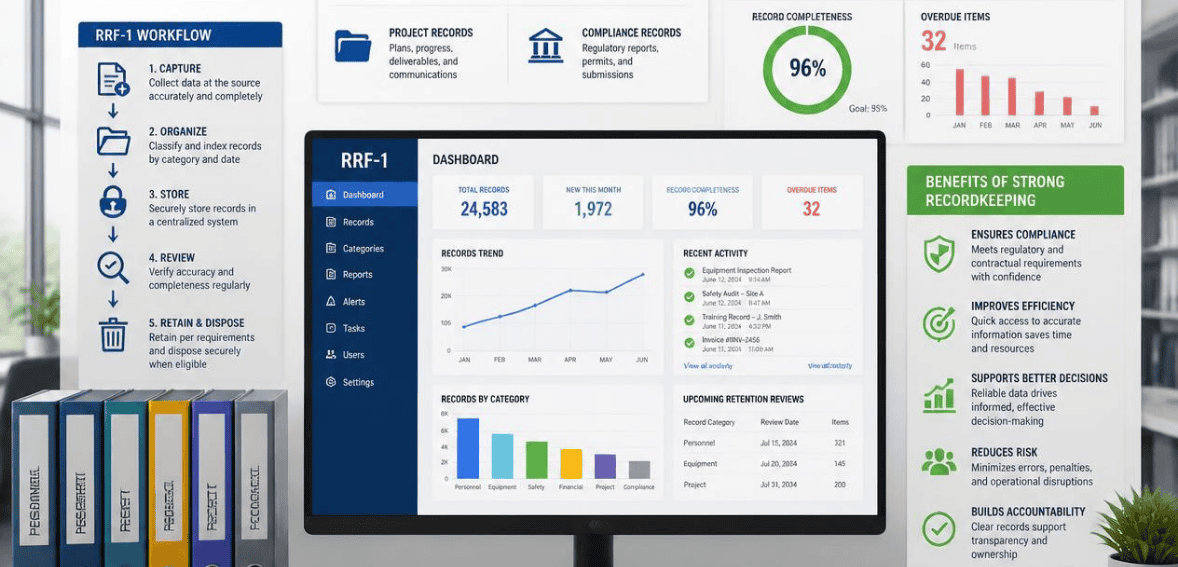
The RRF-1 is the Annual Registration Renewal Fee Report. It goes to the California Attorney General’s Registry of Charities and Fundraisers. Almost every charity that operates or raises money in California must file it each year.
The form exists to identify early signs of poor financial management and to ensure donors that their contributions to charitable organizations have not been misappropriated. As an annual state requirement, you are prompted to verify your summary, provide statistics, and pay a nominal fee.
Now, focusing on the California RRF-1 filing, your nonprofit is obligated to file the RRF-1 on an annual basis. This is the case even when a full IRS Form 990 is not filed. This is also true when the nonprofit is under the extended reporting period of the IRS. Registrations are considered an ongoing requirement and not a one-time obligation.
California Attorney General’s Registry of Charities and Fundraisers
The Registry is California’s state charity oversight office and is within the Department of Justice. This office is in charge of collecting your annual filings, can audit your status, and maintains the right to audit your books. They also have a public search tool for donors to look up your organization.
In 2026, the Registry will have a new Online Filing Service. This will be a new way for charities to submit their renewals. Until this service launches, the majority of small nonprofits still file by mail and/or use an existing online account.
Meet the CT-TR-1: The Treasurer’s Report for Small Charities
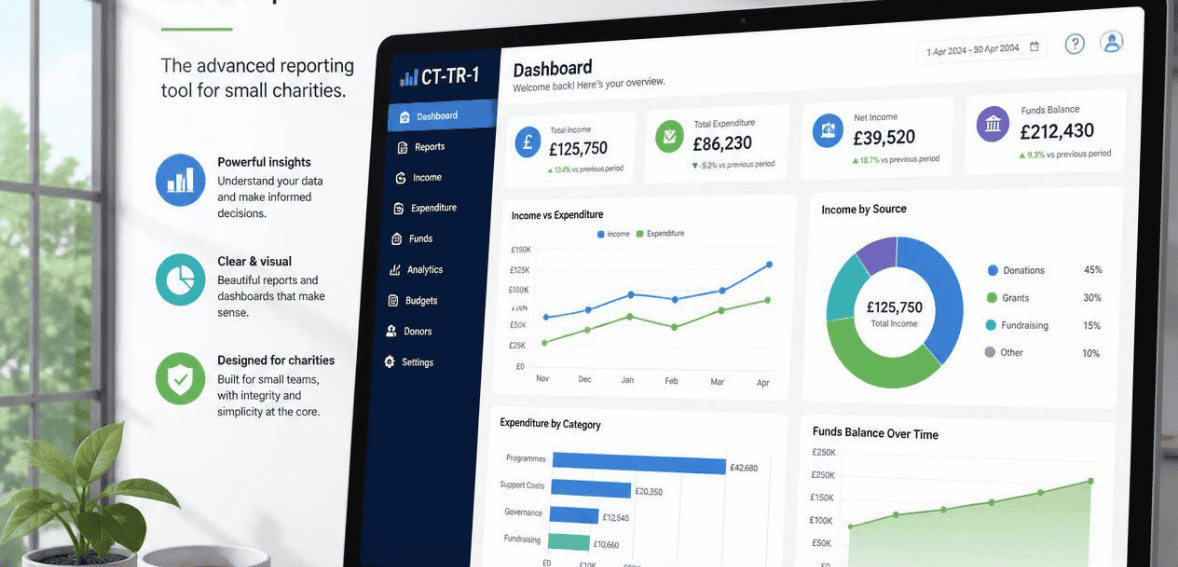
The CT-TR-1 is the Annual Treasurer’s Report. It is designed for the smallest charities. This form gives the state a simple financial snapshot when your organization is too small to file a full 990.
Here is the trigger. If your nonprofit sends the IRS Form 990-N e-postcard, you have to send the CT-TR-1 with your RRF-1. The 990-N is the e-postcard for organizations with gross receipts of $50,000 or less. California requires the CT-TR-1 to address the information gap since this postcard has virtually no financial information.
The CT-TR-1 asks for your organization’s financial position and performance by providing the cash, savings, and investments of your organization, as well as total revenues and total expenses. The form is considered current as of 01/2024. Always be sure to download the most recent version of the form before filing.
There is one exception to this requirement. Private foundations that file Form 990-PF do not file the CT-TR-1. They submit the 990-PF with the RRF-1. Therefore, the CT-TR-1 is the companion form for 990-N for small charities. The California Department of Justice charities forms page allows you to review the official form and instructions.
Who Has to File in California
Most charitable corporations, unincorporated associations, and trustees holding charitable assets must register and renew. If you solicit donations from Californians, the rule likely applies to you. This is true even if your nonprofit is based in another state.
Only a handful of organizations are exempt from the RRF-1. Government agencies do not need to file. Religious corporations sole do not need to file. Additionally, religious schools, hospitals, and other organizations conducted primarily for religious purposes are exempt. Cemetery corporations and certain political committees also do not need to file. If you do not know if you are exempt, consult a nonprofit attorney before foregoing the filing.
You must register before your first RRF-1. New charities must file form CT-1 whenever new charities first receive charitable assets in California. The Registry then confirms to the charity that it is registered and issues a State Charity Registration number. This number must appear on all subsequent filings.
RRF-1 Filing Fees for 2026
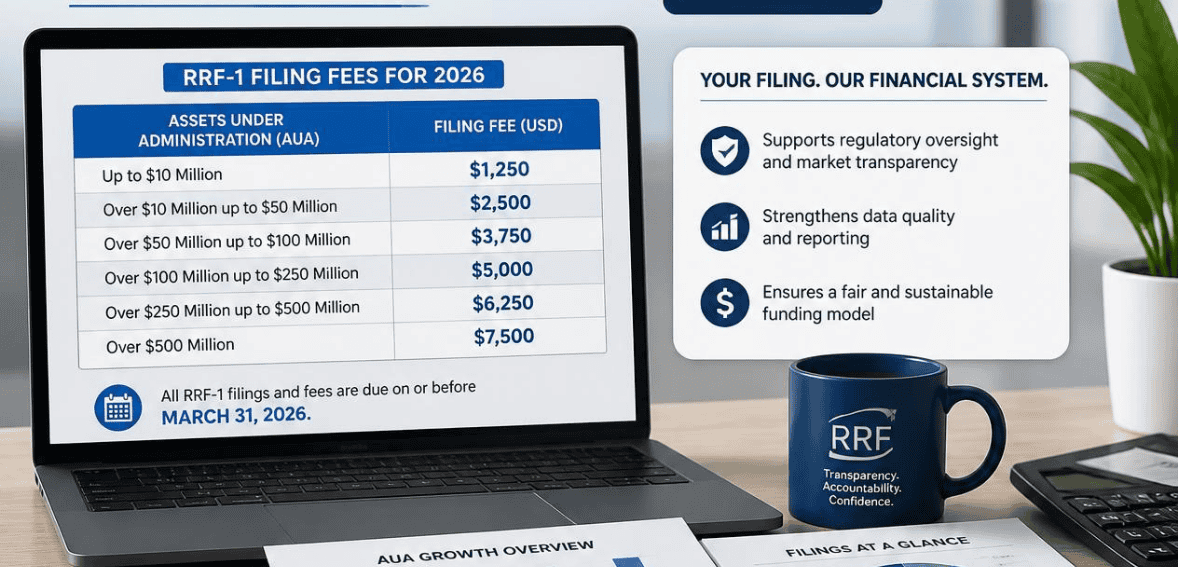
The RRF-1 uses a sliding fee scale based on your total revenue. Small nonprofits pay very little. As your budget grows, so does the fee.
Charities totaling less than $50,000 in revenue are charged a $25 fee. Charities with revenue of $50,000 to $100,000 are charged a $50 fee. A fee of $75 is charged to charities with revenue of $100,001 to $250,000. Charities with revenue of $250,001 to $1 million are charged a fee of $100. Charities with revenue of $1 million to $5 million are charged a fee of $200. A fee of $1,200 is charged to the largest charities. Always check the form to confirm the current schedule, as these fees are subject to change.
For most small nonprofits, this $25 fee is the most their expenses will amount to. If you are filing via mail, include this fee as failure to do so will result in the Registry rejecting your entire filing.
Deadlines You Can’t Afford to Miss
The RRF-1 is due four months and 15 days after your fiscal year ends. For a calendar-year nonprofit, that means May 15. The CT-TR-1 or your 990 attachment is due at the same time.
California accepts extensions issued by the IRS. If you get an extension from the IRS for your 990, that extension is granted to your RRF-1 as well. Ensure you file with the state after you have filed with the IRS and by the newly extended due date. It is recommended to keep a copy of the federal extension with your documents in case the Registry requests it.
There is temporary relief related to the 2026 system upgrade as well. The Registry has stated that renewals in the period from the 7th of January 2025 to the 31st of August 2026 will have an extended due date of the 31st of August 2026. No application will be necessary from the Charity to receive this relief. However, this relief should not be treated as a reason to fall behind on renewals. Timely renewals continue a clean and positive relationship with the Registry and avoid any unnecessary stress.
Recordkeeping: The Part Most Small Nonprofits Skip
Filing the forms is only half the job. The other half is keeping the records that back them up. California Government Code Section 12586 requires charities to keep records that substantiate the numbers on the RRF-1 and the 990. The Attorney General can audit at any time. When they do, they may ask you to prove any line item.
This is where recordkeeping matters. Staff turnover and volunteer changes are a fact of life for all nonprofits. Change can be even in the boardroom. You may even lose your bank signatories. You need to comply with audits, yet you are unable to find three-year-old records. Good and timely recordkeeping helps avoid this nightmare scenario.
Each statement of account, each receipt, each invoice supporting each record of income and expense, must be retained. Keep all documents supporting expenditure of grants and the agreements you sign. Save your board minutes, as they show board approval of policies and expenditures. Maintain copies of your CT-TR-1, RRF-1, and 990 forms and the payment proof for these forms. Keep your IRS determination letter and your CT-1 confirmation in a permanent storage place.
Digital storage helps. You can scan a document and retain a copy in digital storage. It is important that you have clearly named folders by fiscal year. Give access to at least two people; otherwise, your organization may be locked out of its history.
How Long to Keep Each Record
Retention time depends on the document. The standard practice for financial records is at least seven years. Bank statements, receipts, and filed returns fall into this group. Board minutes should be kept permanently, because they are part of your organization’s legal history. Documentation for restricted gifts should last for the life of the restriction, which can stretch well beyond seven years.
When in doubt, keep it longer. Storage is cheap. A missing record during an audit is expensive. A simple written retention policy, approved by your board, keeps everyone on the same page.
Common Mistakes That Trigger Delinquency
Delinquency notices are usually the result of a few common mistakes. One is forgetting the RRF-1 because the nonprofit thought the only form to submit was the IRS 990-N. Another is filing the RRF-1 with the CT-TR-1 or 990 attachment lacking. A third is submitting the form without the fee. Each of these mistakes can hold up your renewal.
There is a privacy trap too. If you submit a full 990, you must first remove Schedule B. Because it contains the names of donors, the Registry does not wish to receive it. Leaving Schedule B poses a risk to your donors. The RRF-1 becomes a public record, so remove every page of Schedule B before you submit it.
There are actual penalties for delinquency. A charity that has become delinquent is not able to legally conduct business or solicit donations in the State of California. It may also cause the charity to lose its tax exemption with the Franchise Tax Board. If you receive a notice you must quickly go to the Registry search tool and find your missing filings, and submit all due forms, attachments and fees as soon as possible.
A Simple Compliance Routine for Small Teams
You do not need an entire accounting team for compliance. You need a rhythm. Mark the RRF-1 deadline on your shared calendar and set a reminder for 60 days before. Reconcile your books monthly so the numbers are ready for filing season. Submit the 990-N or 990 first. Then, complete the RRF-1 and CT-TR-1 forms.
Each year, assign one person the responsibility for filing and select a backup. On the filing day, save the confirmation email and the fee receipt to the records folder. Immediately set up the reminder for the following year, and then close the task. This small loop of tasks eliminates the last-minute stress and replaces it with a 5-minute routine.
Conclusion
California RRF-1 filing for nonprofit organizations does not have to be a source of dread. The forms are short. The fee for small charities is modest. The deadlines are predictable. What ties it all together is recordkeeping. When you keep clean, well-organized records, the RRF-1 and CT-TR-1 almost fill themselves out.
Think of compliance as part of your mission. Every tax compliance filing as a nonprofit keeps your organization in good standing with the IRS, communicates to your donors that their gifts are being responsibly managed, and keeps your nonprofit from being listed as delinquent. To know the recent updates regarding Tax Form 990-N e-Postcard, fees, and filing deadlines, please visit the California Attorney General’s Registry and the IRS website. CalNonprofits also has helpful resources for other state-specific compliance needs.
Frequently Asked Questions
- Does every small nonprofit in California have to file both the RRF-1 and the CT-TR-1?
Not always. Every registered charity files the RRF-1 each year. You add the CT-TR-1 only if you file the IRS Form 990-N e-Postcard. If you file a full 990 or 990-EZ, you attach that instead of the CT-TR-1. Private foundations attach the 990-PF and skip the CT-TR-1.
- When is the California RRF-1 due each year?
It is due four months and 15 days after your fiscal year ends. For calendar-year nonprofits, that is May 15. California honors IRS extensions, so a federal extension usually pushes your state deadline too. Note the temporary relief that extends certain renewals to August 31, 2026.
- How long should a small nonprofit keep its financial records?
Keep financial records for at least seven years. That covers bank statements, receipts, and filed returns. Keep board minutes permanently. Keep documentation for restricted gifts for the full life of the restriction. A written retention policy approved by your board keeps this consistent.
- What happens if my nonprofit misses the RRF-1 filing?
Your organization can be listed as delinquent with the Registry. A delinquent charity cannot legally operate or solicit donations in California. You may also lose your tax exemption with the Franchise Tax Board. To fix it, identify the missing filings, then submit the past-due forms, attachments, and fees as soon as possible.