
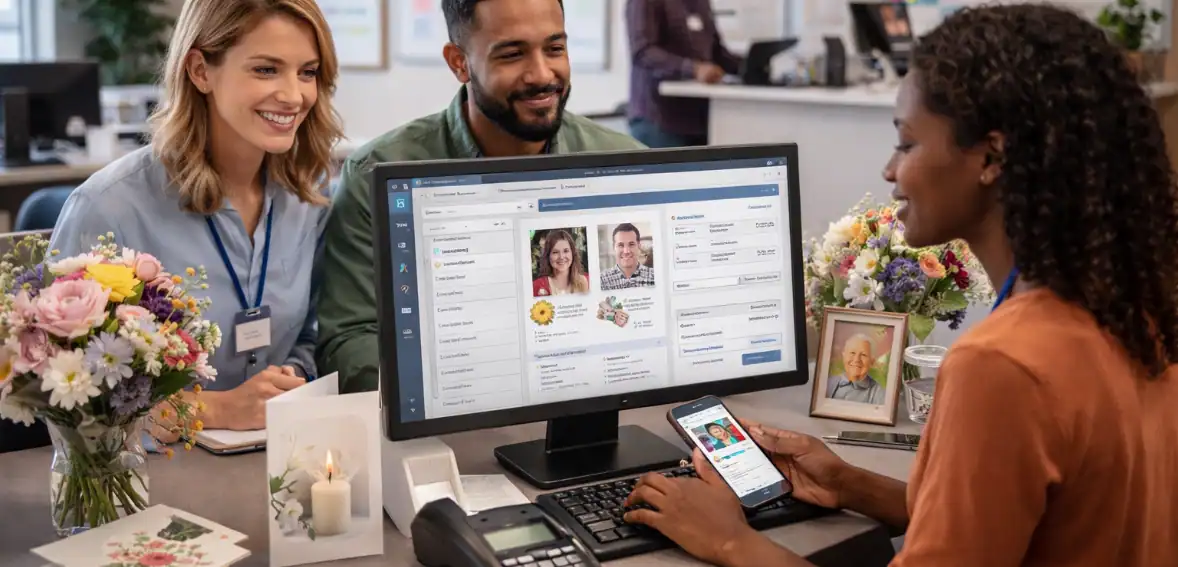
How to Set Up Tribute and Memorial Gifts Without Creating Extra Work
Donors can use tribute and memorial gifts to honor their deceased family members while they support important causes. Nonprofit organizations establish emotional ties with their supporters through memorial donations and honor gifts, which enable them to create connections that result in increased participation and permanent donor partnerships. The process of handling these donations can be challenging for most nonprofits because it requires them to spend unnecessary time on administrative tasks, which leads to inconsistent experiences for their supporters.
A nonprofit organization requires a structured system to manage tribute gifts because unorganized processing methods become unmanageable. The organization faces difficulties because it must handle multiple responsibilities, including tracking in-memory donations, sending tribute notifications, and managing memorial gift acknowledgment processes. The organization faces delays and errors that result in missed opportunities to build stronger connections with its donors.
Organizations need to create an effective tribute gift process that must operate smoothly with their current fundraising methods to achieve their desired outcomes. Nonprofits achieve efficient Tribute and Memorial Gift management through their operational mode, which streamlines their existing processes, automates their communication system, and standardizes their document management.
The guide provides instructions for constructing Tribute and Memorial Gift systems that can grow with organizational development and require minimal operational effort. The document outlines the workflows for acknowledging gifts, sending notifications about those gifts, and maintaining operational standards. The insights help you work efficiently to create a valuable donor experience, whether you are starting a new program or improving your existing nonprofit tribute-giving program.
Understanding Tribute and Memorial Gifts in Nonprofit Giving

The Tribute and Memorial Gifts enable donors to make contributions that serve to honor or remember their special someone. The gifts donors make to the organization fall into two distinct groups: donations made to honor someone and donations made to remember someone who has passed away.
The two choices enable donors to make donations that provide them with a direct connection to their personal life experiences. Nonprofits must capture honoree information, notify designated recipients, and manage acknowledgment communications. This adds complexity to the donation process.
The gifts provide organizations with valuable advantages. Tribute gifts for nonprofits attract new donors who would have stayed disengaged from the organization. Donors show their commitment to charity through repeat donations made to mark particular times throughout the year.
The complete understanding of nonprofit tribute giving requires knowledge about both its emotional and operational elements. Organizations can create systems that deliver maximum results while requiring minimal administrative work by understanding their existing benefits and challenges.
Designing a Simple Tribute Gift Workflow That Scales
A properly designed tribute gift workflow provides the foundation for efficiently managing tribute and memorial gifts. Lack of a clear structure will create confusion and delays in processing tribute and memorial gifts.
An efficient workflow should include:
- Capture of the honoree’s information during the donation process.
- Selection of the tribute type (in honor of or in memory of).
- Gathering of notification recipient information.
- Automated confirmation and notification processes.
- Tracking and reporting of tribute gifts.
The donation platform should integrate all of these processes into a single system, enabling seamless data flow between systems and reducing the need for manual entry. Automation is essential for scalability purposes, especially as donation volumes continue to increase.
In addition, workflows should be consistent across all campaigns, allowing staff to efficiently manage tribute and memorial gifts without having to adapt to different processes.
Through the implementation of a clear and scalable tribute gift workflow, nonprofits will be able to process increased volume without creating additional operational complexity.
Setting Up Donation Forms for Tribute Gifts for Nonprofits
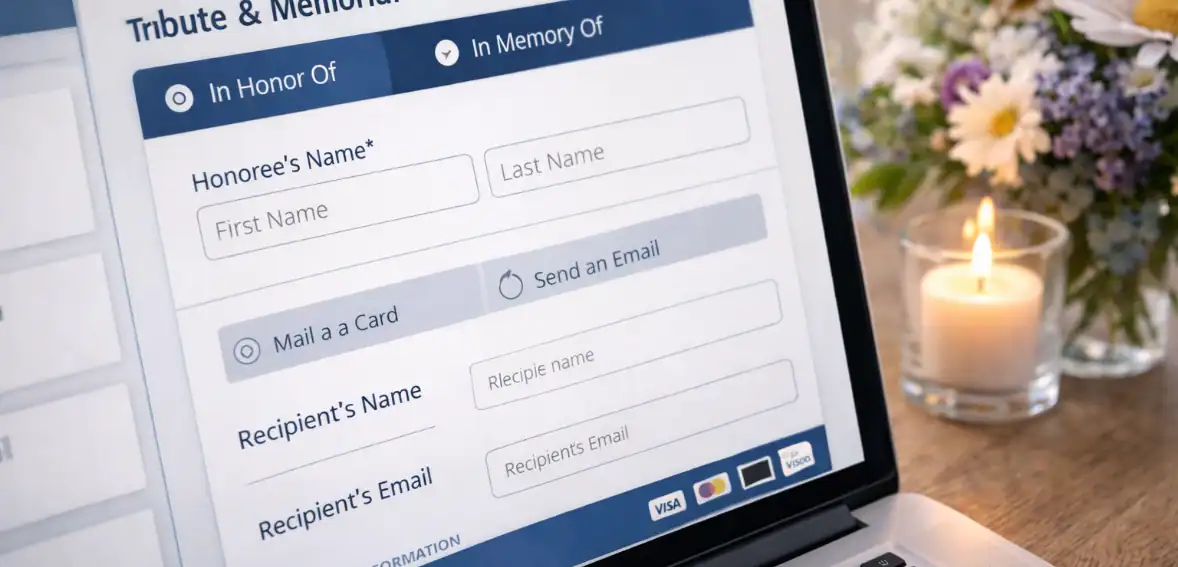
To appropriately manage tribute and memorial donations, a donation form is an important tool. A donation form should include everything needed to gather all the important information from a donor, without being so extensive as to cause confusion or frustration. Some of the main features that should be included on a donation form for a Tribute donation are:
- Type of tribute (Honor/Memory)
- Name and details of the person being honored
- Message from the donor (if desired)
- Contact information for the person receiving the tribute notification
It is important that the donation form is simple and easy to use. Donors may not be inclined to donate if they have too many things to fill out on the donation form. Keep only the most important fields and ensure the process remains user-friendly.
Using condition-based logic can also aid in the usability of the donation form. For example, when donating for a tribute, fields should be displayed to the donor only after they select the tribute option. This will help keep the donation form clean and to the point.
By optimizing your donation form process, non-profits can collect accurate information and ensure an easy and seamless experience for all donors.
Automating Tribute Notifications to Reduce Manual Work
The Tribute and Memorial Gifts system depends on tribute notifications as its essential element. The notifications inform recipients of a donation made to honor or remember a particular person. Manual management of this process takes excessive time because it creates multiple opportunities for mistakes.
Automation significantly reduces this workload. Donor input data allows systems to create and dispatch notifications without requiring manual intervention. The system guarantees that all messages will be sent at the correct time while maintaining uniformity in their content.
Organizations need to create customized notification systems that meet their requirements. Donors may want to include personal messages, and nonprofits should allow this flexibility. Templates maintain uniformity throughout the organization by maintaining a standard organizational tone and branding elements.
Organizations need to track their notifications because they play a crucial role in their operations. The systems need to document both the time notifications are sent and the time they are received. The system provides both accountability and information to assist with the reporting process.
Nonprofits can use automated tribute notifications to improve operational efficiency while providing donors with a better experience.
Creating a Consistent Memorial Gift Acknowledgment Process
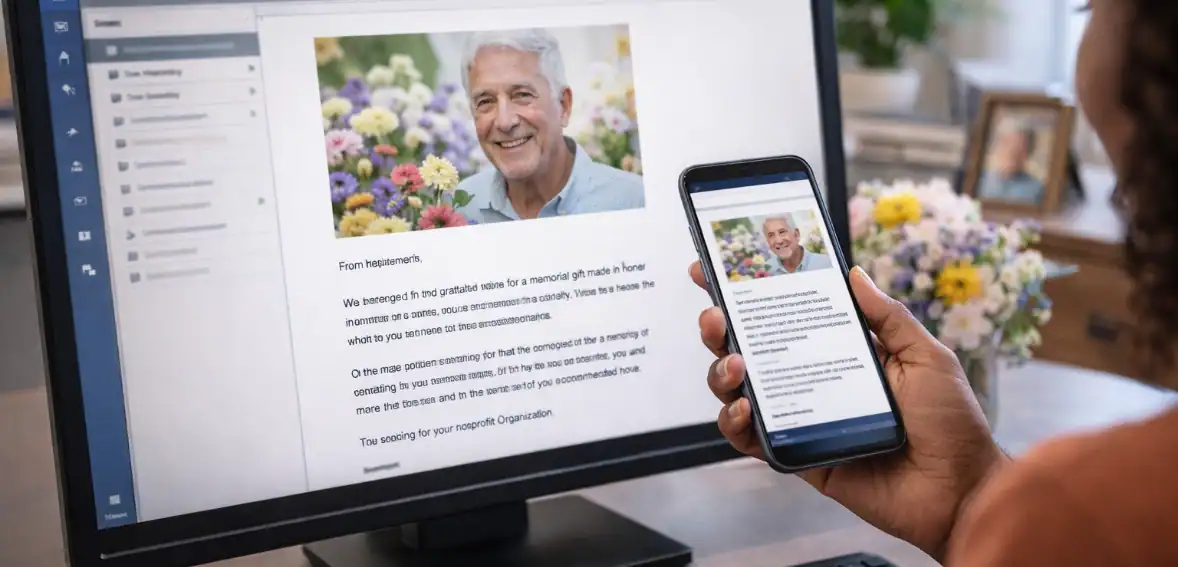
Donor trust can be built through honest communications and strong relationships. Acknowledging memorial gifts in a timely, meaningful manner meets donors’ expectations.
A standardized process of acknowledging memorial gifts creates a sense of consistency when acknowledging donations. The three components of a standardized acknowledgement process include the following:
- Confirmation emails are sent automatically within hours of when the donation is made.
- Acknowledgment messages sent to the donor are personalized and include information about the honoree.
- A follow-up communication with the donor is sent as appropriate after acknowledgement.
Acknowledgment of memorial gifts should acknowledge the emotional factors associated with tribute and memorial donations. Tone, in particular, must be respectful and empathetic for donations made in memory of an individual.
While automated systems provide support for this process, personalization must be incorporated. Utilizing an automated system with customizable Acknowledgment templates provides an efficient process while maintaining authenticity.
Developing a consistent memorial gift acknowledgment process can enhance the relationship between the nonprofit and the donor, encouraging the donor to continue giving in the future.
Managing In-Memory Donations and In-Honor Donations Efficiently
The process for handling in-memory and in-honor donations needs to be implemented systematically. Different types of gifts require specialized handling procedures, including communication methods and recognition processes.
In memory donations often involve sensitive situations. All communication must follow proper procedures that show respect for others. Nonprofits need to verify that their messages use suitable language at the correct delivery times.
People make things in honor of special occasions. These gifts may be associated with events such as birthdays or achievements. The messaging can take on a more positive tone.
Nonprofits can gain useful insights by separating donation tracking for both donation types. Nonprofits use trend analysis to develop effective campaigns by making targeted adjustments.
Efficient management requires clear processes and accurate data tracking. Nonprofits can enhance operational performance and donor engagement by properly organizing in-memory and in-honor donations.
Integrating Tribute Giving With Existing Fundraising Systems
The organization needs to establish integrated systems that enable it to handle tribute and memorial gifts without adding extra operational tasks. The absence of system connections creates two problems that require employees to enter data twice as their workload increases. Organizations need to establish integrated systems that connect their tribute gift processes to their customer relationship management, donation collection, and email communication systems.
Centralizing all data through this process enables users to access the information from one common location. Organizations can achieve their reporting needs through system integration, which provides access to the required data. Nonprofits use data insights to track their performance and find emerging patterns that help them improve their marketing strategies. Automated systems, when integrated, allow organizations to run their entire business from a single central location.
This system automates the entire process, including sending acknowledgment emails and tribute notifications, as well as creating reports. Nonprofits that connect their tribute giving system with their current systems will accomplish two goals. The system helps organizations improve operational efficiency while reducing the need for manual tasks.
Tracking and Reporting on Nonprofit Tribute Giving Performance
It’s important to monitor the performance of Tribute and Memorial Gifts programs so nonprofits can identify areas of success and areas that need improvement. Nonprofits need to use data to analyze which components are effective and require attention.
Some metrics that should be monitored would include the following:
- Quantity of tribute gifts.
- Revenue generated from memorial and honor gifts.
- Retention rates of tribute donors.
- States of notification delivery and engagement rates.
Performance indicators can provide insight into these metrics. Use a dashboard as a performance visualization tool to support decision-making.
Also, do segmentation to enhance the analysis of your program. For example, compare equivalent quantities of in-memory donations vs in-honor donations to discover trends and opportunities.
To improve your tribute-giving strategy and maximize your impact, it is important to effectively track and report program metrics.
Reducing Administrative Burden With Standardized Processes
The management of tribute and memorial gifts requires standardization because it is the essential means of achieving effective results. Staff members handle their work tasks differently when organizations lack standard procedures, leading to confusion and mistakes.
The tribute-giving process requires standardized procedures that include data collection methods, notification systems, and acknowledgment procedures. The presence of clear guidelines enables all team members to execute their work in accordance with established procedures.
Staff members use written procedures as their reference material, which helps them learn and develop their skills. The value of this resource becomes particularly important for organizations that are experiencing growth. The automation process establishes additional standards that lead to more efficient operational procedures.
The system establishes standardized operational procedures that link to automated functions, reducing the need for manual work. Nonprofits can achieve better efficiency through standardized operational processes, which decrease their need for administrative tasks.
Avoiding Common Mistakes in Tribute Gift Management
The management of tribute and memorial gifts poses several challenges, but avoiding some of the most common errors can increase efficiency and donor satisfaction.
Some examples of common donor issues include:
- Complicated donation forms.
- Delayed notifications and acknowledgments of tributes.
- Lack of accurate tracking of tribute gift data.
- Failure of consistency among total communications.
- Lack of effective integration of systems.
Addressing these issues will require adequate planning and ongoing improvement efforts. All organizations should regularly review processes to identify any areas where improvement is possible.
Utilizing training for staff and utilizing technology will also assist in preventing issues. If all the above factors are consistently followed, tribute and memorial gifts should be managed effectively.
If nonprofits can avoid these common pitfalls, they will provide a better experience for the donors and the recipients.
Scaling Tribute and Memorial Gifts Programs Without Extra Work
The management of tribute and memorial gifts becomes increasingly difficult when programs expand their operations. Organizations need systems and processes that handle increased operational demands without requiring additional staff resources.
The process of scaling requires organizations to implement automated systems. The system should manage all tasks, including sending notifications, creating acknowledgments, and generating reports.
The organization established scalable workflows that maintain operational consistency when production levels increase. The process improves accuracy while maintaining operational speed.
Scalability training requires staff members to receive proper training from organizations that provide accurate system documentation. The organization requires teams to learn their operational procedures while mastering system functionality.
Nonprofits can develop their tribute giving programs through scalable solutions that enable them to operate their organizations efficiently.
Conclusion
Donors can use tribute and memorial gifts to connect with causes while paying tribute to their departed family members. Donor relationships improve when organizations use these gifts to boost donor participation and maintain long-term funding. Unorganized systems create both extra work for administrators and difficulties for organizations to handle their operations.
Nonprofits can improve process efficiency by establishing an organized tribute gift system. The organization needs to perform three main tasks to achieve its objectives. The organization needs to establish memorial gift acknowledgment procedures to improve its tribute notification process and donation forms.
The organization needs established policies, ongoing communication, and insights from data analysis to manage in-memory donations and in-honor donations successfully. Programs grow when organizations avoid common errors and build systems that can handle increased demand.
Nonprofit organizations need to establish three elements: technological solutions, operational procedures, and compassionate services to achieve successful tribute donation programs. The nonprofit organization develops Tribute and Memorial Gifts programs that deliver operational and emotional benefits by using its resources to create efficient donor experiences. Nonprofits can fulfill their obligation to donors by using these strategies, which enable them to operate their organizations in ways that achieve both environmental and social responsibility goals.
FAQs
- What are tribute and memorial gifts in nonprofits?
Donors make tribute and memorial gifts to support a cause while honoring someone or something special.
- How do nonprofits manage tribute notifications?
Nonprofits collect recipient information at donation time and use this data to send automated messages notifying recipients of their gifts.
- What is a tribute gift workflow?
The tribute gift workflow establishes a comprehensive system for data collection, gift notifications, gift acknowledgments, and gift tracking for tribute donations.
- Why are memorial gift acknowledgments important?
Memorial gift acknowledgment creates trust while showing gratitude. Donors receive value through acknowledgement, which leads to their ongoing support.
- How can nonprofits reduce workload for tribute giving?
Nonprofits can reduce operational demands by implementing automated systems that create standardized procedures and enable unified tribute gift management through system integrations.