
Best Bloomerang Alternatives for Small Nonprofits That Need Simpler Donor Management
Small nonprofits do not face challenges due to a lack of appreciation for their donors. Their difficulties arise from the outsized demands placed on them by their systems. While software solutions may look sleek in a presentation, they often feel cumbersome once the actual work begins. Staff take on multiple roles, budgets are always tight, and there seems to be a black hole that consumes time. When donor databases, campaign management, reporting, and follow-up become more burdensome than helpful, it’s time to seek a better solution.
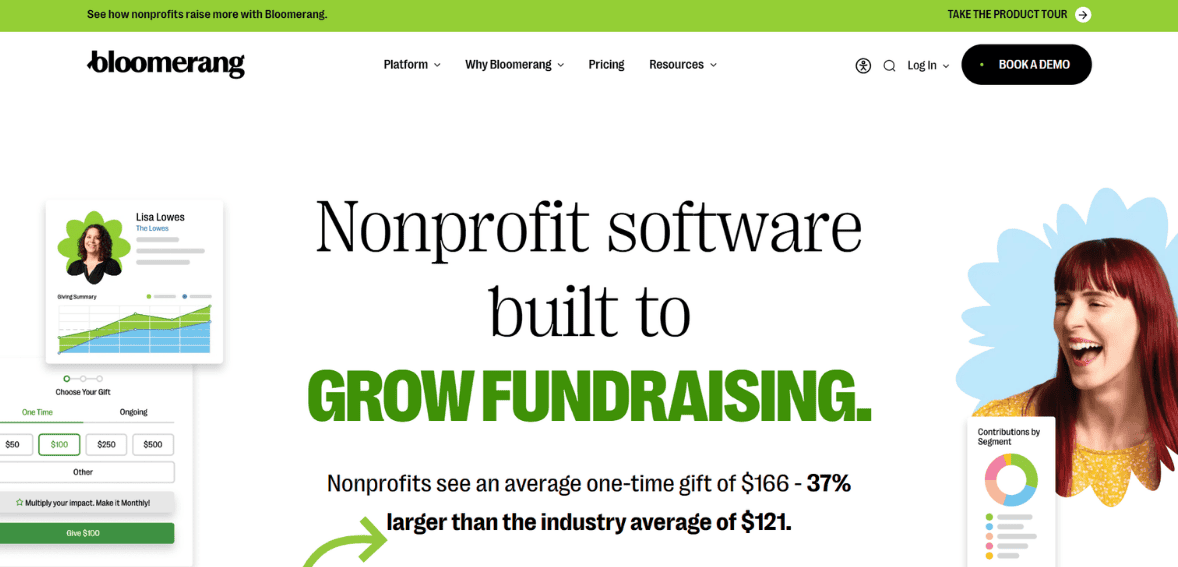
This is the context in which the search for Bloomerang alternatives is broadening. Bloomerang is often lauded for donor retention analytics and a user-friendly interface. However, these features do not make it the best choice for smaller teams. Some nonprofits are looking for lower price points as they expand, as well as simpler add-on requirements, more straightforward initial configurations, more robust fundraising tools built in, and donor relationship management systems that do not feel overly burdensome on the analytics side.
For organizations needing straightforward workflows, less software friction, and cleaner data, there are many good options. The right choice will hinge on your fundraising model, size, and the level of complexity your team can manage. The most powerful solution is not always the right choice for many smaller organizations; often, the right choice is the system that the team will actively engage with.
Reasons Why Small Nonprofits Start Seeking Alternatives to Bloomerang
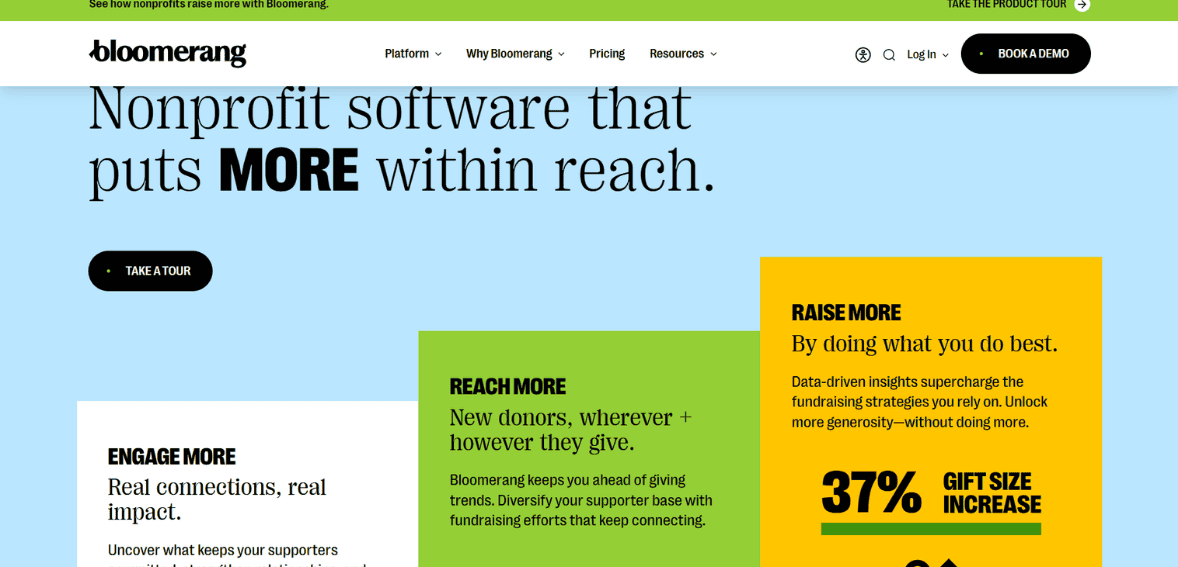
Image Source
Small nonprofits often avoid changing systems due to more significant challenges. Instead, a set of challenges begins to snowball. A team begins with donor tracking and a handful of annual campaigns, then adds events, grows recurring giving, implements email segmentation, extends report pulls, and onboards staff. The CRM that once felt manageable now feels like a second job.
This is when the Bloomerang conversations change from theoretical to practical discussion. Many view Bloomerang as a donor-centered CRM system for small and mid-size nonprofits, with a positive outlook for its retention analytics and onboarding. However, several market comparisons indicate the lack of customization, limited grant tracking, and pricing based on the size of your database.
Many nonprofits want an all-in-one system, especially if they want fundraising tools, payment processing, email, forms, and event systems integrated. grantpipe.com blog.charityengine.net
For very small teams, simplicity matters more than feature volume. A system can have excellent analytics and still be the wrong fit if everyday tasks take too many clicks. That is why the best donor management software alternatives often win on usability, not just on depth.
What Small Nonprofits Should Want from a Simpler CRM
A nonprofit CRM for small nonprofits should reduce administrative work, not increase it. Many platforms expect small organizations to behave like large development offices. They expect you to have some level of technical ability, formal processes, or a dedicated staff member to manage a database, which most small nonprofits do not have.
The right system should allow for easy searching and updating of donor records. It should take the staff’s awkward workarounds when tracking gifts. It should handle recurring donations, acknowledgments, and campaign reports in a natural, easy manner. Overall, it should allow for a more complete donor story.
This includes a history of communications, behavioral engagement, and follow-ups that need to be done.
While price does matter when deciding on a CRM, it should not be the driving factor. A cheap platform that creates manual work can cost more in staff time than a more expensive tool that is more automated. What small nonprofits need is a CRM that is affordable, easy to learn, and simple, but can grow without becoming bloated.
Alternative CRM to Bloomerang for Simpler Donor Management
Some smaller nonprofits want better experiences for day-to-day activities. Some offer greater flexibility, others greater ease of use, and others better all-in-one fundraising. It all depends on your team’s work style to find the best fit.
Neon CRM
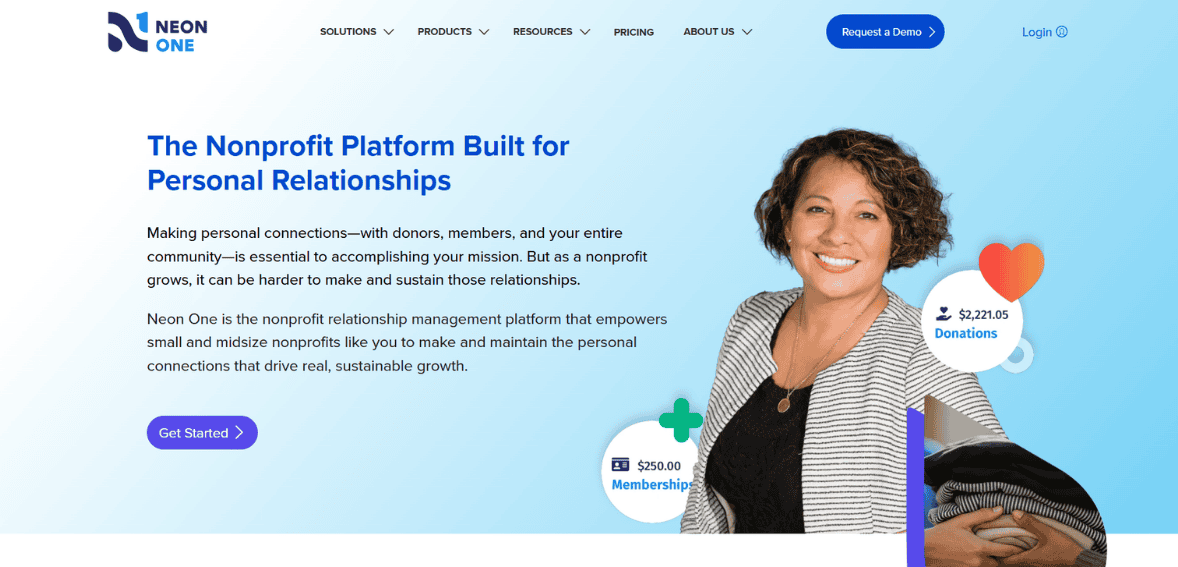
Image Source
Neon CRM is a popular option for developing nonprofits that want a wide array of features, without having to jump into enterprise-level systems. Industry comparisons show it as a strong all-around choice offering combined donor management, fundraising, email marketing, events, memberships, volunteer management, and reporting. Most describe it as a system that can grow with an organization without forcing a large number of separate add-ons.
For small nonprofits, the proposition is simple. Neon Lessens the need to piece several systems together. When staff capacity is limited, that becomes even more important. Instead of having to track donor records in one system, emails in another, and event registrations in a third, they can centralize more of their work.
The system is designed to create centralization. The all-in-one system comes with the tradeoff that it can feel like a lot to manage. Small teams that want a comfortable level of growth often appreciate Neon. Teams wanting the least burden on their system will often prefer other options.
Givebutter
Givebutter’s popularity has grown among small nonprofits due to its modern approach to combining fundraising and CRM features. It is especially appealing to organizations operating on limited budgets to run campaigns, events, or peer-to-peer fundraising. It is frequently mentioned in comparisons as a highly suitable option for early-stage nonprofits seeking flexibility and low overhead.
Many small teams care most about approachability. It is a small team that highly appreciates Givebutter. If your organization wants donor management tightly integrated with campaigns and engagement, it can be an attractive Bloomerang alternative. It might not be suitable for every nonprofit with sophisticated relational database needs, but for donor management integrated with fundraising activity, it checks a lot of boxes.
Little Green Light
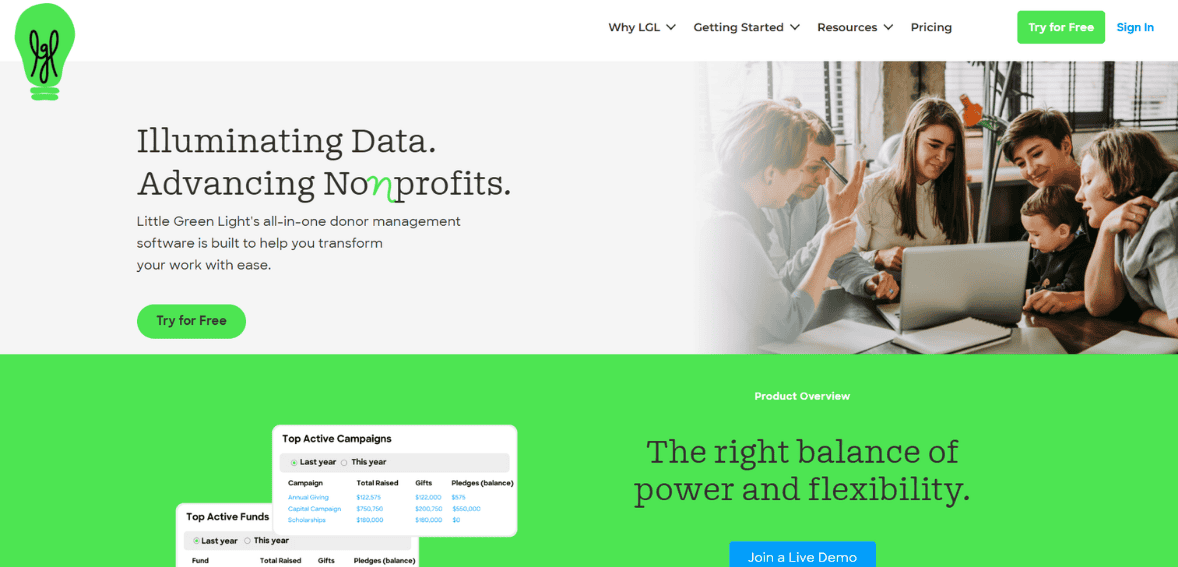
Image Source
Little Green Light is commonly recommended for budget-limited nonprofits wishing to implement a purpose-built system for basic donor tracking. It continues to be highlighted as one of the cheapest nonprofit CRM options for very small nonprofit organizations that only require contact management, gift management, and basic reporting.
Little Green Light enables small, budget-limited nonprofits to overcome the intimidation of larger donor management solutions. While larger nonprofits may prefer comprehensive and multifunctional products, Little Green Light focuses exclusively on basic donor management. Its simplicity may limit nonprofits’ ability to report, automate, and market. For organizations that prefer simplicity and a limited database to manage donations, Little Green Light is an excellent choice compared to other donor management solutions.
Keela
Keela is described as a contemporary solution for nonprofit CRMs that require donor management coupled with integrated communication. It is commonly positioned as the top choice for small nonprofits with a similar email marketing and fundraising system integrated into the same database.
Keela provides cohesion to organizations that have relied on disconnected tools. Nonprofits that prefer a modern user interface and an alternative design to traditional CRMs are often drawn to Keela. No platform is without compromises.
Many Keela users trade the convenience of integrated tools for concerns related to customer service or the system’s ability to adapt to the organization’s evolving needs. Keela is designed to meet the needs of small nonprofits by providing donor management and integrated communication in one system.
DonorPerfect
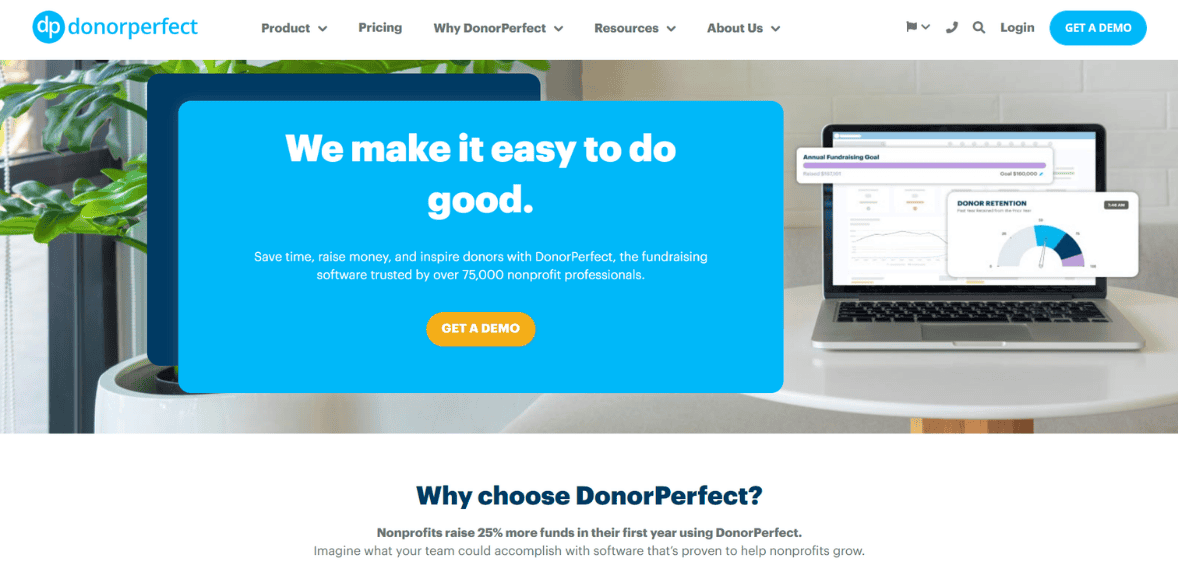
Image Source
The history of DonorPerfect provides both advantages and limitations. DonorPerfect remains a solid choice for nonprofits that want detailed donor management, better segmentation, and reporting capabilities than some entry-level systems offer. In small nonprofit market reviews, DonorPerfect is most often described as a reliable mid-range system compared to lightweight systems and enterprise-level products.
For smaller organizations, the question is not whether DonorPerfect can do enough. It is whether it is doing too much for what they need. Fundraising programs that are expected to grow may appreciate that depth, while others may find it less intuitive than newer systems. It remains a credible Bloomerang competitor for nonprofits that want greater reporting flexibility without moving to a very large system.
Donorbox CRM
Although Donorbox is primarily known for its fundraising services, it has also gained traction as a CRM solution appealing to smaller organizations. In reviews, it is praised as an inexpensive cloud-based service with functionality designed to automate daily organizational tasks for smaller nonprofits.
It is also designed to serve and assist smaller nonprofits that adopt a more actionable mindset rather than a purely database-oriented one. Donorbox serves its purpose if your organization is focused on fundraising, donor management, and simplified processes.
Donorbox may not replace an extensive CRM, and it may not serve larger nonprofits well, but it helps most smaller nonprofits that are more focused on ease and speed. Many organizations benefit more from a simplified tool that is fully adopted and used than from a complex tool used in a simplified manner.
How to Choose the Right Bloomerang Alternative
When choosing Bloomerang alternatives, focus on your actual workflow rather than a list of features. What tasks are you doing that are consuming your time? If your challenges are with entering gifts, focus on the donation workflow. If you feel the need to track down your donors, you should focus on your communication and task management. If your team is using many exported spreadsheets, reporting is likely the real problem.
The second question pertains to staffing. A small nonprofit with one development generalist will need very different things than a large, multi-person fundraising department. Depending on how complex and time-consuming they are to configure, some tools that look good in a sales demo could become very expensive distractions for a team that lacks the time to set them up and manage them. Simpler systems that align with actual staff behavior often lead to superior results.
The third question relates to growth. Some nonprofits will only need a simple donor database and not much else. Others will need a platform that accommodates recurring giving, campaigns, events, volunteer engagement, or memberships, and expects those to be added within the next two years.
More integrated functionality becomes desirable despite added complexity. Therefore, the best nonprofit CRM for small nonprofits is, counterintuitively, not the one with the most features. Instead, it is the one that aligns with your current resources and your immediate future.
When It Still Makes Sense to Use Bloomerang
Not every nonprofit looking at options should move away from Bloomerang. It continues to have distinct advantages. It is often awarded for analytics for donor retention, a clean user interface, and a strong donor-focused organization onboarding. For nonprofits that focus primarily on individual giving and retention, it remains a good option, especially if the team appreciates that information and is comfortable with the pricing model.
The problem is not the quality. A platform can be good and still be wrong for a specific team. If your nonprofit wants broader built-in fundraising tools, flatter pricing, easier scaling, or more basic day-to-day donor management, then another system may serve you better. That is often why looking for a Bloomerang competitor is less about replacing a poor product and more about finding one that better fits the way small nonprofits work.
Conclusion
Small nonprofits do not need software that makes them feel smaller. They need tools that remove friction, support donor relationships, and help limited staff do meaningful work without constant workarounds. That is the real reason organizations start exploring Bloomerang alternatives, not because of novelty. It is seeking something clearer, lighter, and more useful.
All-in-one solutions include Neon CRM. Others prefer Givebutter or Donorbox, which offer slightly more user-friendly fundraising as a focus option. Little Green Light has become a popular choice for budget-conscious teams. Organizations that want embedded communication tools may lean towards Keela. Others still may prefer DonorPerfect for its depth. Each of these alternatives to donor management software addresses a specific problem that may need to be solved.
To evaluate software, the daily experience it creates poses the best path forward. If donor records are easy to find, gifts can be processed with ease, communication is consistent, and pulling reports is useful, the platform is doing its job. For a smaller organization, such a method is not a luxury; it is, in fact, a growth strategy.
Frequently Asked Questions
What are the best alternatives to Bloomerang for small nonprofits?
Small nonprofits seeking alternatives to Bloomerang typically find the best options in Neon CRM, Givebutter, Little Green Light, Keela, DonorPerfect, and Donorbox. The value in the right option lies in identifying whether the organization values affordability, fundraising tools, depth of reporting, or an all-in-one system.
Why do nonprofits look for a Bloomerang competitor?
Most small nonprofits look for a competitor to Bloomerang because they need simpler workflows, different pricing, more built-in tools, or better alignment with current staff capacity. The switch is more about usability and efficiency than a particular feature set.
What features should a nonprofit CRM for small nonprofits have?
A small nonprofit CRM should include donor records, tracking gifts, tracking recurring donations, tracking reports, a history of communications, and ease of use for daily tasks. If possible, it should consolidate tools that are used for the same purpose.
Are donor management software alternatives better than Bloomerang?
Not automatically. Some donor management software alternatives will be better for some nonprofits, and others will be worse for others. The least-friction options are the ones that best meet your budget, workflow, team size, and fundraising objectives.