
Best DonorPerfect Alternatives for Nonprofits That Want Lower Costs and Less Complexity
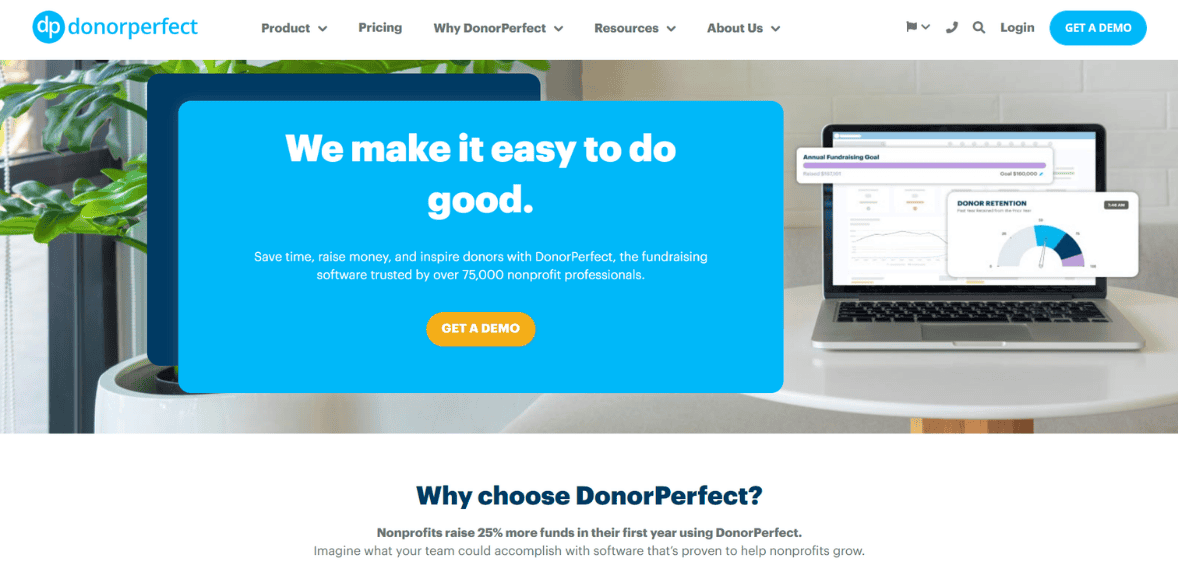
Nonprofit organizations look for software for a specific purpose. We want to ensure clean data, easy reporting, donor tracking systems, and user-friendly tools so our staff isn’t frustrated with the systems. That is why many organizations have been seeking DonorPerfect alternatives. DonorPerfect is a popular software choice, but many organizations feel it is too expensive, too complex, or too layered for them.
The issue is not that DonorPerfect is bad software. The issue is that it is a bad fit. A smaller organization likely does not need a long list of advanced features because it will likely have to do more work with fewer staff. A growing organization is likely to have faster onboarding, easily customizable reporting, and more budget-friendly monthly fees. This is one of the main reasons why nonprofits that want to save money and reduce complexity are more likely to seek alternatives to DonorPerfect.
This guide will examine the best alternatives for organizations that want to save money and complexity, and will compare ease of use, pricing, fundraising support, and donor management features. This article will help teams looking for donor database alternatives, comparing nonprofit CRMs, or cutting costs with free donor software.
Why Nonprofits Look for DonorPerfect Alternatives
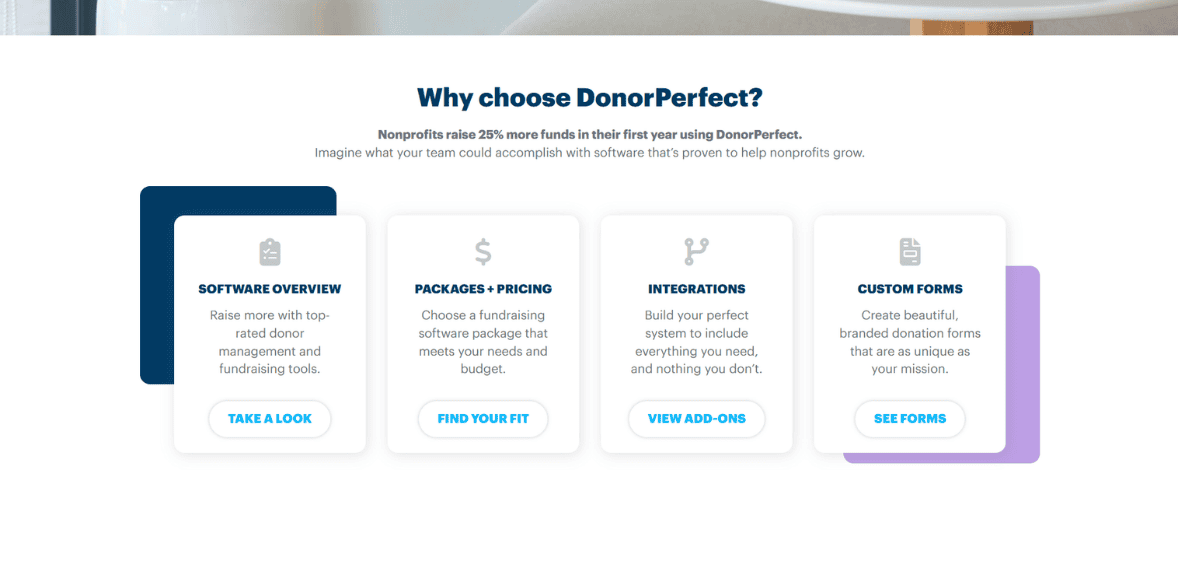
As organizations grow, it may become clear that their existing software is no longer sufficient to meet their needs. Sometimes it is a matter of cost. A limited budget can be stretched thin by monthly fees, additional modules, training, and setup. Other times, it is a matter of usability. Outdated software can be cumbersome and too complex to use, and staff may simply not use it in its entirety.
Staff time is always a big factor. A team at a nonprofit is already stretched thin between fundraising, communication, event management, reporting, and donor stewardship. A software product with a complex user interface will not be used much, and the organization will not derive much value from it. A simpler user interface will ultimately allow the data to be used more consistently.
This is often why donor software alternatives are not as feature-rich. Many times, the best software is the one that does a few things well. In the case of donor management, gift tracking, email, reporting, online giving, and growth integrations.
What to Expect from a Lower-Cost, Less Complex Nonprofit CRM
When evaluating other system options, it can be useful to identify the best options to meet the organization’s needs. A nonprofit CRM should not make donor management more difficult. Donor management systems should aggregate giving history, communication streams, campaign analytics, and donor details, and integrate without additional manual load.
We all know Price is important, but value is more important. A low-cost system that lacks reporting or donor communication tools could create more work elsewhere. Software that is a better value has transparent pricing, meaningful value, and a user experience that aligns with your staff size and level of technical comfort. Good onboarding, timely support, and easy transition resources are also valuable during a major change.
When comparing CRMs for nonprofits, it is important to consider both current and future needs. A basic donor database may be sufficient for your team today, but down the road, peer-to-peer fundraising, text message campaigns, or volunteer management may become important. The optimal solution provides the flexibility to accommodate growth and avoid unnecessary complexity and features to start.
Bloomerang
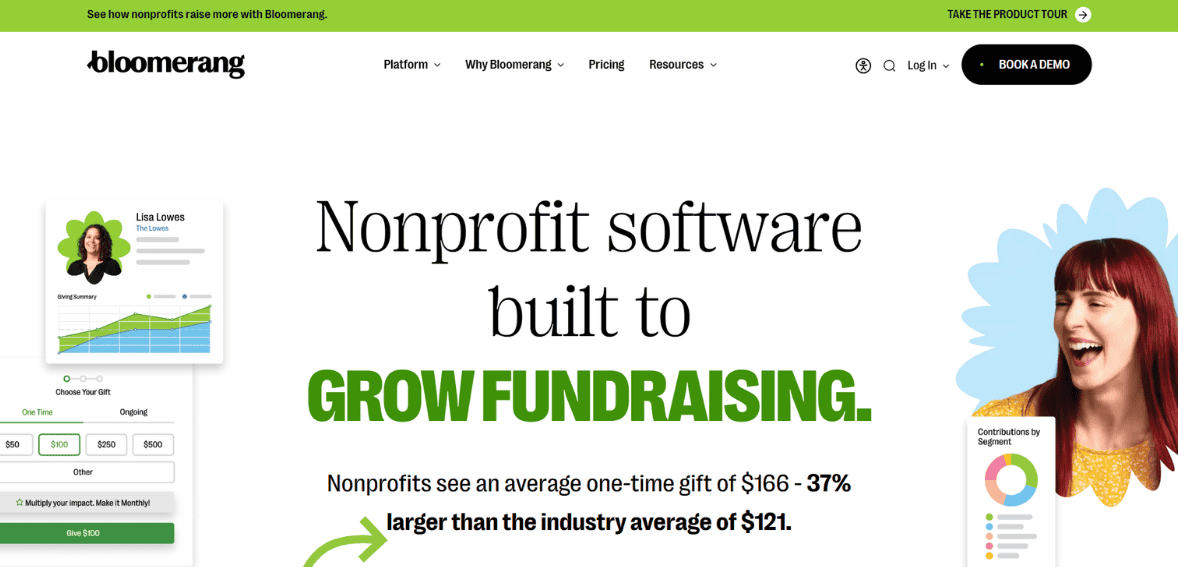
Image Source
As for a cleaner interface and a more donor retention-focused design, Bloomerang is perhaps the most visible alternative to DonorPerfect. Its usability-focused design is especially appealing to small and mid-sized nonprofits that cannot accommodate long onboarding processes. Teams tend to enjoy dashboard reporting and visibility into donor engagement.
For nonprofits that require both fundraising and donor management and do not want to feel overwhelmed, the platform is particularly strong. Staff can manage donor records, track online donations, and access various reporting and email engagement tools to identify donor retention risks and opportunities. It is a great solution for nonprofits that want to enhance repeat giving without increasing system load.
Although competitors on the market may offer lower pricing than Bloomerang, nonprofits believe that the ease of use of Bloomerang provides better value. If your primary objective is to eliminate the convoluted processes that other systems have in place, Bloomerang is usually among the first to be considered when comparing nonprofit CRM systems.
Little Green Light
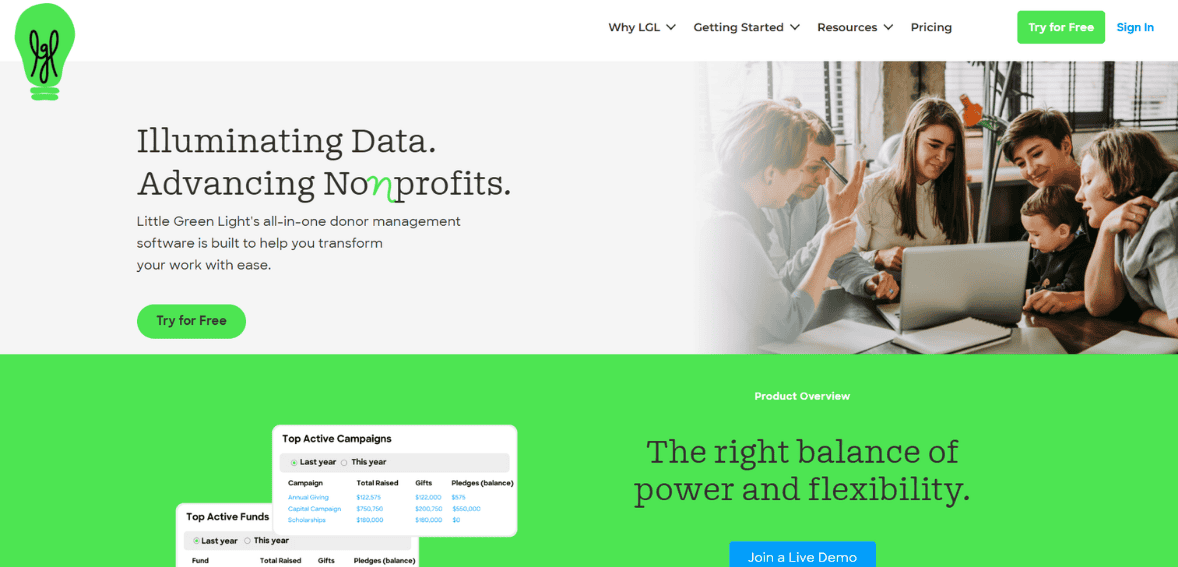
Image Source
Little Green Light has a strong following among nonprofits that value practicality and affordability. In discussions about alternatives to donor databases, other platforms that cover the essentials are considered, but Little Green Light is often recommended because it does the basics well, and it does not try to be a full-blown all-in-one solution. This is especially important for many smaller organizations.
The system includes donor management, gift tracking and acknowledgment, mailing list management, basic reporting, and relationship history. There is also enough flexibility for teams that need custom fields and segmented communication without making the technical configuration too complicated. Compared to other CRM platforms launched more recently, the system may seem a bit outdated, but it is still regarded as straightforward and dependable.
When nonprofits are trying to control costs more tightly, Little Green Light is certainly one of the more budget-friendly options available. It is ideal for teams that want strong basic CRM functionality and are willing to sacrifice some visual elements. Given the functions offered, the pricing remains very competitive.
Kindful
Kindful strengthens its resume as one of the top donor management systems in the nonprofit sector by emphasizing accessible workflows and useful integrations. Describing donor data as ‘easier to understand and use’ differentiates Kindful and shows appreciation for organizations that need simple reporting and data management.
Kindful prides itself on a user-friendly design. This helps with non-profit contact management, donation and campaign tracking, and communication without the day-to-day tasks becoming overly technical. The platform is particularly desired at the smaller-team level, with an urge to bolt, and for non-software-specific staff.
If ease, visibility, and a gentle learning curve are organizational priorities, Kindful is a good fit. This is especially true when a working, reporting, and navigational ‘system’ has presented a layered, convoluted problem. This is particularly true when evaluating nonprofit sector-specific CRMs and their level of operational strain.
Neon CRM
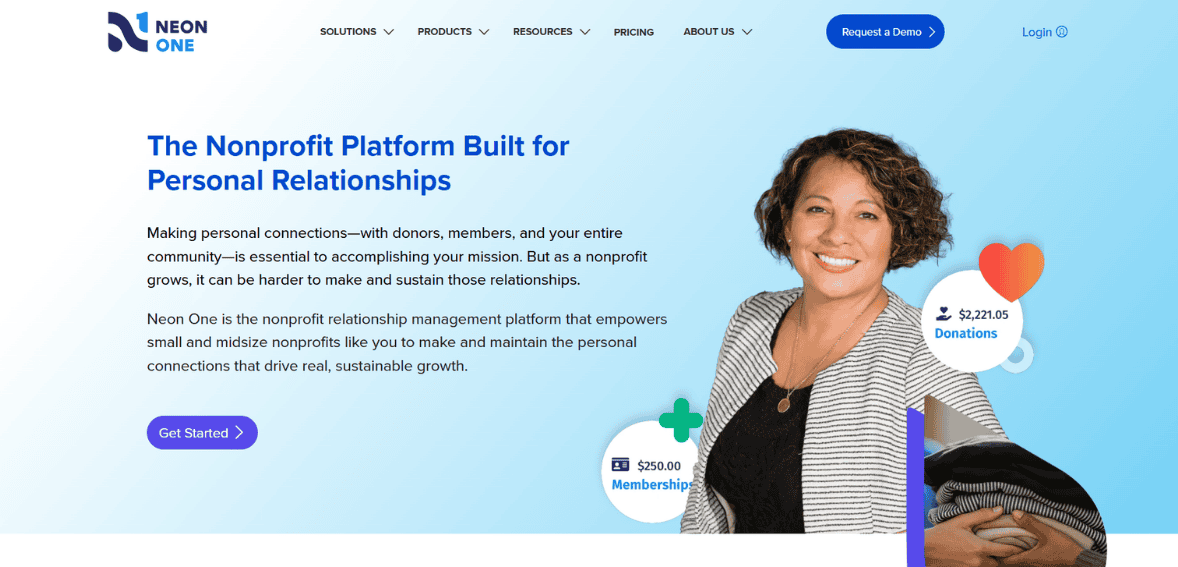
Image Source
Neon CRM has a unique value proposition. Nonprofits that want more than entry-level tools while still needing an accessible space to operate within find Neon CRM in the most interesting middle ground of the sector. Most growing organizations place their belief here, and with good reason. Providing an increasing level of operational complexity while remaining accessible. This is not typical of donor management systems.
The system’s range of functionality includes donor and membership management, event management, online forms, communications, and reports. Just as it appeals to non-profits wishing to consolidate separate tools, it may seem more complex than seemingly pared-down options, so the answer depends on the level of need among your team.
Neon CRM, while not lightweight, is the choice most adaptable for growing nonprofits to offer the most. Not only is it not the lightest option, but when cautiously designed, it achieves the best of both extremes.
Zeffy
Zeffy is a no-fee service, meaning no processing fees. For Budget-conscious non-profits, that is a strong advantage as they look for donor software that is free. This may prove particularly relevant to small non-profits where the need is a strong advantage.
The platform’s most recognizable value lies in the donation, campaign, event, and admin software it provides. Advanced non-profit CRM functions may be beyond the reach of the software, so the need for some non-profits to adjust their expectation of CRM may become more pressing. This remains the best option for the non-profit that requires low-cost fundraising essentials and can function with a limited set of features.
If your nonprofit is in the early stages, has limited staff or is tight on budget, Zeffy is worth your attention. It won’t accommodate every sophisticated database need, but it does lower barriers to entry. In the world of donor software, Zeffy is one of the most talked-about options for a reason.
Givebutter
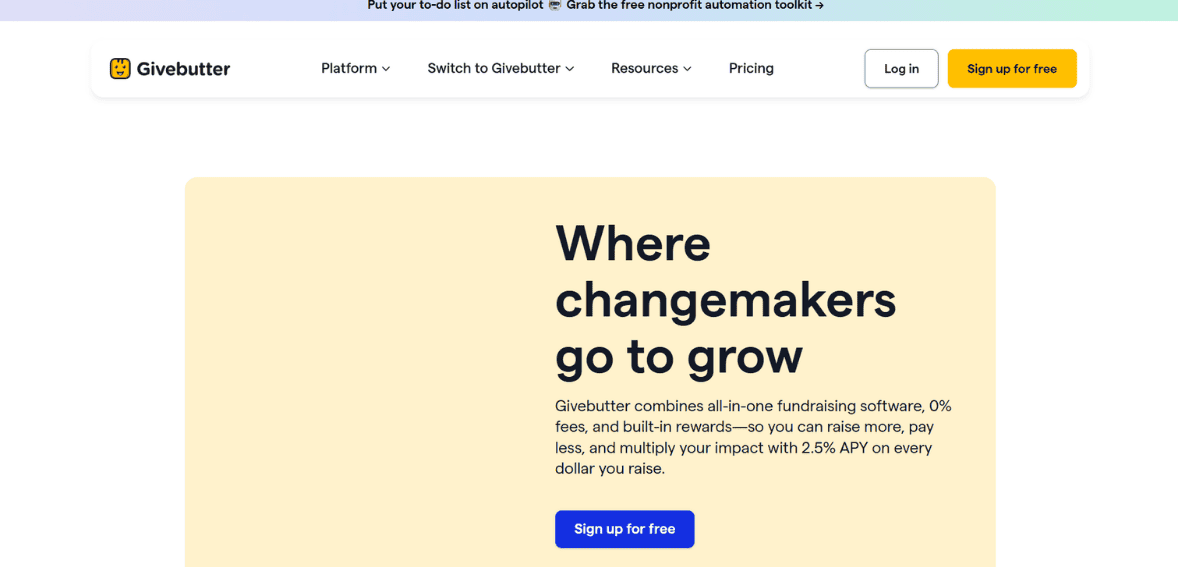
Image Source
Givebutter has gained traction among nonprofits for its fundraising tools, which are more modern and user-friendly. It is less commonly viewed as a traditional database-first CRM and more as a versatile fundraising tool in which donor management is simply one of the features. This distinction is important when comparing it to other DonorPerfect alternatives.
Givebutter tends to shine in online campaigns, donor engagement, event management, fundraising forms, and peer-to-peer fundraising. Digital-first teams can often find it easier to start and manage their fundraising campaigns on Givebutter than on older database systems. Because the interface is modern and user-friendly, staff and volunteers are more likely to adopt the system.
Givebutter can be a great option for nonprofits whose fundraising strategy is more focused on digital methods. It will not meet every CRM-based donor database requirement, but it will streamline online fundraising and reduce the tools the nonprofit needs to use to disconnect.
Salesforce for Nonprofits
Salesforce for Nonprofits appears in virtually every comparison of nonprofit CRMs due to its massive power and flexibility. It manages a broad array of workflows, automation, reporting, and custom processes. It is quite powerful for the right organization. However, for the wrong organization, it is exactly the type of complexity most nonprofits are trying to avoid.
This platform typically fits larger organizations, highly process-oriented teams, or nonprofits that have technical support and implementation assistance. It has immense flexibility, which is both its greatest asset and its greatest drawback. If your organization is seeking something that is relatively easy to configure and straightforward to support, Salesforce may be too much.
However, it is worth considering because certain nonprofits outgrow basic tools and require greater flexibility. The principal concern is not whether Salesforce is powerful, but whether your nonprofit requires such power and has the capacity to handle it.
Which DonorPerfect Alternative Best Fits Your Nonprofit
The best option will vary according to your size, budget, objectives, and internal resources. Little Green Light or Zeffy will likely serve a small nonprofit with basic fundraising needs best. A team that values a refined donor experience and robust retention tools will likely gravitate to Bloomerang. A nonprofit that is primarily focused on digital fundraising campaigns will likely find Givebutter to be the best fit for its current fundraising strategy.
Because of this, a nonprofit CRM comparison should not be made solely on feature lists, but on fit. The best platform is one your team knows, uses, and can maintain and support consistently. A simpler system that adds to staff buy-in is often more valuable than an advanced system that adds to staff confusion.
It is also prudent to consider the effort of migration. A system change takes time and effort, and is easier when the new system is demonstrably more capable than the old system in supporting your current workflows. Prior to a decision, consider the support and systems available for data import, training, and post-go-live team task handling, how to streamline your team’s daily work, and how to easily adapt to sustainable, technical, and operational change after go-live.
Conclusion
There is no single best CRM for every nonprofit. For many teams, the search for DonorPerfect alternatives is really a search for clarity. They want lower costs, easier workflows, better staff adoption, and software that supports fundraising without becoming another problem to manage.
For this reason, more nonprofit software systems are being simplified. Nonprofits require not an abundance of choices but the best choices when it comes to features. Whether considering alternatives to donor databases, completing a comprehensive nonprofit CRM comparison, or searching for free donor software that meets budget constraints, the best option is the one that strengthens donor relations and simplifies the work.
Frequently Asked Questions
What are the best DonorPerfect alternatives for small nonprofits?
Nonprofits often rely on services like Bloomerang, Little Green Light, Kindful, and Zeffy. Each service varies in focus, so it is up to the user to decide whether it prioritizes simplicity, low cost, digital fundraising, or free donor software access.
Are there any free donor software options for nonprofits?
Yes, some services offer grant software for free, and some even offer no-fee fundraising services to qualifying nonprofits. Even though some features are missing that may be important to houses, these services help with fundraising and grant tracking.
What should I compare when reviewing donor database alternatives?
The comparison focuses on usability and reporting, donor records, and communication and integration tools, so not every feature should be included in the review. In other words, the software should conform to the team’s workflow during analysis and should not be fully compared based on the number of features.
Is it worth switching from DonorPerfect to another CRM?
Yes, it is beneficial to move to another CRM if your team is not consistent in using the current system and it is overly complex, expensive, or difficult. Better-fitting platforms can lead to improved user adoption, reduced manual tasks, and more efficient grant tracking.